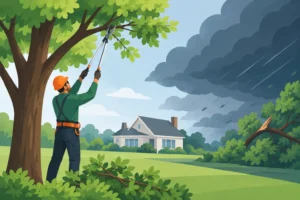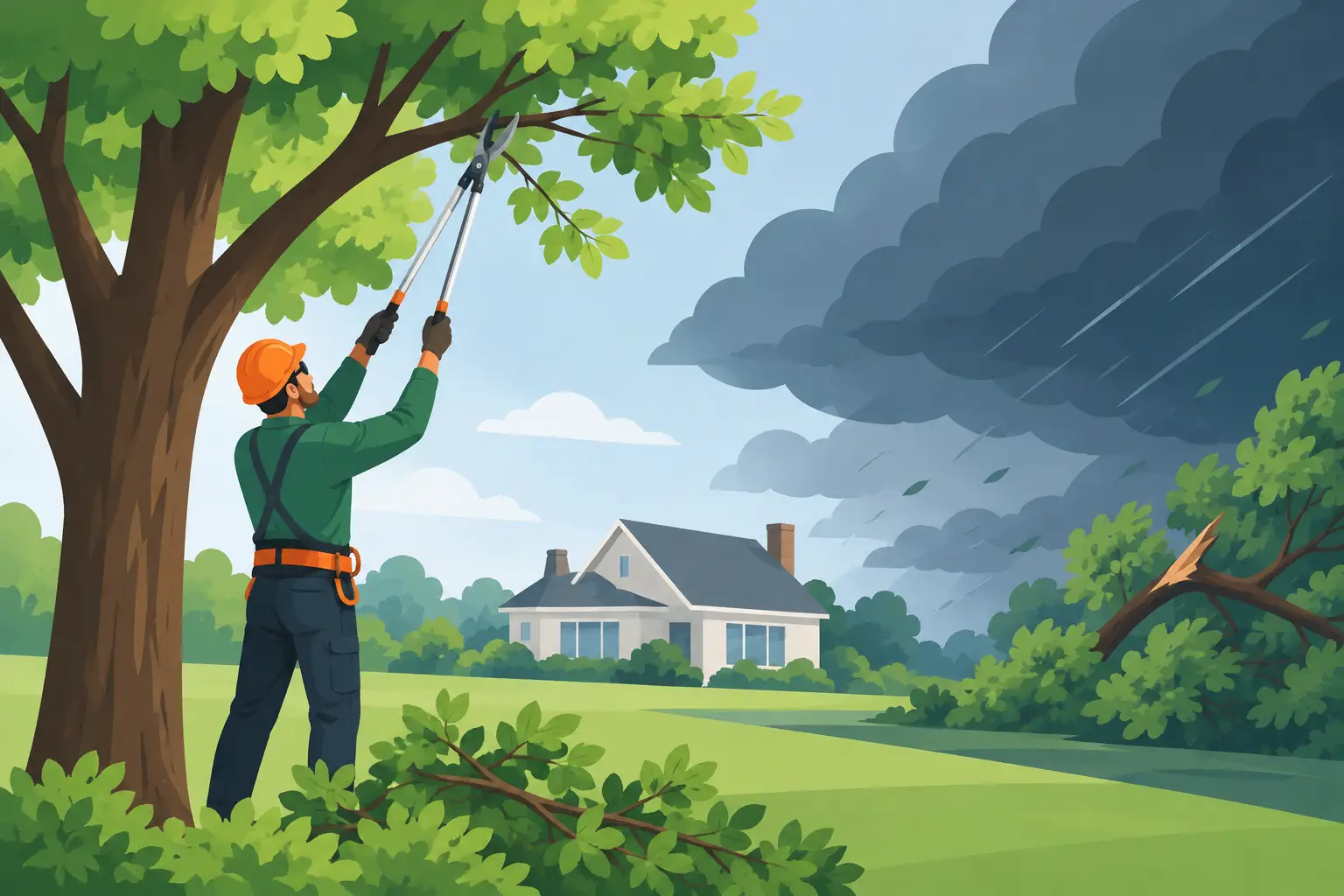
A heavy, wet snowfall in New Haven County can turn an ordinary branch into a roof hazard overnight. Summer thunderstorms bring a different problem: high winds that catch dense, overextended canopies like sails. So, can trimming prevent storm damage? In many cases, yes. Proper tree trimming can substantially reduce the chance of falling limbs, split trunks, and wind-related failure. It cannot make every tree storm-proof, but it is one of the most practical ways to lower the risk around a home or business.
The key word is proper. Random cutting, topping, or removing too much growth can leave a tree weaker than before. Storm-prevention trimming is selective work based on the tree’s structure, health, location, and the hazards beneath it.
How trimming helps prevent storm damage
A healthy tree is built to move in the wind. Trouble starts when dead limbs, weak branch attachments, poor weight distribution, or an overly dense canopy put more stress on the tree than it can handle. Skilled pruning addresses those conditions before a storm exposes them.
Dead, cracked, hanging, and diseased branches are usually the first place to start. They have already lost strength, even if they still look connected from the ground. A gust of wind, a coating of ice, or the added weight of rain can send them down onto a roof, driveway, vehicle, fence, or utility line.
Selective thinning can also reduce wind resistance in a crowded canopy. The goal is not to strip the tree bare. It is to remove certain branches so wind can move through the crown more naturally, rather than pushing hard against a solid wall of foliage. This is especially useful for mature shade trees near homes, parking areas, and commercial buildings.
Pruning may also reduce the leverage of long, heavy limbs. Branches that extend far beyond the main canopy can act like long handles in high winds, placing extra force on their attachment points. Shortening or removing the right limbs helps rebalance the crown and reduces the likelihood of a tear-out.
Can trimming prevent storm damage in every case?
No tree service company should promise that trimming will prevent all storm damage. Severe winds, saturated soil, lightning, ice storms, and hidden internal decay can bring down even a well-maintained tree. If a tree’s roots are failing or its trunk is hollow, branch trimming alone will not solve the larger safety problem.
Trimming is best viewed as risk reduction. It lowers the odds of common failures and gives a qualified arborist a close look at conditions that may not be obvious to a property owner. During an inspection, issues such as trunk cavities, fungal growth, included bark, root damage, or a major lean may point to cabling, further pruning, or full tree removal instead.
The tree’s location matters just as much as its condition. A limb failure in an open backyard may cause little more than cleanup. The same limb over a child’s play area, a busy sidewalk, a garage, or service wires deserves prompt attention. For trees near power lines, residents should contact the utility provider or a qualified tree professional. Never attempt to trim branches near energized lines yourself.
The storm hazards trimming can address
Connecticut weather puts mature trees through a lot. Nor’easters load branches with wet snow. Ice adds weight well beyond what a branch was designed to carry. Summer thunderstorms deliver sudden wind gusts after periods of rain that may soften the ground around root systems.
Proper trimming is particularly useful when a tree has deadwood, crossing limbs that rub against each other, branches growing toward the roof, low limbs obstructing access, or a top-heavy crown. These issues do not always mean the whole tree is dangerous, but they are worth correcting before the next major weather event.
A few warning signs should move the job higher on the priority list: freshly fallen small branches, visible cracks where limbs join the trunk, peeling bark around a branch union, mushrooms at the base of the tree, a new lean, or soil lifting near the roots. These signs can indicate a larger structural issue. Pruning may be part of the solution, but an inspection determines whether the tree is still a good candidate for retention.
What proper storm-prevention pruning looks like
Good pruning preserves the tree’s natural form while removing specific risks. Cuts should be made at appropriate branch collars so the tree can seal wounds effectively. The amount removed should be limited to what the tree can tolerate, especially for older or stressed trees.
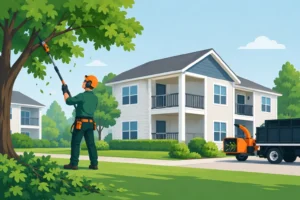
A professional approach often includes removing deadwood, reducing overextended limbs, improving clearance from structures, and selectively thinning crowded areas. On young trees, structural pruning can guide the development of a strong central leader and well-spaced scaffold branches. That early work can prevent expensive problems years down the road.
What proper pruning does not include is topping. Topping means cutting back major upright portions of the crown to blunt stubs. It may make a tree look smaller for a short time, but it often leads to weak, fast-growing replacement shoots and large wounds that invite decay. A topped tree can become more hazardous, not less hazardous, as it regrows.
Avoid the temptation to remove too much foliage at once as well. Excessive thinning can stress the tree, encourage weak new growth, and expose bark to sun damage. The right amount of pruning depends on species, age, health, and the tree’s history. Oak, maple, pine, ornamental trees, and evergreens do not all respond the same way.
When to schedule tree trimming in Connecticut
The best time to trim depends on the type of tree and the reason for the work. Dormant-season pruning, often from late fall through winter, is a practical choice for many deciduous trees because the branch structure is easier to see and disease activity is generally lower. It is also a good time to address hazards before spring and summer storms.
That said, hazardous limbs should not wait for the perfect season. A cracked limb over a roof or driveway needs prompt attention whether it is January or July. Storm cleanup can also reveal damage that should be corrected before the next weather event.
For properties with several mature trees, an annual visual check is a sensible routine. Look up after leaf drop, after major storms, and whenever you notice a change in the tree’s shape or appearance. You do not need to diagnose the problem yourself. You do need to recognize when a tree deserves a closer inspection.
Why experience matters for high-risk trimming
Tree trimming near homes, structures, and utility lines is not a ladder-and-chainsaw weekend project. Falling limbs are unpredictable, and the wrong cut can cause a branch to swing, split, or drop in the wrong direction. Access, rigging, equipment, traffic control, and cleanup all matter on a safe job.
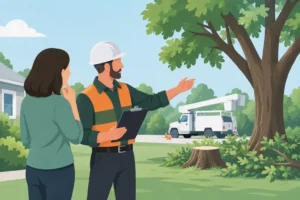
An arborist-led crew can assess the full picture before cutting begins: the tree’s health, limb attachments, decay, targets below, equipment access, and whether removal is safer than pruning. That assessment is especially valuable for large trees that have grown close to older homes, garages, fences, and neighboring properties.
For more than four decades, Stumpbuster LLC has helped New Haven County property owners deal with the real-world tree problems that show up before and after storms. The right recommendation is not always the biggest job. Sometimes a focused pruning visit is enough to remove the immediate risk and improve the tree’s long-term structure. Other times, a compromised tree needs removal before it becomes an emergency.
A safer property starts before the forecast
The best time to deal with a weak limb is when the ground is dry, the sky is clear, and there is time to make careful decisions. If trees on your property have dead branches, heavy limbs over buildings, visible cracks, or growth crowding roofs and driveways, arrange a professional assessment before the next storm puts those weaknesses to the test.