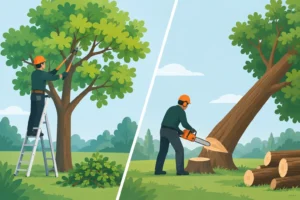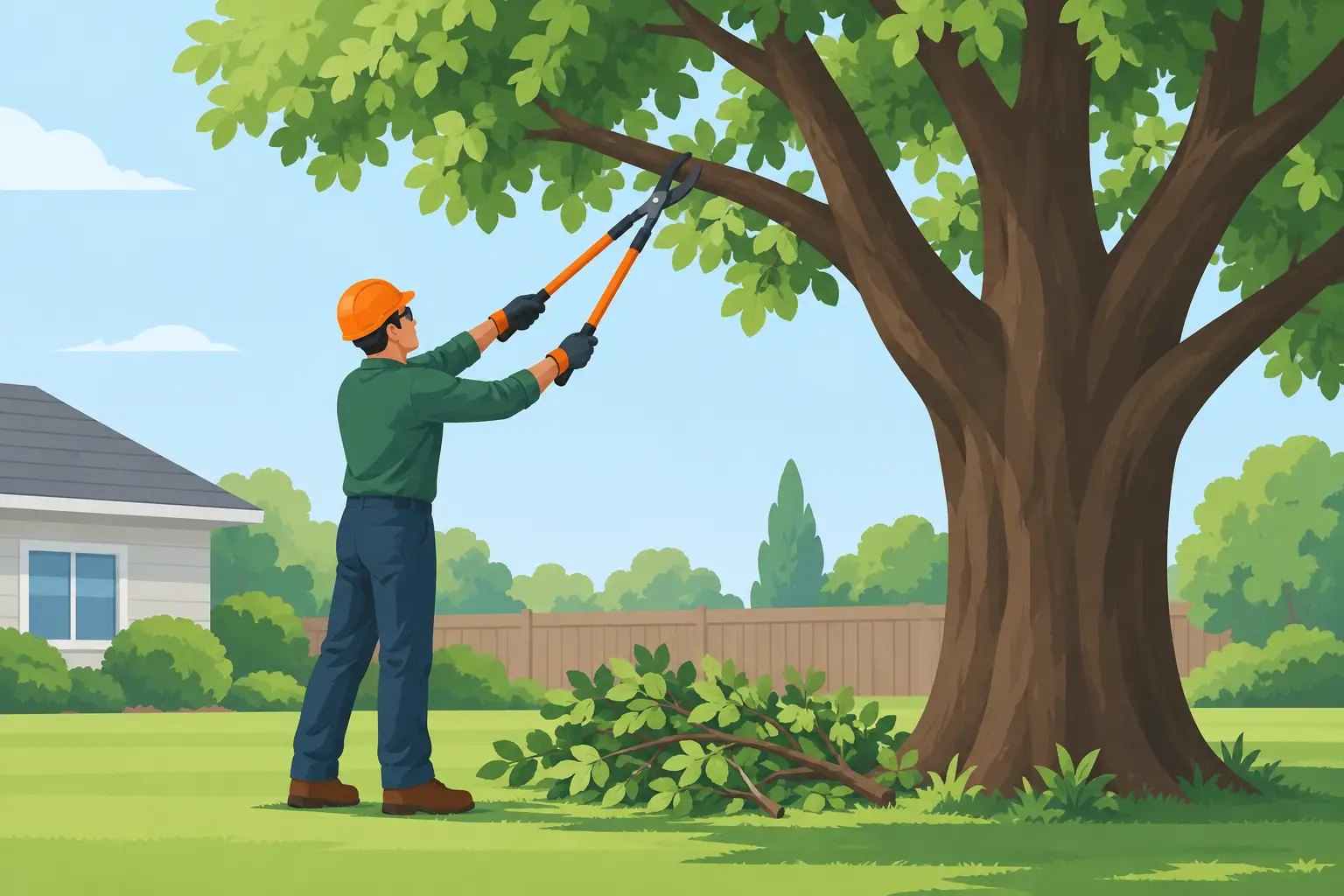
A large oak over a driveway, a maple brushing a roofline, or an old ornamental tree shading a patio can add real value to a property. But mature trees need a different approach than young trees. One aggressive cut can create decay, invite storm damage, or leave the tree with a poor structure for years. This guide to mature tree pruning explains how to improve safety and appearance while protecting the tree you want to keep.
For homeowners and property managers in New Haven County, the goal is not to make a mature tree smaller at all costs. The goal is to remove problems, reduce avoidable risk, and preserve the strong framework that took decades to develop.
Start With the Reason for Pruning
Good pruning begins with a clear purpose. A mature tree may need attention because dead limbs hang over a driveway, branches are rubbing the siding, low growth blocks a walkway, or heavy limbs extend over a roof. Sometimes the concern is health: broken branches, fungal decay, storm damage, or crowded limbs that hold moisture and limit airflow.
The reason matters because it determines the right type and amount of pruning. Removing a dead limb is straightforward compared with trying to reduce the reach of a large, heavy branch over a house. A tree that has been neglected for years may require careful work over more than one season rather than a major one-time cut.
Before any work starts, look at the whole tree from several angles. Note dead or hanging branches, crossing limbs, cavities, peeling bark, mushrooms near the base, cracks at major branch unions, and limbs growing toward structures or utility lines. A concern at ground level can change the plan high in the canopy.
What Mature Tree Pruning Should Accomplish
A properly pruned mature tree should still look like itself when the work is done. Its natural shape should remain intact, with a balanced canopy and no large, unnecessary wounds. The most useful pruning usually focuses on deadwood removal, clearance pruning, selective thinning, and limited weight reduction where a limb presents a specific concern.
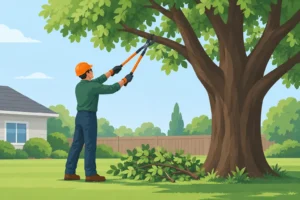
Deadwood removal takes out branches that are already dead, broken, or clearly dying. This is often the first priority because dead branches can fall without warning, especially during wind, snow, or ice. Clearance pruning creates needed space over driveways, sidewalks, roofs, service areas, and buildings. Selective thinning removes a small number of crowded interior branches to improve light and airflow without hollowing out the canopy.
Weight reduction is more technical. It shortens a long limb by cutting it back to a healthy lateral branch that can continue carrying growth. When done correctly, it can reduce leverage on a heavy branch while keeping a natural appearance. When done poorly, it leaves stubs, weak regrowth, or a lopsided canopy.
Avoid Topping a Mature Tree
Topping means cutting major limbs or the upper crown back to blunt stubs. It may seem like a fast way to make a tree shorter, but it often creates bigger problems. The tree responds with fast-growing shoots that are weakly attached, and large cuts can expose wood to decay. The result may be a stressed, unattractive tree that becomes more difficult and costly to manage.
If a tree is simply too large for its location, selective reduction may help in some cases. In others, removal and replacement with a better-sized species is the safer long-term decision. An experienced arborist should assess that choice before major cuts are made.
When Is the Best Time to Prune?
Timing depends on the tree species, its condition, and the reason for pruning. In Connecticut, dormant-season pruning is often a good choice for many deciduous trees. With leaves off, the branch structure is easier to inspect, crews can identify defects more clearly, and there is less disruption to the growing season.
That said, hazardous limbs should not wait for winter. A cracked branch over a front entrance or a dead limb over parked vehicles needs prompt attention, regardless of the calendar. Storm damage also calls for timely evaluation, even if the visible break appears minor.
Some species have specific considerations. Oaks are commonly pruned during dormant periods to help reduce disease concerns. Spring-flowering ornamentals may be best pruned after they bloom if preserving that season’s flowers matters. A local arborist can account for species, weather patterns, and the tree’s present condition instead of applying one rule to every yard.
How Much Can Be Removed Safely?
With mature trees, less is usually more. Removing too much live growth in one visit can stress the tree, reduce its ability to produce energy, and stimulate excessive new shoots. As a general working principle, avoid removing more than about 20 to 25 percent of a healthy tree’s live canopy at one time. For older, stressed, or declining trees, the appropriate amount may be much less.
The size of the cut matters as much as the number of branches removed. Large wounds take longer to close and can become entry points for decay organisms. Whenever possible, a pruning plan should favor smaller, selective cuts over removing large scaffold limbs.
A mature tree with several major issues may need phased pruning. For example, the first visit may remove deadwood and clear the roofline. Later work can address selective reduction after the tree has had time to respond. This approach is often safer for both the tree and the property.
Recognize Work That Should Not Be DIY
Homeowners can handle small twigs and low branches with proper hand tools. Mature tree pruning is different when ladders, chainsaws, heavy limbs, or nearby structures are involved. A branch that looks manageable from the ground can swing, split, or drop with far more force than expected.
Call a qualified tree professional when limbs are over a home, garage, pool, driveway, fence, or public sidewalk; when branches are near power lines; when a tree has visible cracks, cavities, or decay; or when climbing equipment is needed. Never attempt to prune near energized utility lines. That work requires the utility company or properly trained line-clearance professionals.
Insurance, equipment, and experience matter in this type of work. Professional crews can control sections of wood with ropes, identify unsafe branch unions, protect nearby landscaping, and clean up the work area properly. The cost of a professional pruning job is often far less than repairing a roof, vehicle, fence, or injury caused by an uncontrolled limb.
Protect the Tree During the Work
Good results come down to cut placement and restraint. Cuts should be made just outside the branch collar, the slightly swollen area where a branch joins the trunk or a larger limb. Cutting flush against the trunk removes protective tissue. Leaving a long stub is also a problem because it may die back and decay.
Tools should be sharp and suitable for the branch size. Ragged cuts heal poorly, and dull tools increase the chance of tearing bark. On larger limbs, professionals use controlled cutting methods to prevent the branch’s weight from stripping bark down the trunk as it falls.
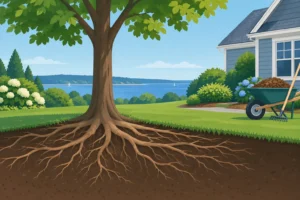
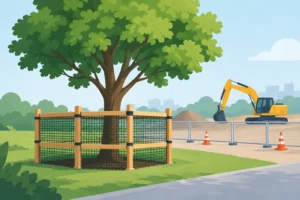
Do not rely on wound paint or sealant to fix a poor cut. Trees compartmentalize wounds naturally, and the best protection is correct pruning technique from the start. After pruning, give the tree normal care: water during extended dry periods when practical, avoid damaging roots with construction or heavy equipment, and keep mulch away from direct contact with the trunk.
Signs a Tree May Need More Than Pruning
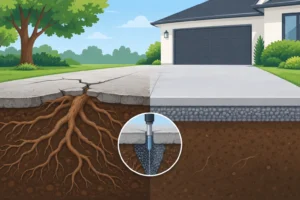
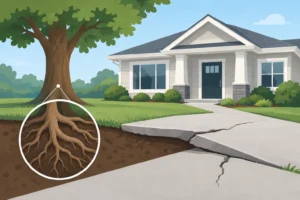
Pruning can reduce certain risks, but it cannot make every tree safe. If a mature tree has extensive trunk decay, a deep crack, root lifting, severe lean, major crown dieback, or repeated branch failures, removal may be the responsible option. The same is true when a tree has outgrown a tight space between a house, driveway, and utility service.
A licensed arborist can help separate a manageable pruning issue from a structural failure risk. That assessment should consider the tree’s health, defects, targets below it, and likelihood of failure. A healthy tree in an open area can sometimes tolerate a defect that would be unacceptable over a child’s play area or a busy parking lot.
Stumpbuster LLC has served New Haven County properties since 1985, providing arborist-led tree trimming, removal, and thorough cleanup for homeowners and commercial sites. For large or difficult mature trees, a careful assessment is the first step toward work that protects both the property and the landscape.
A mature tree is not something to cut back simply because it looks big. Address the deadwood, clearance, and structural concerns you can identify, then bring in experienced help before high-risk branches become a storm-day emergency. A well-planned pruning job can keep a valuable tree safer, healthier, and better suited to the property around it.