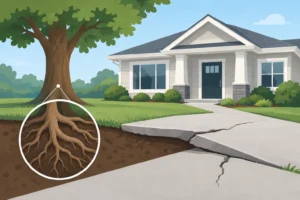
A raised strip across a driveway may look like a paving problem, but it often starts several feet away with a mature tree. This example of driveway root repair shows why the visible crack is only one part of the job. A lasting repair requires identifying the tree involved, checking how the roots are moving the surface, and deciding whether root removal can be done without creating a bigger problem for the driveway, the tree, or both.
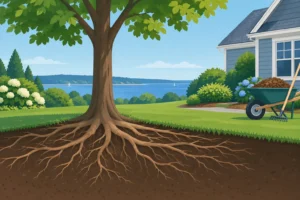
For Connecticut property owners, this situation is common around older maples, oaks, lindens, and other established trees. Their roots naturally seek moisture, oxygen, and open soil. Driveway edges, compacted subgrades, and small pavement cracks can create the conditions that encourage roots to travel close to the surface.
A Realistic Example of Driveway Root Repair
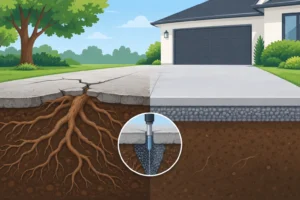
Consider a homeowner with a two-car asphalt driveway that has developed a noticeable hump near the edge. The raised area is about three inches high, the asphalt has split, and water now collects along the crack after rain. A mature maple stands roughly 12 feet from the driveway. The homeowner wants the driveway smooth again, but does not want to lose a healthy, valuable shade tree unless removal is truly necessary.
The first step is not cutting roots. The first step is determining what is below the damaged area. In many cases, the root that lifted the pavement is not a small feeder root. It may be a substantial structural root extending from the trunk toward the driveway. Cutting it without assessing the tree can reduce stability, damage the tree’s health, or lead to decay at the cut.
An arborist-led inspection looks at the tree’s size, species, condition, lean, root flare, and distance from the driveway. It also considers the width and depth of the damaged section. A shallow root under a narrow driveway edge may be managed differently than a large root running beneath the center of a main access drive.
In this example, inspection confirms that one major surface root and several smaller roots are pushing against the asphalt. The maple is in good condition, but the major root is close enough to the trunk that aggressive cutting could affect its long-term stability. That finding changes the repair plan.
The Repair Plan Depends on the Root and the Surface
There is no responsible one-size-fits-all answer to driveway root damage. Some repairs involve removing roots, while others require adjusting the driveway around a root that should remain in place. The right approach depends on the tree’s condition, the severity of the trip or vehicle hazard, and how much of the pavement must be rebuilt.
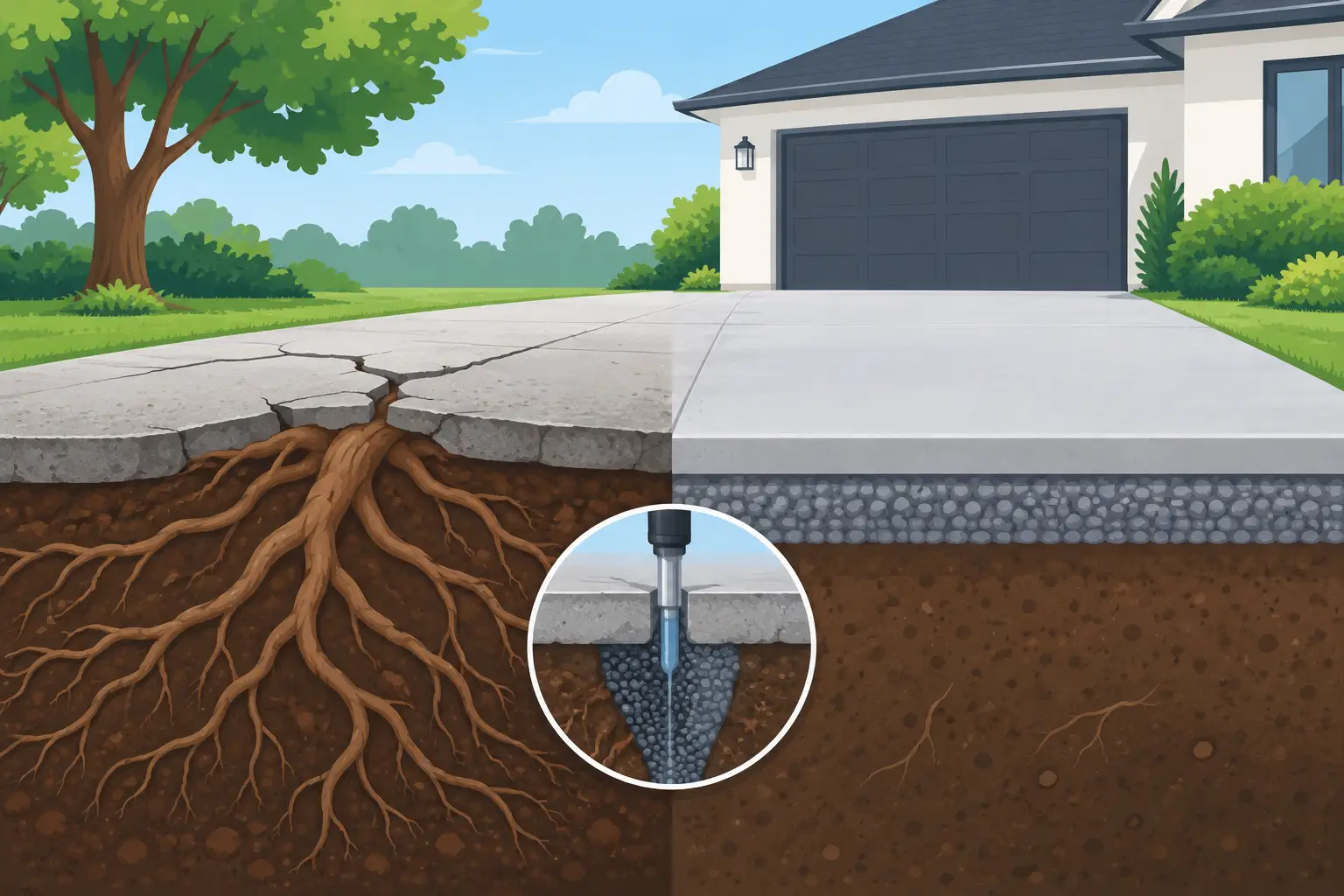
For the homeowner in this example, the damaged driveway edge can be saw-cut and removed. Smaller interfering roots can be removed cleanly, while the larger structural root is retained. The area is then excavated carefully by hand and with the appropriate equipment so the remaining root is not torn or crushed. This is slower than simply digging through the area with a machine, but it prevents unnecessary damage.
Once the root zone is exposed, the crew can determine whether enough material can be removed beneath the driveway to create clearance. If the remaining root still sits too high, the driveway may need a slightly altered grade or a reinforced transition over that area. That is often the better choice when preserving a healthy mature tree matters more than restoring a perfectly flat surface at any cost.
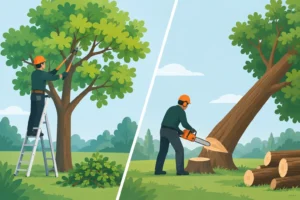
If the tree is declining, hazardous, or growing too close to the structure, the recommendation may be different. Tree removal followed by stump grinding and deeper root removal can give the property owner a clean base for full driveway reconstruction. This is usually the more permanent option when extensive roots have spread under multiple sections of pavement.
Why cutting the root is not always the fix
Roots provide more than water and nutrients. Large roots help anchor the tree, especially during heavy wind and saturated soil conditions. Removing a major root on one side of a mature tree can increase risk, particularly if the tree has a heavy canopy, existing lean, trunk defects, or roots restricted by nearby buildings and hardscape.
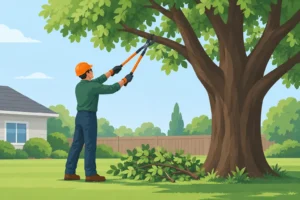
The cut itself can also become an entry point for decay organisms. A healthy tree may tolerate a carefully selected root cut, while a stressed or aging tree may not. That is why a contractor should not promise that root cutting will save both the tree and the driveway in every situation.
How the Work Is Performed
After settling on a plan, the damaged pavement is removed in controlled sections. The goal is to avoid tearing out more driveway than necessary while creating enough access to work safely around the root system. Loose asphalt, broken concrete, old base material, and surface roots are cleared from the work area.
Where roots are approved for removal, they are cut cleanly rather than ripped or pulled. Clean cuts are less traumatic to the remaining root system and leave a more manageable work area for rebuilding. Surface debris is removed so the driveway contractor has a stable, properly prepared base.
Stumpbuster LLC uses specialized root removal equipment, including its Plowrake system, when deeper roots or old stumps are part of the obstruction. This matters when a driveway repair is delayed by buried wood, dense root masses, or roots that extend beyond what ordinary stump grinding can reach. The aim is not simply to make the surface look better for a week. It is to remove the material that could interfere with a sound repair.
Before new asphalt or concrete is installed, the base must be evaluated and rebuilt as needed. A driveway placed over loose organic material, poorly compacted soil, or remaining high roots is likely to settle or crack again. Proper grading also directs water away from the driveway edge and helps prevent future washout.
What a Property Owner Should Watch For
Driveway root problems usually get more expensive when they are ignored. A small rise can become a cracked edge, then a water channel, then a larger section of failed pavement. Early attention gives you more options to preserve the tree and limit the amount of paving that needs replacement.
Look for pavement that rises in a straight line toward a nearby tree, fresh cracking near the driveway edge, sections that rock under vehicle weight, or water pooling where the grade used to drain properly. Concrete slabs may separate or tilt. Asphalt often forms a ridge before it splits open.
Do not assume every raised driveway section is caused by roots. Poor compaction, frost heave, drainage failures, and utility work can produce similar damage. A proper site visit should distinguish between those causes before anyone recommends removal work.
When Tree Removal Is the Better Choice
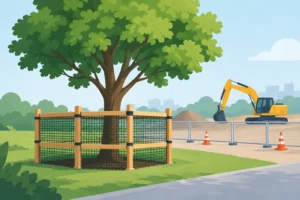
Keeping a mature tree is often worthwhile, but safety and property protection come first. Removal becomes the practical recommendation when the tree is declining, structurally unsound, repeatedly damaging pavement, or positioned where roots are affecting the foundation, retaining walls, underground lines, or a primary access route.
A full removal allows the stump and larger roots to be addressed more thoroughly before the driveway is rebuilt. It also eliminates the ongoing pressure from a living root system. The trade-off is clear: the homeowner loses shade and landscape value, but gains a cleaner long-term path for driveway restoration.
The best decision comes from looking at the whole property, not just the crack in the pavement. A qualified arborist can explain whether selective root work is reasonable, whether the driveway design should change, or whether the tree has reached the point where removal is safer.
If a driveway rise is making your property harder to use, address it before a minor repair becomes a larger paving job. A careful inspection can protect the usable space you paid for while giving you a clear answer about the tree beside it.