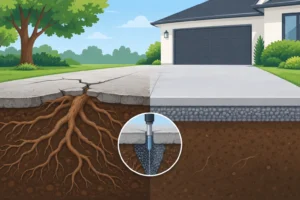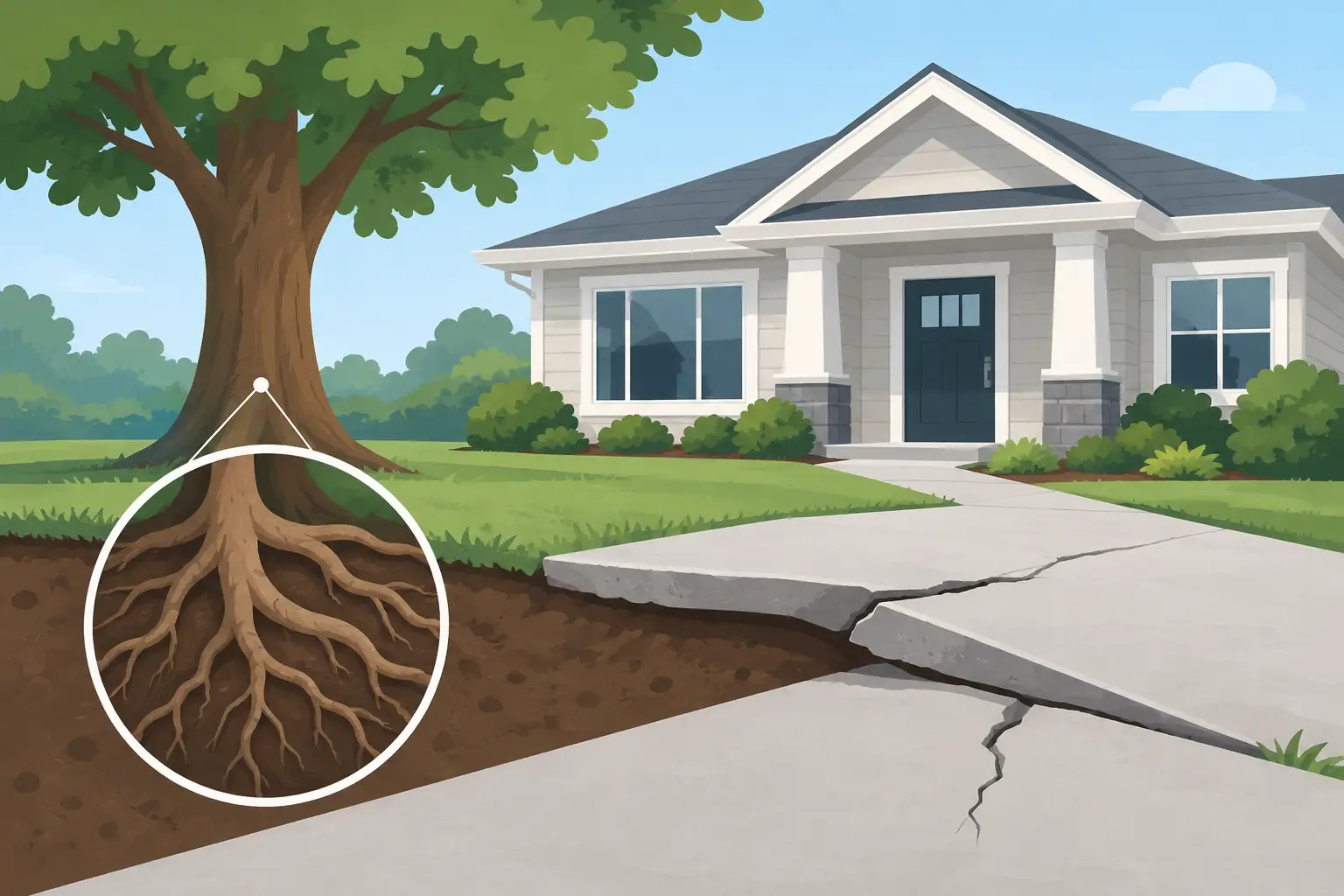
A walkway that suddenly tilts, a patio that develops a raised ridge, or a lawn that feels uneven near a mature tree is more than an appearance issue. Knowing the top root heave signs can help New Haven County property owners act before roots, shifting soil, or a declining tree create damage around the home.
Root heave happens when tree roots lift soil, turf, pavement, landscape borders, or other surfaces as they grow and expand. It is common around established shade trees, especially where roots are confined by driveways, sidewalks, retaining walls, patios, and compacted soil. Connecticut’s seasonal freezing and thawing can add to the movement, making the problem more noticeable from one year to the next.
The right response depends on the tree, the location of the roots, and what they are affecting. Cutting roots without a plan can weaken a healthy tree or create a future hazard. A careful inspection is the best place to start.
What Root Heave Looks Like on a Property
Root heave rarely begins with a dramatic crack. In many yards, it starts with small changes that are easy to overlook: grass that no longer lies flat, a paver that rises above the others, or a slight hump along the edge of a driveway. As roots thicken over time, the pressure becomes more visible.
A lifted sidewalk panel is one of the clearest signs. The raised edge can create a trip hazard for family members, visitors, tenants, and customers. On commercial properties, it can also become a liability concern. Tree roots do not always cause every raised slab, though. Frost heave, poor drainage, and settling can produce similar movement, which is why the source should be identified before work begins.
Look closely at foundations, steps, patios, sheds, fences, and utility areas near large trees. Cracked masonry or pavement may be related to roots, but it may also result from water movement, age, or construction conditions. An experienced arborist can assess the tree side of the issue and help determine whether the roots are likely contributing to the problem.
Top Root Heave Warning Signs to Watch For
The most obvious warning sign is pavement that has been pushed upward near the base or major roots of a tree. A driveway may develop a hump, asphalt can split along a root line, and concrete slabs can become uneven. These issues tend to worsen gradually, but a period of heavy rain, drought stress, or winter freeze-thaw can make movement appear more sudden.
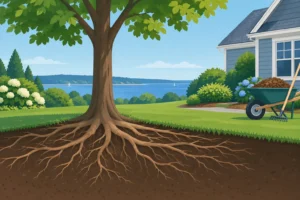
Raised soil is another common clue. Surface roots may create long ridges through a lawn, particularly under maples, oaks, beeches, and other mature trees with broad root systems. Exposed roots are not always a problem by themselves. They become a concern when they interfere with mowing, drainage, walking areas, or nearby structures.
Pay attention if a tree begins to lean, develops new cracks in the soil around its base, or shows signs of decline after excavation or construction nearby. Root disturbance can affect stability and health. Dead branches in the upper canopy, thinning leaves, fungal growth at the trunk base, and peeling bark can all warrant a professional tree inspection.
Drainage changes also matter. Root heave can redirect runoff toward a house, garage, or low area of the yard. Water that pools beside a foundation or repeatedly crosses a walkway can worsen pavement movement and create slippery conditions in winter.
Why Roots Push Upward Instead of Downward
Most tree roots grow in the upper layers of soil, where oxygen, water, and nutrients are most available. In many landscapes, the majority of a tree’s feeder roots are within the top 12 to 24 inches of ground. They spread outward much farther than most people expect, often extending well beyond the drip line.
When soil is shallow, compacted, rocky, or saturated, roots may stay even closer to the surface. A tree planted too close to a sidewalk or driveway has limited room to expand without eventually meeting hardscape. Mature roots continue increasing in diameter, and concrete or asphalt cannot always withstand that steady pressure.
Poor soil conditions can make the issue worse. Heavy clay soils, common in parts of Connecticut, hold moisture and compact easily. Construction activity can also damage or compress root zones, forcing trees to adapt in ways that bring roots closer to the surface. There is no one-size-fits-all answer, because a healthy mature tree may be worth preserving while a smaller or declining tree near a structure may be better removed.
Do Not Cut Large Roots Without an Assessment
It can be tempting to cut or grind down a root that is lifting a paver or creating a bump in the lawn. That quick fix can lead to larger problems. Large roots may be structural roots that help anchor the tree. Removing them can reduce stability, especially during high winds or after the ground becomes saturated.
Root cutting can also open the door to decay and disease. The risk depends on the root’s size, its distance from the trunk, the tree species, its overall condition, and how much of the root system has already been disturbed. A mature tree that has lost several major roots may decline slowly over several seasons, leaving the property owner with an unexpected removal job later.
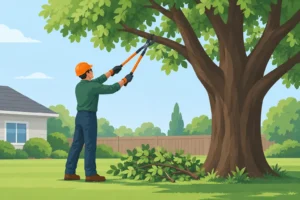
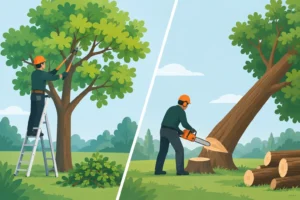
This does not mean roots can never be pruned. In some situations, selective root pruning is appropriate when performed with a clear understanding of the tree and the surrounding site. In others, adjusting the hardscape, rerouting a path, or removing the tree is the safer long-term choice.
Practical Options for Managing Root Heave
For minor lawn heave away from structures, the simplest solution may be to leave exposed roots alone and adjust lawn care around them. Adding a thin layer of soil is sometimes possible, but burying roots too deeply can harm the tree. Avoid piling soil, mulch, or stone against the trunk flare.
When a walkway or patio is affected, resetting pavers or modifying the surface may work if the roots can remain intact. Flexible paving materials can sometimes tolerate more movement than rigid concrete. However, simply repairing the pavement without addressing a rapidly expanding root system may mean the problem returns.
If roots are damaging a driveway, foundation area, retaining wall, sewer line, or other critical feature, more direct action may be needed. Tree removal can be the most practical option when the tree is too close to a structure, in poor condition, or likely to cause continued damage. After removal, stump grinding handles the visible stump, but deeper root removal may be necessary when roots are interfering with planned construction or yard restoration.
Stumpbuster LLC uses specialized equipment for thorough stump and root removal, including its Plowrake system for difficult root zones. That added capability matters when a property owner needs to reclaim usable space rather than leave major roots beneath a future lawn, patio, or planting area.
When Root Heave Requires Prompt Attention
Call for a professional assessment if raised pavement creates a trip hazard, roots are affecting a foundation or utility area, or the tree shows signs of instability. The same applies when you are planning a new driveway, fence, pool, patio, or addition near a mature tree. Addressing roots before construction begins is usually less expensive and less disruptive than correcting damage afterward.
For homeowners and commercial property managers in North Haven, Hamden, West Haven, Branford, Guilford, Wallingford, and nearby communities, local experience makes a difference. Soil conditions, mature tree species, winter weather, and closely built neighborhoods all affect what a safe solution looks like.
A raised sidewalk or uneven lawn does not always mean a tree must come down. But it does mean the roots, the tree’s health, and the affected surface should be evaluated together. A timely inspection gives you a clearer path to safer walking areas, protected structures, and a yard you can use with confidence.