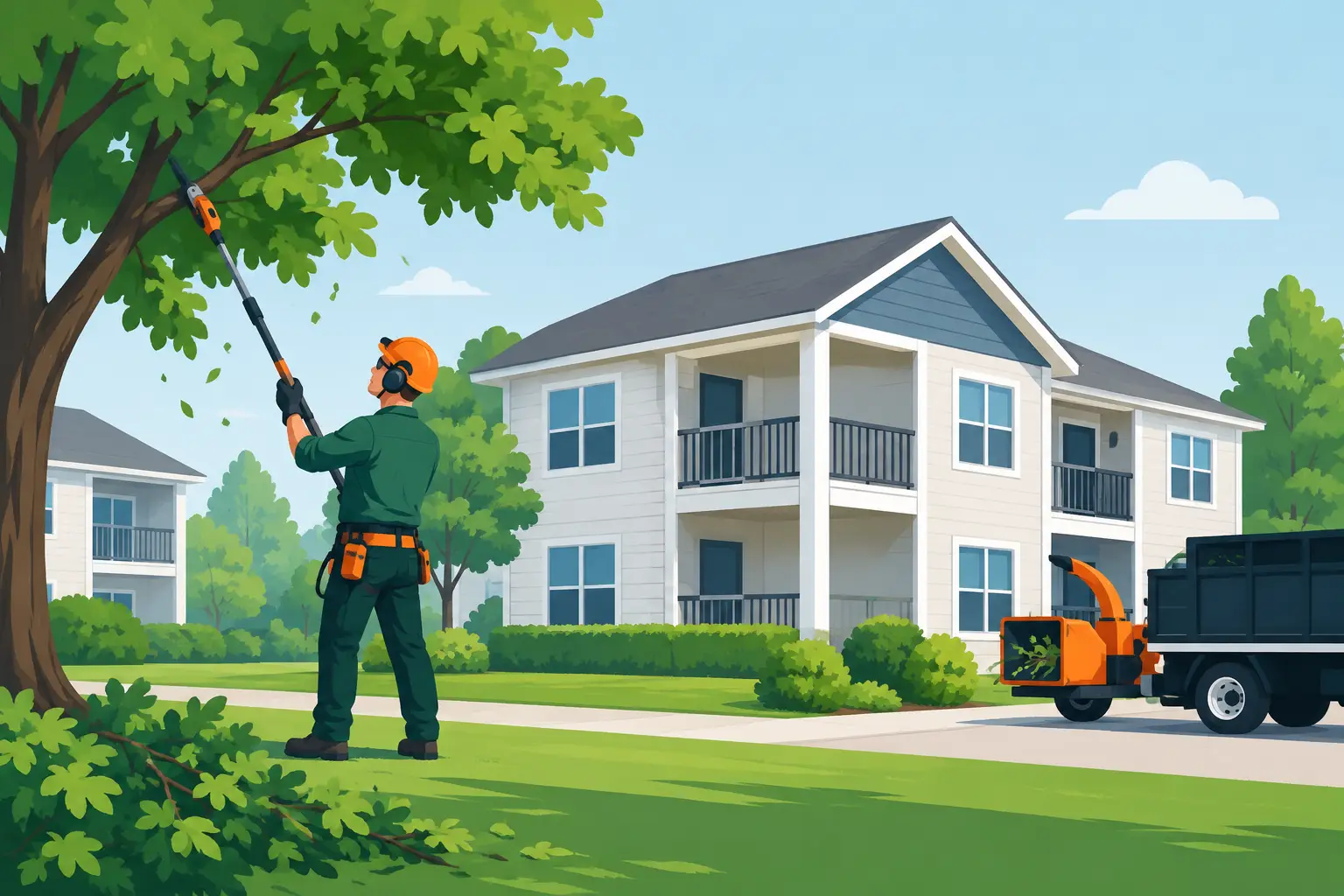
A hanging limb over a parking area, roots lifting a walkway, or a dead tree near a unit can turn into a tenant complaint, an emergency call, or a costly liability issue with very little warning. The best tree services for rental properties focus on preventing those problems before they disrupt tenants or damage the building. For landlords and property managers in New Haven County, tree care is not just about appearance. It is part of keeping a property safe, accessible, and easier to rent.
Rental properties need a practical approach. Work must be done safely around buildings, vehicles, utility lines, sidewalks, and occupied units. The contractor also needs to leave the grounds clean so tenants are not dealing with branches, wood chips, or blocked access after the job is finished.
What Rental Properties Need From Tree Service
A rental property has different demands than a private backyard. A homeowner may be willing to live with a questionable branch until a future project. A landlord has to consider tenant safety, lease responsibilities, insurance exposure, and curb appeal every day.
The right tree service starts by identifying the work that creates the most immediate risk. Dead, split, leaning, or overextended limbs deserve attention first, especially when they are over roofs, driveways, sidewalks, play areas, or electrical service lines. A tree does not have to fall completely to cause trouble. Even a heavy limb can crack siding, damage a vehicle, or block an entrance.
Routine pruning is also valuable at multi-family homes, small commercial rentals, and single-family investment properties. Proper trimming can improve clearance around roofs and structures, reduce branches rubbing against siding, and remove weak growth before wind or snow brings it down. The goal is not to strip a tree bare. It is to make sound cuts that improve safety while preserving the health and natural shape of the tree.
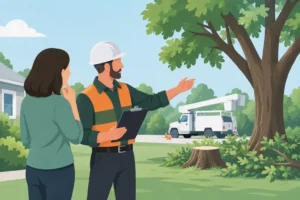
For property owners, responsiveness matters too. When a tenant reports a hazardous branch, the problem needs a knowledgeable evaluation, not a guess from someone with a chainsaw. An arborist-led company can assess the tree’s condition and recommend whether trimming, removal, or monitoring is the sensible next step.
Best Tree Services for Rental Properties: Priorities
The best service plan depends on the property, the tree species, and the condition of the grounds. Still, most rental properties benefit from a few core services that address safety, maintenance, and usable outdoor space.
Hazardous Tree Removal
Tree removal is appropriate when a tree is dead, unstable, severely diseased, storm-damaged, or growing in a location where failure could cause serious damage. Trees close to a roof, foundation, driveway, or utility area require careful planning and controlled removal.
This is not a place to choose a contractor based on the lowest price alone. Tree removal involves elevated work, rigging, equipment, and a clear understanding of where every section of the tree will land. Ask whether the company is insured and whether an experienced arborist will evaluate the work. Those details protect the property owner when conditions are complicated.
Removal can feel like a major expense, but leaving a hazardous tree in place may cost far more after a storm. The better decision often comes down to the tree’s condition and target areas. A mature but healthy tree may only need pruning. A declining tree over a tenant parking area is a different situation.
Tree Trimming for Clearance and Health
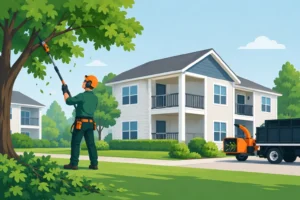
Trimming is one of the most useful ongoing services for rental properties. Overgrown branches can block windows, scrape roofs, shade out lawn areas, interfere with outdoor lighting, and make the building look neglected. They can also give squirrels and other pests an easier route toward the roofline.
Professional pruning creates needed clearance without making damaging cuts. This is particularly important with mature trees, where improper topping or over-pruning can lead to weak regrowth and long-term decline. A qualified arborist considers the branch structure, the season, the tree’s health, and the work needed around the property.
For rental owners, a regular inspection after major weather seasons can prevent small issues from becoming urgent jobs. In Connecticut, winter snow loads, spring storms, and summer wind events can expose weak limbs that were not obvious a few months earlier.
Stump Grinding and Root Removal
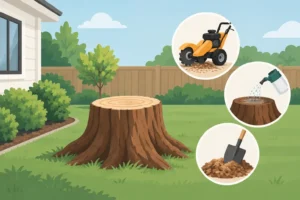
A stump left behind after tree removal is more than an eyesore. It can interfere with mowing, attract insects, create a trip hazard, and take up valuable yard space. On rental properties with limited outdoor areas, that space may be needed for landscaping, a walkway, parking access, or a tenant amenity.
Standard stump grinding removes the visible stump below grade, making the area easier to restore. But some properties also have roots that continue to create problems around walks, patios, driveways, or planned construction. That is where deeper root removal can make a real difference.
Stumpbuster LLC uses a proprietary Plowrake root removal system designed to pull out deeper roots and leave a cleaner area for the next phase of the property. It is especially useful when the goal is not simply to hide the stump, but to reclaim the space for a new lawn, planting bed, fence line, or hardscape project.
Emergency Storm Cleanup
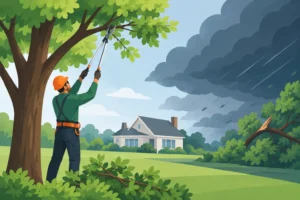
Storm damage does not wait for a convenient time. A broken limb over an entrance or a tree across a driveway can leave tenants frustrated and property managers under pressure. Emergency tree service should focus first on making the area safe, restoring access where possible, and preventing further damage to structures.
Not every storm-damaged tree needs full removal. Some can be pruned and saved if the trunk and main structure remain sound. Others have hidden cracks, root failure, or major splits that make removal the safer choice. An experienced assessment helps prevent a temporary cleanup from becoming a recurring risk.
How to Choose a Tree Contractor for a Rental
Rental owners should look for more than a company that can cut branches. The contractor should understand how to work around occupied buildings and maintain clear communication about access, timing, cleanup, and the scope of work.
Start with insurance and experience. Tree work carries real risk, and the company should be properly insured for the job. Then look for arborist knowledge, particularly when the decision involves a large mature tree, disease concerns, or pruning that affects the tree’s long-term health.
It also helps to ask what cleanup includes. Will brush and logs be removed? Will the work area be raked and cleared? Is stump grinding part of the estimate, or a separate service? Clear answers prevent surprises and make it easier to schedule work around tenants.
Local experience is valuable because trees, soils, weather, and property layouts vary from town to town. A company that has worked for decades in North Haven, Hamden, West Haven, Branford, Guilford, Wallingford, and nearby communities understands the types of tree problems that commonly affect local properties.
Build Tree Care Into Your Property Maintenance Plan
The most cost-effective tree work is often planned before there is an emergency. Walk the property periodically and look for hanging limbs, dead branches, cracks in major trunks, mushrooms near the base, exposed roots, leaning trees, and branches contacting the building. Tenant reports should be taken seriously, particularly when they involve parking areas, entryways, or play spaces.
For larger rentals, schedule inspections and pruning as part of annual exterior maintenance. For smaller properties, a professional review every few years, or after major storms, can be enough unless there are known concerns. The right frequency depends on the number of trees, their age, their location, and the amount of traffic below them.
Well-maintained trees add shade, privacy, and curb appeal that tenants notice. The work is worthwhile when it protects those benefits without allowing a manageable tree issue to become an expensive property problem. A qualified local tree service can help you make the right call, keep the grounds clean, and give tenants one less reason to pick up the phone with a complaint.