A mature maple shading your driveway can be an asset. The same tree can become a concern when heavy limbs extend over a roof, branches rub the house, or the canopy catches too much wind. Crown thinning versus reduction is not simply a matter of cutting back branches. These are two different pruning methods, each with a specific purpose, and choosing the wrong one can weaken a tree rather than improve it.
For homeowners and property managers in New Haven County, the right approach starts with the tree’s condition, species, location, and long-term structure. A licensed arborist can determine whether a tree needs less weight, more air movement, better clearance, or a different solution entirely.
What Is Crown Thinning?
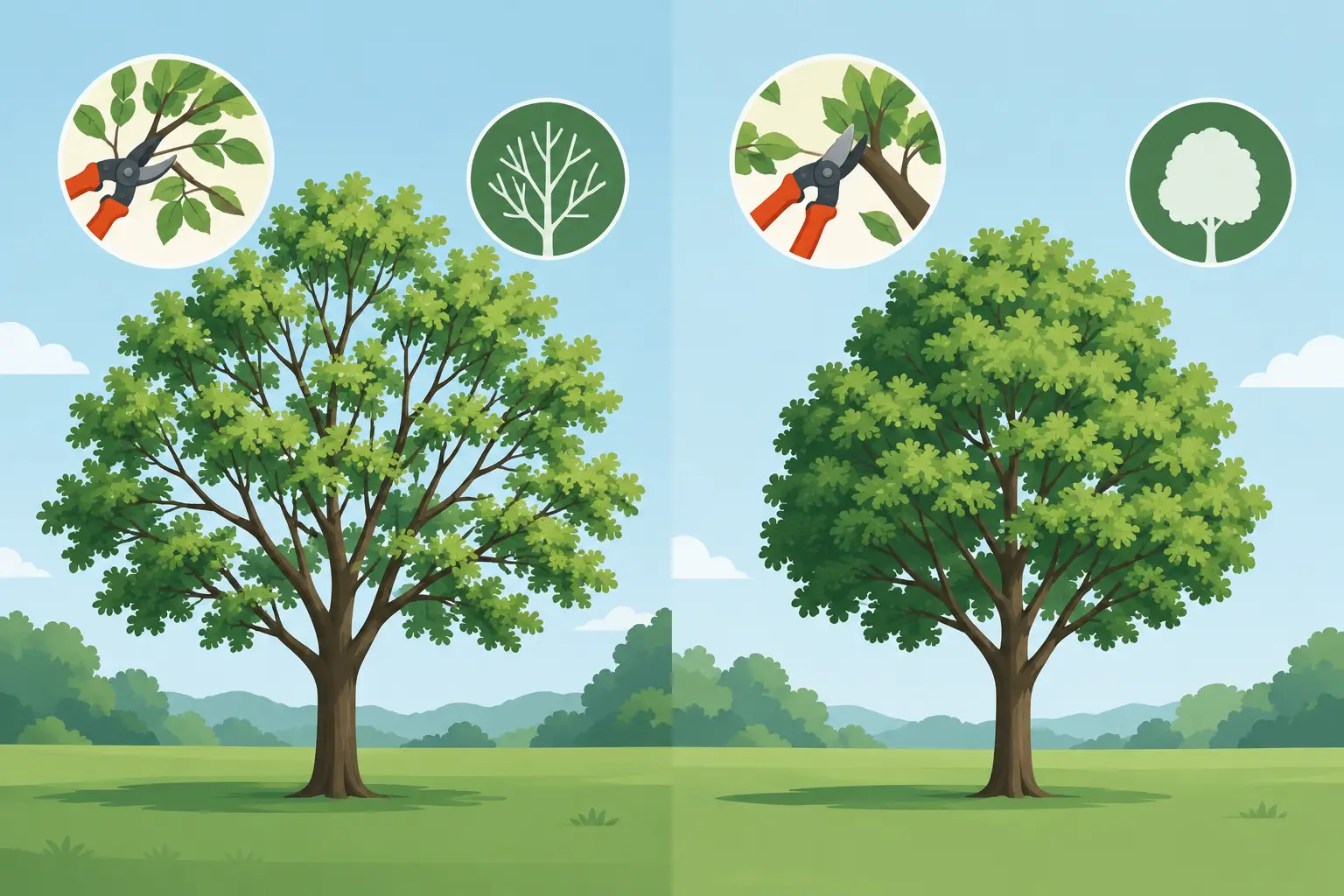
Crown thinning removes selected branches throughout the canopy to reduce density while keeping the tree’s overall height and natural outline largely the same. The goal is not to make the tree look bare or dramatically smaller. It is to improve light penetration and air circulation while reducing minor wind resistance and the weight carried by crowded limbs.
Done properly, thinning is selective work. An arborist removes dead, weak, crossing, poorly attached, or overly crowded branches rather than taking large amounts of foliage from one area. The remaining canopy should look balanced and natural from the ground.
Crown thinning may be appropriate when a healthy, mature tree has a dense interior canopy, branches that are rubbing together, or limited airflow around the home. It can also help reduce the amount of small deadwood that accumulates in certain species. However, thinning is not a cure for a tree with major structural defects, decay, a split trunk, or large overextended limbs.
A common mistake is treating thinning as a way to make a tall tree substantially shorter. It will not solve a height or clearance problem. In fact, over-thinning can stress the tree by removing too much leaf surface, reducing its ability to produce energy.
What Is Crown Reduction?
Crown reduction shortens the overall canopy by cutting selected branches back to suitable lateral branches that can continue the tree’s growth. This lowers the height and spread of the tree while preserving as much of its natural form as possible.
Reduction pruning is often used when branches have grown too close to a roof, chimney, service line, driveway, or neighboring property. It may also be recommended for mature trees with long, heavy limbs that place excessive leverage on weak unions or compromised areas of the trunk.
A proper reduction cut is made back to a healthy lateral branch that is large enough to assume the terminal role. That detail matters. Cutting branches to stubs, or shearing them uniformly across the top, encourages weak regrowth and leaves the tree with wounds it may struggle to compartmentalize.
Reduction is generally more significant than thinning because it changes the size of the canopy. It can be a responsible way to retain a valuable mature tree that has outgrown its space, but it must be planned carefully. A tree that repeatedly needs hard reduction may simply be the wrong species or size for its location.
Crown Thinning Versus Reduction: The Main Difference
The simplest distinction is this: thinning removes selected branches within the canopy, while reduction shortens branches to decrease the canopy’s height or spread.
If your oak is healthy but overly dense, a light, selective thinning may improve airflow and remove interior crowding without changing its size. If its lower limbs are reaching your roof or a large lead is extending far over a patio, crown reduction may be the better choice because the issue is length and weight, not density.
The two services can sometimes be used together. A tree with extended limbs and congested interior growth may benefit from modest reduction on specific leaders along with selective thinning. The exact balance depends on the species, age, previous pruning history, and structural condition of the tree.
Neither method should be confused with topping. Topping means cutting major branches or the trunk back indiscriminately to stubs. It produces large wounds, weakly attached new shoots, and an unnatural appearance. It can create more maintenance and safety problems in the years ahead.
When Thinning Makes Sense
Crown thinning is often a good fit for trees that still have appropriate size for their setting but need careful maintenance. A dense canopy over a lawn may keep grass from growing and hold moisture around the house. Crowded branches can also rub in the wind, creating wounds that invite pests and disease.
Thinning can improve the appearance of a well-established tree by removing deadwood and branches that disrupt its structure. On commercial properties, it may help maintain visibility around entrances, signs, parking areas, and walkways without stripping away the shade and character that mature trees provide.
There are limits. Removing too much foliage at once can trigger stress growth, sunscald on newly exposed limbs, and a thin, uneven canopy. For most healthy trees, a conservative approach is safer than trying to achieve a dramatic change in one visit.
When Reduction Is the Better Option
Reduction is typically the better choice when a tree is physically too large for the space it occupies. The concern may be a roofline, a garage, a fence, utility clearance, or a limb hanging over an area where people park or gather.
It is also useful when an arborist identifies long, heavy branches with poor leverage or attachment. Reducing the length of those limbs can lower stress at the branch union without removing the entire limb. That can be particularly valuable on mature specimens that would lose too much shape or shade if large limbs were removed outright.
Connecticut weather makes sound pruning decisions especially important. Wet snow, ice, and high winds can expose weak branch attachments and overloaded limbs. Reduction may lower the chance of failure in a known problem area, but it cannot make a tree with extensive internal decay safe. In those cases, removal may be the responsible recommendation.
Timing and Tree Health Matter
Pruning is not one-size-fits-all. Many deciduous trees respond well to structural work during the dormant season, when leaves are down and the branch framework is easier to inspect. But dead, damaged, or hazardous limbs should be addressed whenever they create a safety concern.
Species also matter. Oaks, for example, may need seasonal precautions because fresh pruning wounds can attract insects associated with oak wilt in affected regions. Flowering trees, evergreens, and recently stressed trees each have different considerations. Pruning right after storm damage or during severe drought may require a lighter touch than routine maintenance.
An experienced arborist looks beyond the branch being cut. They consider the root zone, trunk condition, signs of decay, pest activity, past storm damage, and how the tree will respond over the next several years.
What a Professional Assessment Should Include
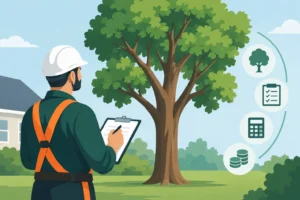
Before recommending crown thinning or reduction, a qualified tree professional should inspect the whole tree from the ground up. The conversation should cover what you want to accomplish, whether that is roof clearance, more sunlight, lower limb weight, improved appearance, or removal of dead branches.
The assessment should also identify practical limits. If branches are near power lines, specialized utility clearance procedures are required. If a tree has a hollow trunk, mushroom growth, major cracks, or a leaning root plate, pruning alone may not address the risk. A responsible contractor will explain when a tree needs monitoring, bracing, removal, or no work at all.
At Stumpbuster LLC, licensed arborist oversight helps property owners make that call based on tree health and site conditions, not on a one-size-fits-all trimming package. The goal is clean, precise work that protects the property and leaves the tree with a sounder structure.
Avoid the “More Is Better” Approach
The most visible pruning job is not always the best pruning job. Trees need foliage to make food, manage stress, and recover from wounds. Excessive thinning, aggressive reduction, and topping can create a short-term open look while causing long-term decline.
Ask how much material will be removed, which limbs are being targeted, and what the tree should look like when the work is complete. You should expect a clear explanation in plain language. A properly pruned tree should look like a healthier version of itself, not like it has been shaped with a hedge trimmer.
If you are concerned about branches over a roof, a crowded canopy, or a mature tree that has become too large for its space, do not wait for the next storm to make the decision. A careful evaluation can show whether selective thinning, measured reduction, or another service will give you a safer property and a tree that can continue growing well for years to come.