A mature tree can add shade, privacy, and real value to a Connecticut property. It can also become a serious liability when decay, storm damage, weak branch structure, or failing roots go unnoticed. This guide to tree risk mitigation helps property owners identify problems early and make sound decisions before a limb damages a roof, blocks a driveway, or creates a danger near people and utilities.
Tree risk is not limited to obviously dead trees. Many hazardous trees still have a full canopy and appear healthy from a distance. The goal is not to remove every large tree. It is to understand what could fail, what could be hit, and what practical work can lower the risk.
What Tree Risk Mitigation Means
Tree risk mitigation is the process of reducing the likelihood or consequences of a tree or branch failure. Depending on the tree and the site, that may mean selective pruning, removing deadwood, reducing the weight on an overextended limb, improving clearance from a structure, or removing a tree that cannot be made reasonably safe.
A tree becomes more concerning when three factors come together: there is a defect, there is a realistic chance of failure, and there is a target underneath or nearby. A hollow limb over a wooded back corner may deserve monitoring. That same limb hanging above a play area, parked cars, sidewalk, or roof needs more immediate attention.
Connecticut properties often have mature trees growing close to homes, stone walls, driveways, power lines, and neighboring yards. That makes careful evaluation especially valuable. The right answer depends on the species, condition, location, and what the tree could strike if it fails.
Start With a Ground-Level Inspection
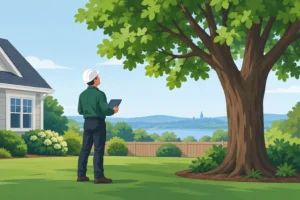
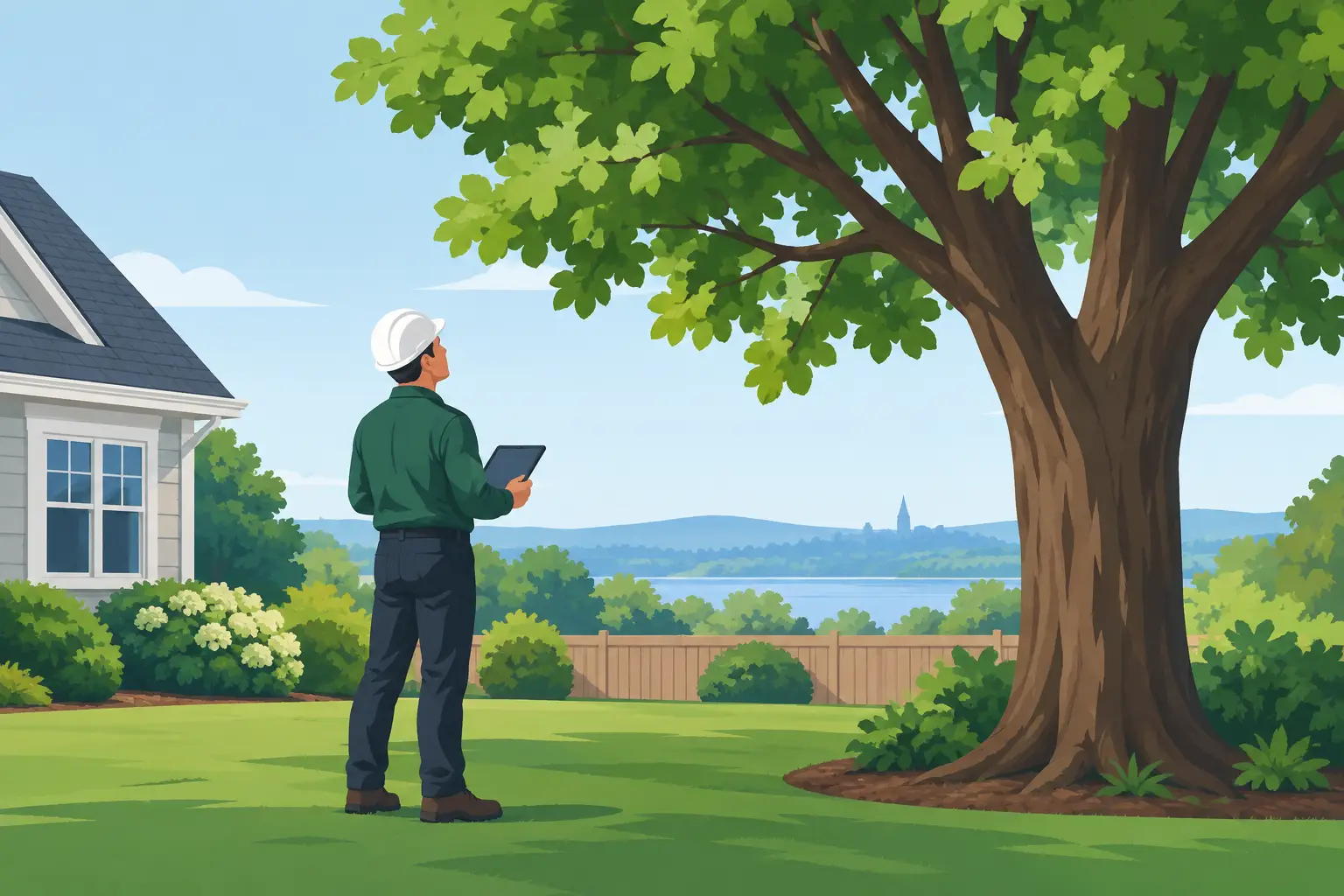
Property owners should walk their yards a few times each year, especially after heavy rain, snow, ice, or high winds. Look at trees from more than one angle. A quick inspection will not replace an arborist assessment, but it can help you spot changes before they become emergencies.
Check the Trunk and Major Branches
Visible defects on the trunk deserve attention. Watch for deep cracks, fresh splits, cavities, loose bark, fungal growth at the base, or areas where the wood appears soft or decayed. A seam running between two large stems can signal a weak union, particularly when both stems carry heavy branches.
Dead or hanging limbs are another clear warning sign. They may fall without much notice, particularly after wind or wet snow loads them. Branches rubbing against a roof, siding, chimney, or service wire can also cause damage over time, even if they have not failed yet.
Do not assume a tree is safe because a wound has closed around the edges or because it leafs out each spring. Trees can compartmentalize decay while still losing strength inside. A qualified evaluation looks beyond what is visible from the ground.
Look at the Base and Root Zone
Roots are the tree’s foundation. A tree that has recently started leaning, shows raised soil or cracked ground on one side, or has exposed roots lifting near the trunk may be unstable. Soil movement is especially concerning after prolonged rain, flooding, excavation, or construction activity.
Root damage is easy to miss because it happens below ground. Trenching for utilities, driveway work, grade changes, and repeated soil compaction can weaken a tree years after the work is finished. If a tree near a house or heavily used area has lost major roots, it should be inspected instead of simply watched.
Mushrooms or conks growing near the base can indicate decay in roots or lower trunk wood. They do not automatically mean the tree must come down, but they are a reason to call an experienced arborist.
Match the Work to the Actual Hazard
The best tree risk mitigation plan is specific. Cutting back every branch or removing every older tree is not good risk management. Over-pruning can stress a healthy tree, encourage weak regrowth, and create new problems.
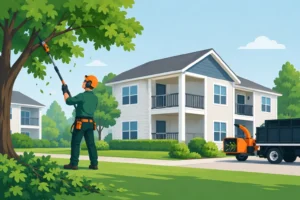
Selective trimming is often the right approach when a tree is healthy but has deadwood, overextended limbs, poor clearance, or branches growing toward a building. Proper pruning reduces weight where needed while keeping the natural structure and health of the tree in mind.
Cabling or bracing may be considered for certain valuable trees with weak branch unions. This is not a fix for advanced decay or a badly compromised trunk. Support systems require proper installation and periodic inspection, and they work best when the tree still has enough sound wood to retain.
Removal is usually the safer choice when a tree has severe decay, major root failure, extensive storm damage, or a lean toward a high-value target. It can also make sense when a tree is crowded beyond recovery, repeatedly damages a structure, or has outgrown the available space. While removal changes the look of a property, it can prevent a much more expensive and dangerous failure.
Know When a Situation Is Urgent
Some tree concerns can be scheduled for routine service. Others should be treated as urgent. If a large limb is cracked and suspended over a driveway, a tree has shifted after a storm, or a branch is resting on a utility line, keep people away from the area.
Never attempt to remove a branch from a power line or work near an energized line yourself. Contact the utility company when wires are involved, then arrange qualified tree service work as appropriate. Even branches that appear to be touching only a service line can create a hazardous situation.
After a storm, avoid standing under broken limbs or walking through a damaged canopy. Wood under tension can move suddenly, and a partially fallen tree may be supported by branches that can fail without warning. Take photos from a safe distance if needed for documentation, but leave cutting and climbing to trained crews with the right equipment.
Plan for Connecticut Weather and Seasonal Changes
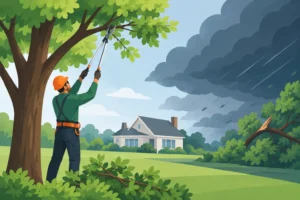
Local weather has a direct effect on tree risk. Heavy, wet snow can overload evergreens and broad-limbed hardwoods. Ice adds weight to branches and exposes weak unions. Summer thunderstorms can snap decayed limbs, while saturated spring soil can reduce root stability.
Late winter and early spring are useful times to evaluate structure because many deciduous trees are easier to see without leaves. That said, hazardous limbs should not wait for a preferred season. If there is a clear safety issue, address it when conditions allow safe work.
Routine pruning before problems develop can make storm cleanup less likely, but timing depends on the tree species and the work needed. An arborist can recommend an approach that balances safety, appearance, and tree health rather than applying a one-size-fits-all schedule.
Do Not Forget Stumps and Surface Roots
Risk mitigation does not always end when a tree is removed. A stump left near a walkway, lawn area, or driveway can become a tripping hazard and interfere with mowing or future landscaping. Remaining roots may continue to affect a lawn, hardscape, or planting plan.
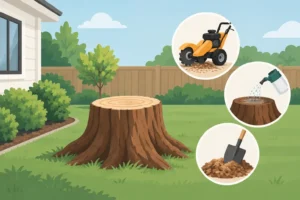
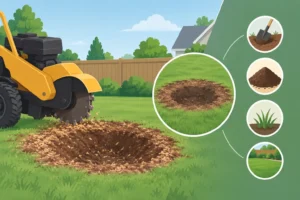
Stump grinding is a practical choice when the goal is to remove the visible stump and reclaim surface space. Deeper root removal may be needed when roots are in the way of construction, drainage work, a new patio, or a major landscape change. The right level of removal depends on what will happen in that area next.
For properties where usable yard space matters, complete planning prevents the common problem of removing a tree only to leave behind an obstacle that limits the project.
Get Professional Help Before the Risk Becomes Damage
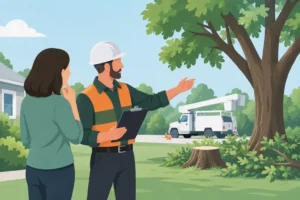
Tree work is one of those property decisions where experience matters. A professional assessment considers defects, tree species, soil conditions, access for equipment, nearby structures, and safe work methods. It also helps separate trees that need immediate action from those that can be monitored or pruned.
For homeowners and commercial property managers in New Haven County, Stumpbuster LLC brings licensed arborist oversight, insured service, and local field experience dating back to 1985. A clear estimate and site review can help you decide whether trimming, removal, stump grinding, or root removal is the practical next step.
A tree does not need to look dramatic to deserve attention. If something has changed – a new lean, a crack, dead branches, lifted roots, or limbs reaching over the places people use every day – address it while the work can be planned safely and cleanly.