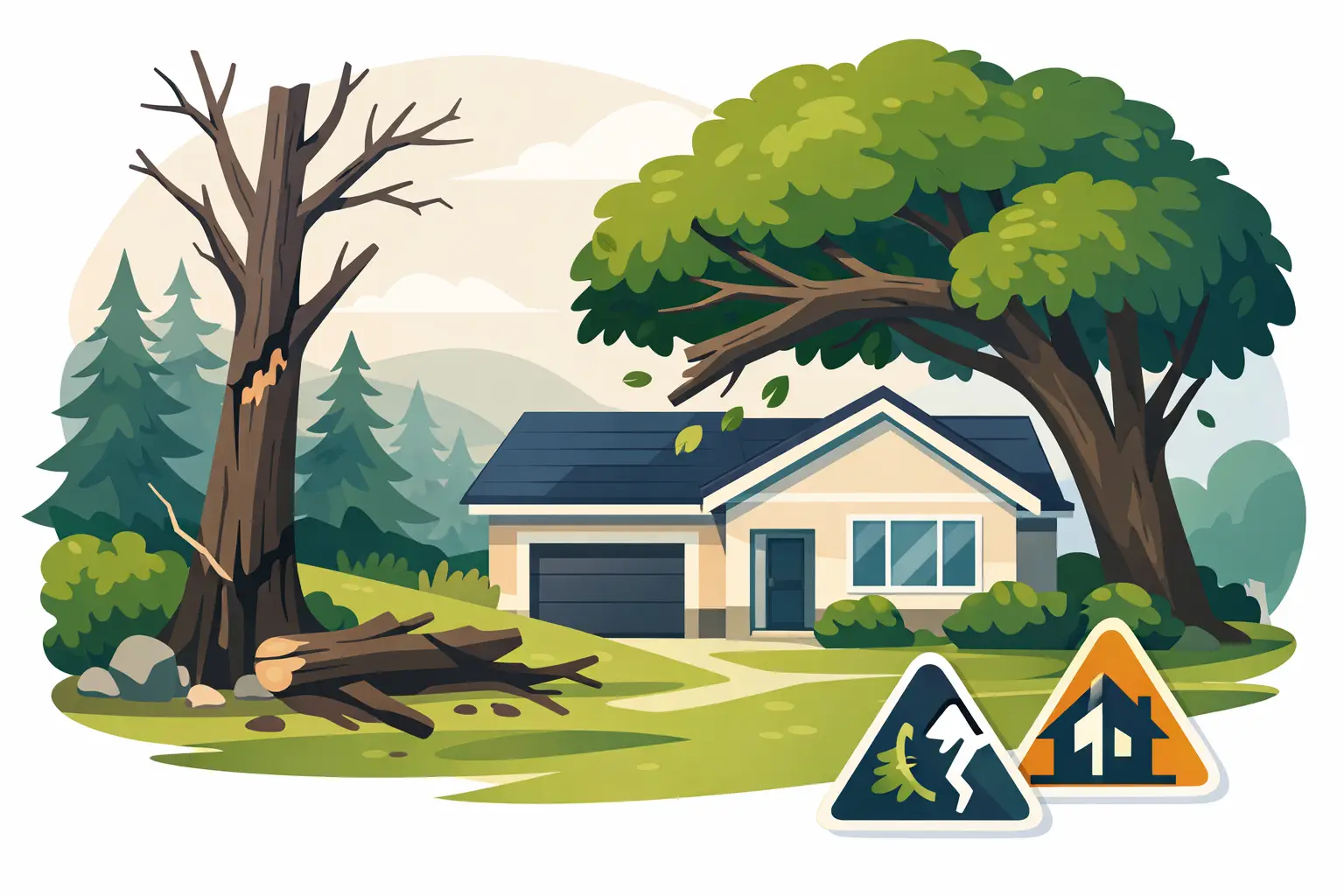
A tree can look healthy from the driveway and still be a serious concern over a roof, garage, driveway, or utility line. When homeowners ask about the best trees to remove near homes, the real answer is not a simple list of species. Location, condition, root structure, soil, and the tree’s targets all matter.
A mature tree adds shade, privacy, and value to a Connecticut property. But when it has declined, outgrown its space, or developed structural problems, waiting can turn a manageable removal into storm damage. A professional inspection helps separate trees that need pruning and care from trees that are no longer safe to keep.
Which Trees Are Best to Remove Near Homes?
The trees most likely to warrant removal are those with a combination of poor structure, visible decline, and close proximity to a structure. A healthy, well-maintained oak 30 feet from a house may be less concerning than a smaller, damaged tree directly over a bedroom or attached garage.
Certain tree types deserve closer attention because of their growth habits or common problems in this area. Fast-growing trees such as silver maples, willows, poplars, and some ornamental pears can develop weak branch attachments or become oversized for small yards. White pines and spruces may lose limbs under heavy snow and ice, especially when their lower branches extend over roofs or driveways. Ash trees with significant decline can become brittle and unpredictable.
That does not mean every maple, pine, willow, or ash should come down. Many can be pruned, cabled, treated, or monitored. Removal becomes the practical choice when the tree’s risk cannot be reduced to an acceptable level.
Dead, Dying, or Decaying Trees
A dead tree near a home should not be left for the next windstorm. Dead wood weakens quickly, and a tree that has lost its leaves, bark, or major limbs may no longer have the strength to stay standing.
Decay is often less obvious. Mushrooms at the base, cavities in the trunk, loose bark, carpenter ant activity, and soft or hollow areas can point to internal rot. A tree can still leaf out while its trunk or root system is losing structural strength. When decay is near the base or major branch unions, the risk level rises considerably.
Trees Leaning Toward a House or Driveway
Not every lean is dangerous. Some trees naturally grow at an angle and have adapted over many years. What matters is whether the lean is new, increasing, or paired with cracked soil, lifted roots, or a split trunk.
A recent lean after heavy rain, excavation, construction, or high winds deserves immediate attention. Saturated ground can reduce root support, particularly in areas with shallow or compacted soil. If a tree is leaning toward a house, parked vehicles, or a frequently used walkway, do not try to correct it with ropes or cutting. Have it assessed before the next storm changes the situation.
Trees With Weak Branch Structure
Large stems that grow from the same point can create a weak connection called a co-dominant union. When bark is trapped between those stems, known as included bark, the tree may split under snow, ice, or wind loading.
This is common in mature maples, ornamental pears, and other broad-canopy trees. Proper pruning when the tree is young can often improve its structure. On an older tree with large competing stems over a home, removal may be safer than repeated emergency limb work.
Trees Growing Too Close to the House
Distance alone does not decide whether a tree must be removed, but a tree planted too close to a structure often creates ongoing problems. Branches scrape siding and shingles, block gutters, shade the roof enough to encourage moss, and give squirrels and other pests an easy route to the house.
Roots are another concern, although they are often misunderstood. Tree roots do not usually crush a sound concrete foundation. They can, however, enter existing cracks, disturb patios and walkways, interfere with older drainage lines, and worsen problems where soil is already moving or settling. Large surface roots can also make mowing difficult and create trip hazards.
A tree tight against a foundation, porch, retaining wall, or septic area may be a poor long-term fit even if it is currently healthy. In those situations, removal can prevent repeated trimming, roof cleanup, root conflicts, and future damage. The stump should be addressed as part of the plan if the area will be replanted, graded, paved, or returned to lawn.
Warning Signs That Call for an Arborist Inspection
Homeowners do not need to diagnose a tree on their own, but visible changes are worth taking seriously. Request an evaluation when you notice several of these conditions:
- Large dead limbs in the upper canopy or limbs falling without a storm
- Cracks, splits, cavities, or peeling bark on the trunk
- Mushrooms or fungal growth around the base of the tree
- Soil heaving, exposed roots, or a sudden change in lean
- A canopy that is thin, discolored, or leafing out unevenly
- Branches touching the roof, chimney, service drop, or utility equipment
These symptoms do not always mean removal is necessary. A licensed arborist can evaluate the tree’s species, health, defects, root zone, and likely targets before recommending pruning, monitoring, treatment, or removal.
Do Not Remove a Tree Just Because It Drops Leaves
Leaf litter, acorns, needles, and small twigs are normal parts of living with mature trees. They can be frustrating around gutters, pools, and patios, but they are not by themselves a reason to remove a healthy shade tree.
The same applies to a tree that is large. Size increases the consequences of failure, but a large tree with good root support and sound structure may remain a valuable part of the property for decades. Selective pruning can reduce branch weight, improve clearance, and remove deadwood without sacrificing the benefits of the tree.
The better question is not, “Is this tree messy?” It is, “Is this tree suitable for this location and condition?” That distinction can save a homeowner from removing a tree that could be safely maintained, while also preventing them from overlooking a real hazard.
Why Professional Removal Matters Near a Structure
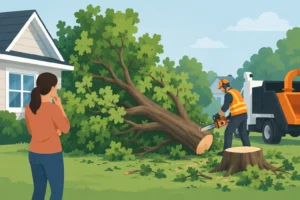
Removing a tree close to a house is not a backyard cutting project. Directional felling is often impossible when a tree is surrounded by roofs, fences, sheds, landscaping, and power lines. The work may require controlled dismantling in sections, rigging, specialized equipment, and a crew that knows how to protect the property below.
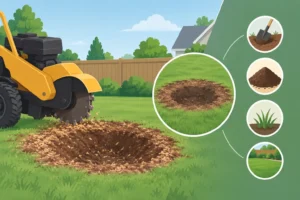
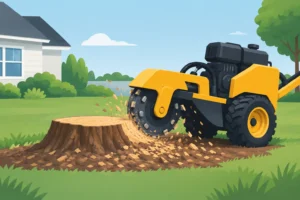
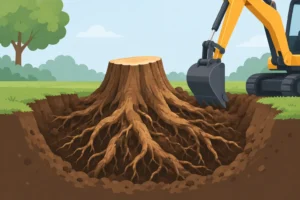
Insurance and experience matter just as much as equipment. A proper tree service evaluates access, identifies drop zones, protects lawns and hardscapes where possible, and removes brush and wood cleanly. If a stump is left in a future garden bed, lawn area, or construction zone, stump grinding and deeper root removal can restore usable space instead of leaving an obstacle behind.
For New Haven County property owners, Stumpbuster LLC brings arborist-led judgment to the decision before the cutting starts. Since 1985, the focus has been on safe removal, practical trimming, clean cleanup, and solutions that fit the property rather than a one-size-fits-all answer.
Frequently Asked Questions About Trees Near Homes
How close is too close for a tree to a house?
There is no single measurement that applies to every tree. A small ornamental tree may be fine several feet from a home, while a large-growing maple or oak needs much more room. Consider its mature canopy, root zone, branch structure, and whether limbs are directly over the structure.
Can trimming solve the problem instead of removing the tree?
Often, yes. Pruning can remove deadwood, improve clearance, reduce end weight on long limbs, and correct some structural issues. It cannot fix severe trunk decay, a failing root system, or a major split in a hazardous location.
Should a tree be removed before storm season?
If a tree already shows clear signs of failure, it is better to address it before high winds, heavy rain, or winter ice make access harder and damage more likely. A planned removal is safer and usually less stressful than an emergency call after a limb has landed on the roof.
A good tree decision protects more than the house. It protects the people using the driveway, the neighbors next door, and the yard you have worked to maintain. When a tree has you looking up every time the wind picks up, a professional assessment is a sensible next step.