A stump that sits a few inches above the lawn is more than an eyesore. It catches mower blades, gets in the way of landscaping, and leaves part of the yard unusable. So homeowners often ask, can you grind stump below grade? Yes – in many cases, you can grind a stump below ground level. The real question is how far below grade makes sense for your property, your plans for the area, and the root system left behind.
That distinction matters. Stump grinding is not always the same as full stump and root removal, and if you expect one result while hiring the other, you can end up disappointed.
Can you grind stump below grade and how deep?
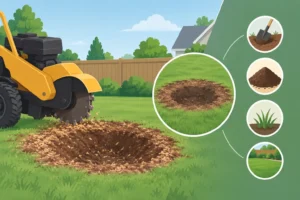
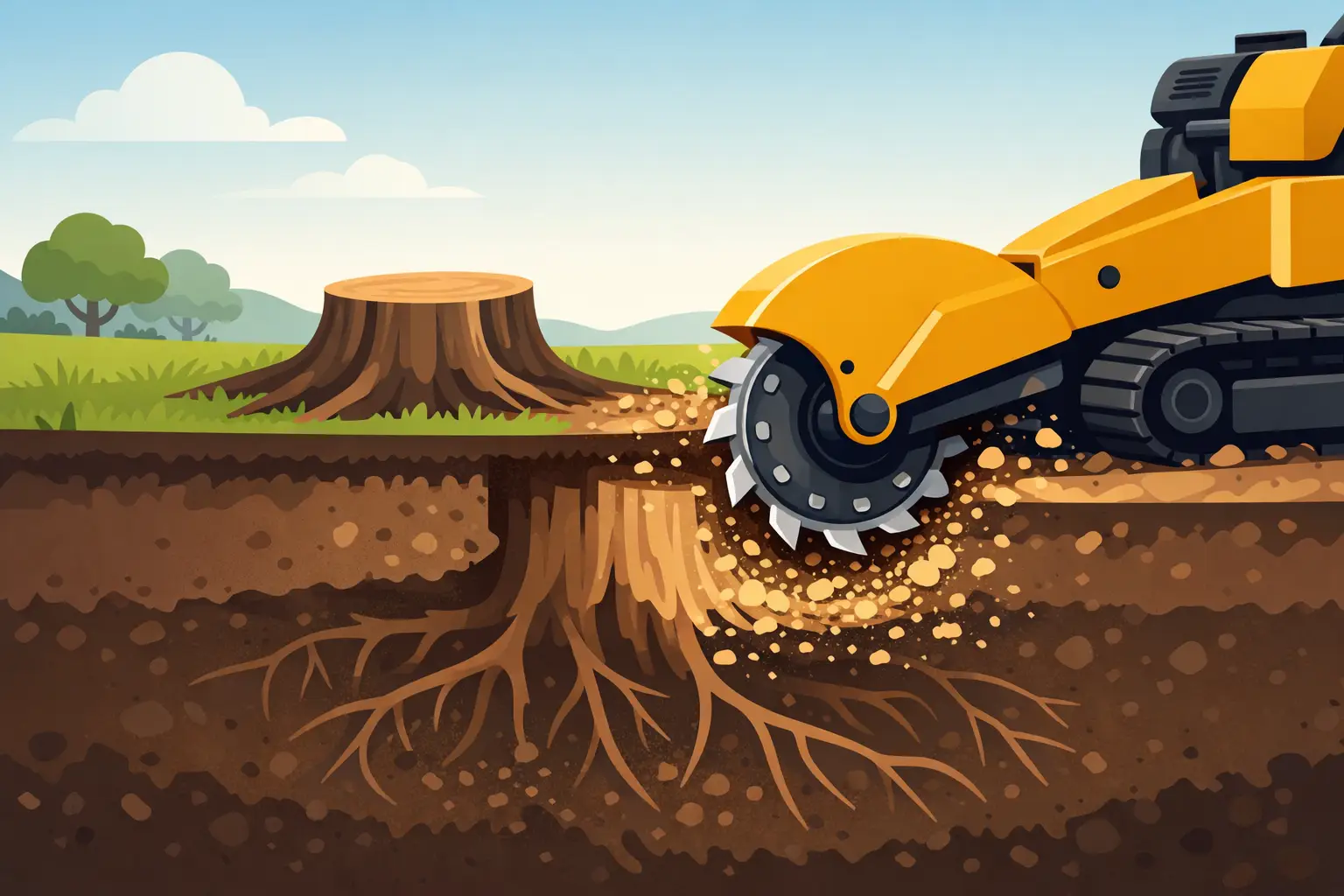
In most residential jobs, a stump can be ground several inches below grade, often deep enough to allow topsoil and grass to cover the area. For basic lawn restoration, that is usually enough. If the goal is simply to remove the visible stump, eliminate a tripping hazard, and reclaim the surface, below-grade grinding is the standard approach.
But depth is not one-size-fits-all. A stump near a patio, foundation, walkway, or new planting area may need a different approach than a stump in the back corner of a yard. Some customers want the stump gone so they can seed grass. Others want to install a fence, pour concrete, expand a driveway, or replant a tree. Those plans change how deep and how thoroughly the work should be done.
A professional operator will look at stump size, species, flare roots, surrounding grade, and access before deciding on the proper depth. Going deeper is possible, but deeper grinding also means more time, more debris, and sometimes more disturbance to the surrounding area.
What below-grade stump grinding actually does
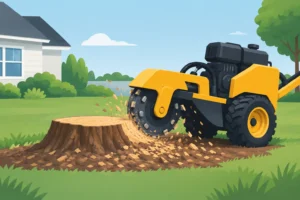
Stump grinding uses a machine to cut the stump into small wood chips below the soil line. That removes the main stump mass from sight and from the usable surface of the yard. It is efficient, cleaner than excavation, and usually less disruptive than digging the entire stump and root ball out with heavy equipment.
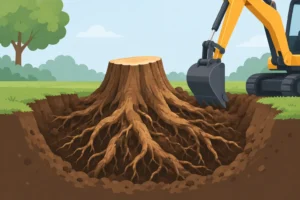
What it does not always do is remove every major root. Large structural roots often extend beyond the stump and remain in the ground unless the job specifically includes root removal. In many cases, that is fine. Those roots will break down over time. But if the area is being redeveloped or needs a clean base, leftover roots can still be a problem.
That is where experience matters. A contractor who handles stump work every day knows when standard grinding is enough and when the root system needs more attention.
When grinding below grade is usually enough
For many homeowners, below-grade grinding solves the problem completely. If you want the area leveled, covered with soil, and seeded back into lawn, this method is often the most practical choice. It removes the visible stump, improves appearance, and restores the space without tearing up the whole yard.
This is also a good fit when access is tight and large excavation equipment would damage the lawn, nearby beds, or hardscapes. In established neighborhoods across New Haven County, that matters. Mature trees are often close to homes, fences, sheds, and utility lines, so a controlled grinding process is usually the smarter option.
If the stump is in a general landscape area and you are not building over it, there may be no reason to chase every root. The stump gets cut down below grade, the surface gets cleaned up, and the yard becomes usable again.
When below-grade grinding may not be enough
There are situations where simply asking, can you grind stump below grade, does not go far enough. The better question is whether below-grade grinding will fully prepare the area for what comes next.
If you plan to build a shed pad, install a walkway, add a retaining wall, or replant in the exact same spot, remaining roots may interfere. As buried wood decomposes, it can create settling. In a lawn, minor settling is manageable. Under pavers, footings, or other finished surfaces, it is a bigger concern.
The same goes for aggressive root systems near driveways or foundations. Grinding the stump out of sight does not automatically eliminate root-related issues farther underground. If roots are lifting surfaces or occupying space needed for construction, a deeper and more targeted removal plan may be necessary.
That is why a good estimate should include more than stump diameter and price. It should address the intended use of the area afterward.
Depth depends on the job, not just the machine
Some people assume deeper is always better. Not necessarily. The right depth depends on what you are trying to accomplish.
For lawn use, a moderate below-grade grind is often the most cost-effective answer. For regrading or basic planting, that may still be enough if the area is properly backfilled. For construction or complete site redevelopment, deeper stump and root removal may be worth the extra work.
There is also the issue of underground conditions. Rocks, buried debris, utilities, irrigation lines, and compacted soil can affect how the work is done. An experienced crew will not promise a blanket depth without seeing the site. That is not hesitation. That is how careful contractors avoid property damage and deliver the right result.
The difference between stump grinding and root removal
This is where many property owners get caught off guard. Stump grinding removes the central stump to a certain depth. Root removal is a broader service that targets major roots beyond the stump itself.
If your only goal is to get rid of the stump and smooth the area, grinding may be all you need. If roots are surfacing in the lawn, interfering with a project, or running through a future work area, then a more complete removal process may be the better fit.
That difference is especially important with large hardwood stumps and older trees. The stump may disappear neatly below grade while substantial roots remain outside the immediate grind zone. On some jobs, that is acceptable. On others, it is not.
At Stumpbuster LLC, that kind of distinction matters because customers are not just paying to make a stump less visible. They are paying to make the space useful again.
What to expect after a stump is ground below grade
Once the stump is ground out, the hole is typically filled with a mix of grindings and loose material unless a different cleanup plan is part of the job. Many homeowners choose to have the area backfilled with soil and finished for seeding. That creates a cleaner final result and helps the yard recover faster.
You should also expect some settling over time, especially if wood chips remain in the cavity. That is normal. As organic material decomposes, the area may sink a bit and need additional topsoil. It is not usually a major issue, but it should be expected.
If the area is going to stay as lawn, this is manageable. If the area is going to support a structure or finished hardscape, that is one more reason to talk through the full plan before the stump is removed.
Choosing the right contractor for below-grade stump grinding
Not every tree contractor approaches stump work with the same level of care. The machine matters, but the operator matters more. Proper depth, clean edges, protection of nearby surfaces, and realistic expectations all come down to experience.
A licensed arborist-led company brings added value because stump work is connected to the bigger picture of tree health, root behavior, site conditions, and property safety. That is especially important when stumps sit close to desirable trees, homes, utilities, or landscape features.
You want a contractor who asks what you plan to do with the area next, explains whether grinding alone is enough, and is honest when root removal would serve you better. That kind of straightforward guidance saves time and money.
If you are looking at an old stump and wondering whether it can be taken below grade, the answer is usually yes. The better move is to make sure the work matches the result you actually need. A quick conversation now can spare you from rework later and leave you with a cleaner, safer, more usable yard.