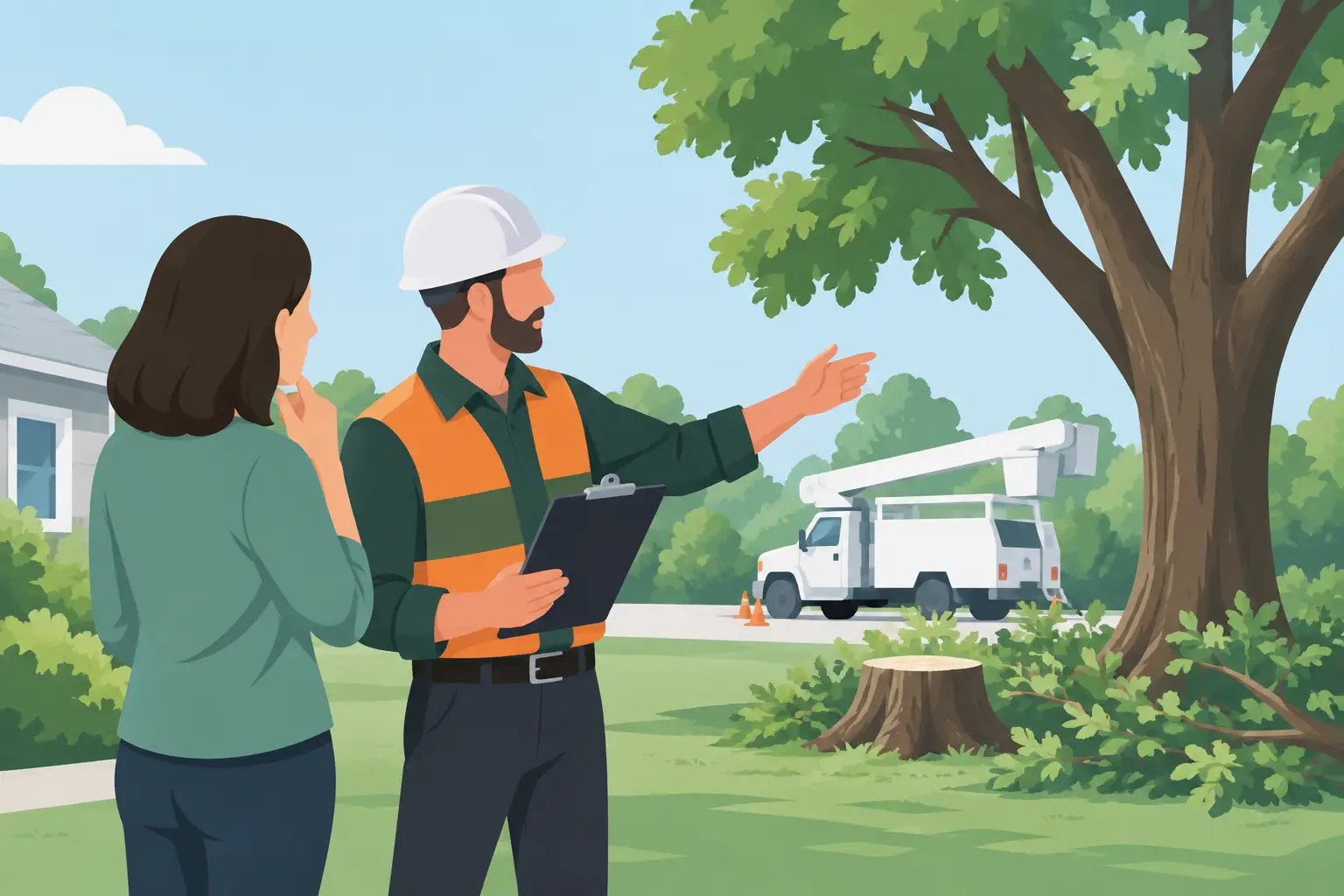
A tree can look manageable from the ground and still present a serious problem overhead. A dead limb above a driveway, a leaning trunk near a roof, or roots lifting a walkway all deserve a professional look before conditions get worse. Getting a tree removal estimate gives you more than a price. It gives you a clear plan for removing the risk without causing new damage to your property.
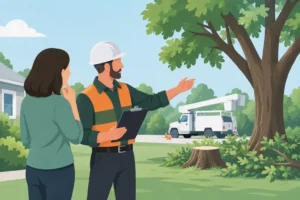
For homeowners and property managers in New Haven County, the best estimates begin with an on-site evaluation. Every yard has different access, obstacles, tree conditions, and cleanup needs. A qualified tree crew should take the time to see the whole job before naming a number.
Getting a Tree Removal Estimate Begins On Site
A tree removal estimate should be based on the actual tree, its location, and the work required to bring it down safely. Photos can be helpful for an initial conversation, especially if a branch has fallen or a tree is visibly damaged. But photos often leave out the details that determine how a job must be handled.
During an on-site visit, an experienced arborist or estimator will look at the tree’s size, species, health, lean, canopy spread, and structural condition. They will also consider what sits beneath it. A tree over open lawn is a very different removal from the same tree hanging over a house, fence, garage, pool, utility line, or neighbor’s property.
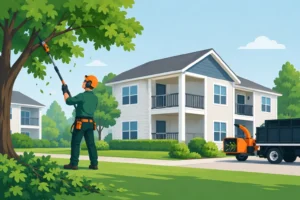
The goal is not to make the job sound complicated. It is to understand the safest way to complete it. Some trees can be felled in one controlled direction. Others must be dismantled piece by piece with climbing equipment, ropes, a bucket truck, or a crane. The method affects labor, equipment, time, and cost.
What Changes the Cost of Tree Removal?
There is no honest flat rate for every tree. Two trees of similar height can require very different levels of work. A clear estimate explains the factors behind the price rather than leaving you to guess.
Tree size is usually the first consideration. Taller, wider trees have more wood to manage and require more time to cut, lower, chip, and haul away. Large mature trees common across Hamden, North Haven, Wallingford, Branford, and Guilford often need a carefully coordinated crew, particularly when they stand close to older homes or tight property lines.
Condition matters just as much. A healthy tree can often support a climber and rigging system. A dead, decayed, split, or storm-damaged tree may be less predictable and more hazardous to work in. Hidden rot, hollow sections, hanging limbs, and weak unions can change the removal approach. That added caution is not an upsell. It is part of doing dangerous work responsibly.
Access is another major factor. Can equipment reach the tree from the driveway or street? Is there a narrow gate, steep slope, stone wall, landscaped bed, or soft ground between the crew and the work area? Limited access may mean more climbing and hand carrying. Good access can reduce labor, but crews still need room to work without damaging lawns, paving, or plantings.
Nearby utilities require special attention. Trees growing into or close to electric lines should never be treated as ordinary removals. Utility clearance work has specific safety requirements, and the appropriate party may need to be involved before trimming or removal begins. If a tree is actively touching power lines, stay clear and contact the utility company right away.
Make Sure the Scope Is Clear
A low number is not automatically a good estimate. Before comparing bids, make sure each company is pricing the same work. One contractor may quote only the tree removal, while another may include hauling, brush chipping, log removal, stump grinding, and final cleanup.
Ask whether the estimate includes cutting the tree to ground level, removing all debris, and raking the work area. If the tree is large, ask what will happen to the wood. Some property owners want logs left for firewood, while others want the entire site cleared. Either choice can be reasonable, but it should be stated before the work begins.
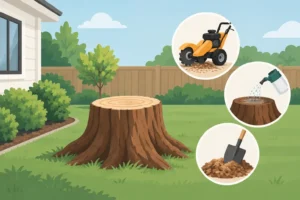
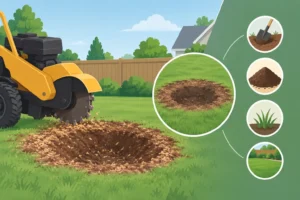
Stump removal is usually separate from tree removal, and for good reason. Removing the visible trunk leaves the stump and root system in place. Stump grinding removes the stump below grade and produces wood chips, while deeper root removal may be needed when roots interfere with a planned patio, lawn restoration, fence, driveway, or new planting area.
This is where the intended use of the yard matters. If you only want to eliminate a tripping hazard, stump grinding may be the practical choice. If you are preparing the area for construction or need to remove troublesome roots, ask whether deeper excavation is appropriate. Stumpbuster LLC uses its Plowrake system when a cleaner, more complete root removal is needed, but not every property requires that level of work.
Questions Worth Asking Before You Hire
Tree work involves heavy equipment, elevated cutting, falling wood, and real liability. A professional contractor should be comfortable answering direct questions about how the work will be handled.
Ask whether the company is fully insured and whether the crew has experience with trees like yours. You can also ask who will be overseeing the job, how nearby structures will be protected, and whether permits or local approvals may apply. Rules can vary by town, especially for trees near public roads, wetlands, historic districts, or shared property boundaries.
It is also reasonable to ask about the schedule and what conditions might delay the work. High winds, lightning, frozen ground, saturated lawns, and active utility issues can affect timing. A dependable company will not promise unsafe work just to fit a calendar date.
Be cautious with estimates that are rushed, vague, or offered without seeing the tree. You should be able to understand what is included, what is excluded, and why the recommended approach makes sense. The cheapest quote may leave you with debris, an unaddressed stump, property damage, or a crew that is not equipped for the job.
Help the Estimate Go Smoothly
You do not need to prepare the yard like a job site before an estimator arrives. A few simple details can make the visit more productive. If possible, point out any concerns you have noticed, such as cracks in the trunk, branches over the roof, mushrooms at the base, recent changes in leaf growth, or roots affecting pavement.
Let the estimator know about underground features near the tree, including irrigation lines, invisible pet fences, septic components, landscape lighting, or drainage systems. Marking those features does not replace utility locating, but it helps the crew plan around known property details.
If access is through a locked gate or shared driveway, make arrangements in advance. For commercial properties, identify the best time to inspect the site and any areas that must remain open for customers, deliveries, or emergency access. Clear communication before the job reduces surprises on removal day.
When to Request an Estimate Right Away
Some tree concerns can wait for a scheduled inspection, while others need quick action. Call for professional help promptly if a tree has suddenly leaned, cracked, partially fallen, lost a major limb, or shifted after a storm. The same is true if roots are lifting a structure or if decay has created a visible cavity near the base of a large tree.
Do not try to pull down a hung-up limb, cut a storm-damaged tree yourself, or climb to inspect a problem area. Trees under tension can move unexpectedly, and damaged branches can fall without warning. Keep people, vehicles, and pets out of the area until the hazard has been assessed.
A well-prepared estimate gives you a practical decision point: what needs to happen now, what can be planned, and what level of cleanup will leave your property in good shape. The right crew will treat your yard, your structures, and your safety as part of the same job – because they are.