The tree is down, the crew is gone, and now you are looking at the spot thinking, what to do after tree removal so the yard does not stay half-finished for months. That next phase matters more than many property owners expect. A removed tree can leave behind a stump, surface roots, a low spot in the lawn, compacted soil, sawdust, and new questions about drainage, replanting, and safety.
The right next step depends on why the tree was removed in the first place. If it came down because it was dead, storm-damaged, too close to the house, or causing root problems, the work is not always over when the trunk is hauled away. In many Connecticut yards, especially older properties with mature trees, the real goal is not just removal. It is getting the space back clean, level, safe, and usable.
What to do after tree removal right away
Start with a close look at the area. Fresh tree removal sites often have more going on than homeowners notice at first glance. There may be exposed roots, wood chips mixed into the soil, tire marks from equipment, or branches and debris that settled into nearby beds. If the tree was removed near a driveway, fence, patio, or foundation, check those areas too.
This is also the time to think about access and safety. A stump can become a trip hazard. Hidden roots can interfere with mowing. If the tree was removed because of disease or decay, leftover wood material may not be something you want sitting in place for long. A clean site inspection gives you a better idea of whether you just need finish work or whether you need stump grinding, root removal, grading, and lawn repair.
If you have children, pets, or regular foot traffic in that part of the yard, do not leave the area rough longer than necessary. Small hazards turn into everyday annoyances fast.
Decide whether the stump should stay or go
Some people assume a stump is harmless if it is cut low. Sometimes that is true for a remote wooded edge. In a lawn, near a walkway, or in a space you actually want to use, keeping the stump usually creates more problems than it solves.
A stump can attract insects, get in the way of mowing, and continue to send up sprouts depending on the tree species. It also limits what you can do with the area later. If you plan to seed grass, expand a planting bed, install a fence, or reclaim yard space, the stump is usually the next thing that needs attention.
Stump grinding vs. full root removal
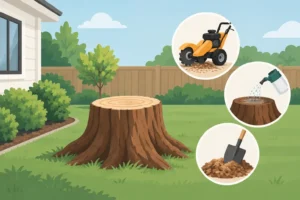
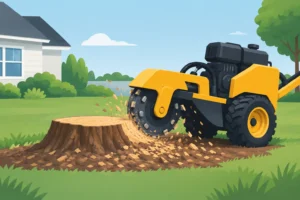
Stump grinding is the most common next step. It removes the visible stump below grade so the area can be covered with soil and restored. For many yards, that is enough.
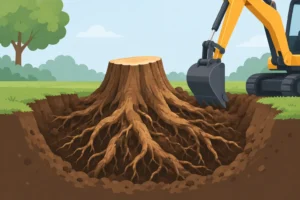
Full root removal is a bigger decision. It makes sense when roots are surfacing through the lawn, interfering with future construction, affecting nearby hardscapes, or preventing you from truly reclaiming the area. This is especially relevant on older properties where root systems have spread under turf, near driveways, or around foundations. In those cases, a deeper extraction method can make a major difference in how usable the space becomes.
The trade-off is simple. Grinding is quicker and less invasive. Root removal is more thorough, but it is also more involved. The right choice depends on your plans for the space.
Deal with the wood chips and grindings properly
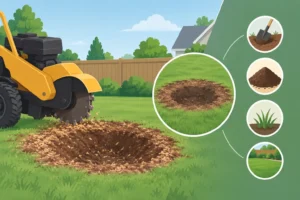
After stump grinding, you will usually be left with a pile or layer of wood chips mixed with soil. That material should not always be treated like topsoil. Fresh grindings break down over time, and as they decompose, they can affect the way the area settles and the way grass grows.
If your goal is a clean lawn, most of the grindings should be removed or reduced before adding good soil. A thin amount can sometimes be worked into surrounding landscape beds, but packing a planting or lawn area full of woody material is asking for a weak finish. You may get sinking, patchy growth, or a spot that stays soft and uneven.
If you are replanting with shrubs or rebuilding a bed, those chips may be useful elsewhere on the property. If you are trying to create a stable grass area, cleaner fill and topsoil usually give a better result.
Watch for roots that keep causing problems
A common mistake after tree removal is assuming the root issue disappears with the trunk. It does not always happen that way. Large surface roots can remain for years. Some species send up suckers. In tighter residential lots, leftover roots can continue interfering with mowing, edging, patios, and future planting.
This is one of those situations where it depends on the site. If the roots are deep and not affecting anything, they may simply decay over time. If they are shallow, exposed, or tied into the exact reason the tree was removed, they should be addressed directly.
Signs root removal may be worth it
You should take a closer look if the lawn still has raised ridges, if roots are visible above grade, if the space feels unusable, or if you are planning a project in the same area. Root removal can also help where previous stump grinding did not go far enough to truly restore the site.
For homeowners who want the area to look finished, not just improved, this is often the difference between a partial fix and a complete one.
Repair the soil before you think about replanting
Tree removal equipment, especially on wet ground, can compact soil. Stump work can also leave behind a mix of native soil, sawdust, and disturbed subgrade. If you want grass, planting beds, or a new tree to succeed, the soil needs attention first.
Start by checking grade and firmness. If the area is low, add clean fill where needed and finish with quality topsoil. If the ground is compacted, loosening the top layer can help roots establish later. This matters whether you are seeding, sodding, or planting.
Do not rush to plant a new tree exactly where the old one stood unless the site has been properly prepared. Leftover roots, poor soil structure, and decay below grade can all affect the new planting. In many cases, planting slightly off-center from the original spot is the better move.
Think about drainage before restoring the lawn
Removing a tree changes more than the view. It can change how water moves across the property. A stump hole, a depression from grinding, or disturbed grade around the work area can create puddling where there was none before.
That is why one of the smartest answers to what to do after tree removal is simply this: pay attention after the next hard rain. If water collects in the area, it is easier to correct grading before grass is established than after. On properties with slope, heavy clay, or compacted sections, a minor drainage issue can become a recurring headache.
A level-looking yard is not always a properly draining yard. Good finish work should account for both.
Decide whether to replant or reclaim the space
Not every removed tree should be replaced with another tree in the same location. Sometimes the best outcome is open lawn, a planting bed, or a better buffer around the house, driveway, or utility lines.
If the original tree was too close to a structure, overshadowed the yard, dropped heavy debris, or had roots causing trouble, replanting the same way can recreate the same problem years down the road. A better option may be selecting a smaller species and placing it farther from foundations, walks, septic areas, and overhead lines.
If your main goal is usable space, then reclaiming the area with lawn may make the most sense. If curb appeal and shade are priorities, a well-placed replacement tree can be the right investment. The key is matching the next step to how you actually use the property.
What to do after tree removal if the yard still looks unfinished
Sometimes the tree work itself is done well, but the property still feels rough. That usually comes down to the details – leftover chips, shallow roots, uneven grade, thin grass cover, or disturbed edges around beds and hardscapes. Those finishing issues are what make a yard look like a job site instead of a maintained property.
This is where experienced follow-through matters. Arborist-led companies tend to look at the whole site, not just the trunk that came down. That matters on residential properties in places like North Haven, Hamden, Branford, Guilford, and surrounding New Haven County towns, where mature trees often sit close to homes, garages, stone walls, and long-established landscaping.
If the area needs more than a basic cleanup, say so early. It is easier to plan for stump grinding, deeper root removal, or final grading right away than to revisit the same spot months later after the problems become more obvious. Companies with the right equipment can often restore the site more completely than a general contractor who only handles the removal itself. That is one reason many local property owners call Stumpbuster LLC when they want the area truly cleared and usable.
A removed tree should leave you with a safer property, not a half-solved mess. If the next step gets the ground stable, clean, and ready for the way you use your yard, the job is finally doing what it was supposed to do.