A cracked walkway is one thing. A root pushing toward your house is another. When homeowners need to remove roots near foundation areas, the real question is not just how to cut them out. It is how to solve the problem without trading one risk for another – damage to the house, damage to the tree, or both.
Roots near a foundation can cause trouble in a few different ways. Sometimes they lift sidewalks, patios, or front steps and create a trip hazard right next to the home. Sometimes they grow into planting beds, drainage lines, or hardscape and make routine maintenance harder than it should be. In other cases, the concern is less about direct pressure and more about what the root system is doing underground around old masonry, existing cracks, or damp soils.
That is why root removal near a house should never be treated like a quick shovel-and-saw job. The right approach depends on the tree species, the size of the root, how close it is to the structure, and whether the tree is healthy enough to tolerate cutting.
When roots near a foundation are actually a problem
Not every root close to a house is damaging the foundation. That distinction matters. Homeowners often see a large surface root and assume it is breaking concrete below grade, when the real issue may be settling soil, poor drainage, or an older foundation wall that already had weaknesses.
Still, some root systems do create real problems. Large woody roots can displace pavers, edge against retaining walls, and crowd utility trenches. Fast-growing trees planted too close to the home can make the area around the foundation harder to manage, especially if the roots are spreading into narrow side yards, foundation plantings, or driveways.
If you are seeing heaving, cracking, soil movement, blocked access, or roots exposed along the home, it is worth having the situation evaluated before you start cutting. Once major roots are removed, there is no putting them back.
Remove roots near foundation or remove the tree?
This is where experience matters. In some cases, selective root removal is enough to restore usable space and reduce pressure around the house. In others, the roots are only part of the problem because the tree itself is too close, too large, or already in decline.
Cutting roots without looking at the whole tree can create a new hazard. If too much of the structural root system is removed on the house side, the tree may become unstable. That risk goes up with mature trees, trees with existing lean, or trees growing in wet Connecticut soils where anchoring can already be compromised.
There is also the tree health side of it. Roots supply water and nutrients. Remove too many, especially larger support roots, and the canopy can start thinning, decline can set in, or the tree can die back over time. Homeowners sometimes expect an immediate answer, but the honest answer is often, it depends. A smaller ornamental tree may tolerate targeted cuts. A large maple or oak close to the home may need a more cautious plan.
Why DIY root cutting near a house goes wrong
The most common mistake is cutting first and asking questions later. A homeowner sees one visible root, rents a saw, and starts severing anything they can reach. That can leave hidden roots jagged, unsupported, and open to decay. It can also disturb grade around the house in ways that worsen drainage.
The second problem is access. Working tight to a foundation is not like digging in the back corner of a yard. There may be irrigation, utility lines, old drain tile, invisible landscape lighting, or shallow footings nearby. Even if the cut itself looks simple, the area around it rarely is.
Then there is cleanup. Root removal is messy, heavy work. Once large roots are exposed and cut, they still need to be extracted cleanly without leaving a rough trench next to the home or a patchwork yard that settles later.
The safer way to remove roots near foundation areas
A professional approach starts with identifying the source tree, the root size, and the likely role those roots play. Arborist-led root work is not just about removal. It is about deciding what can be removed, how much can be removed, and what method gives you the cleanest result with the least risk.
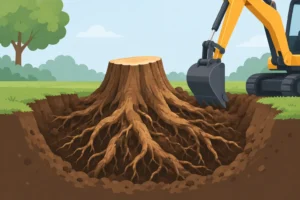
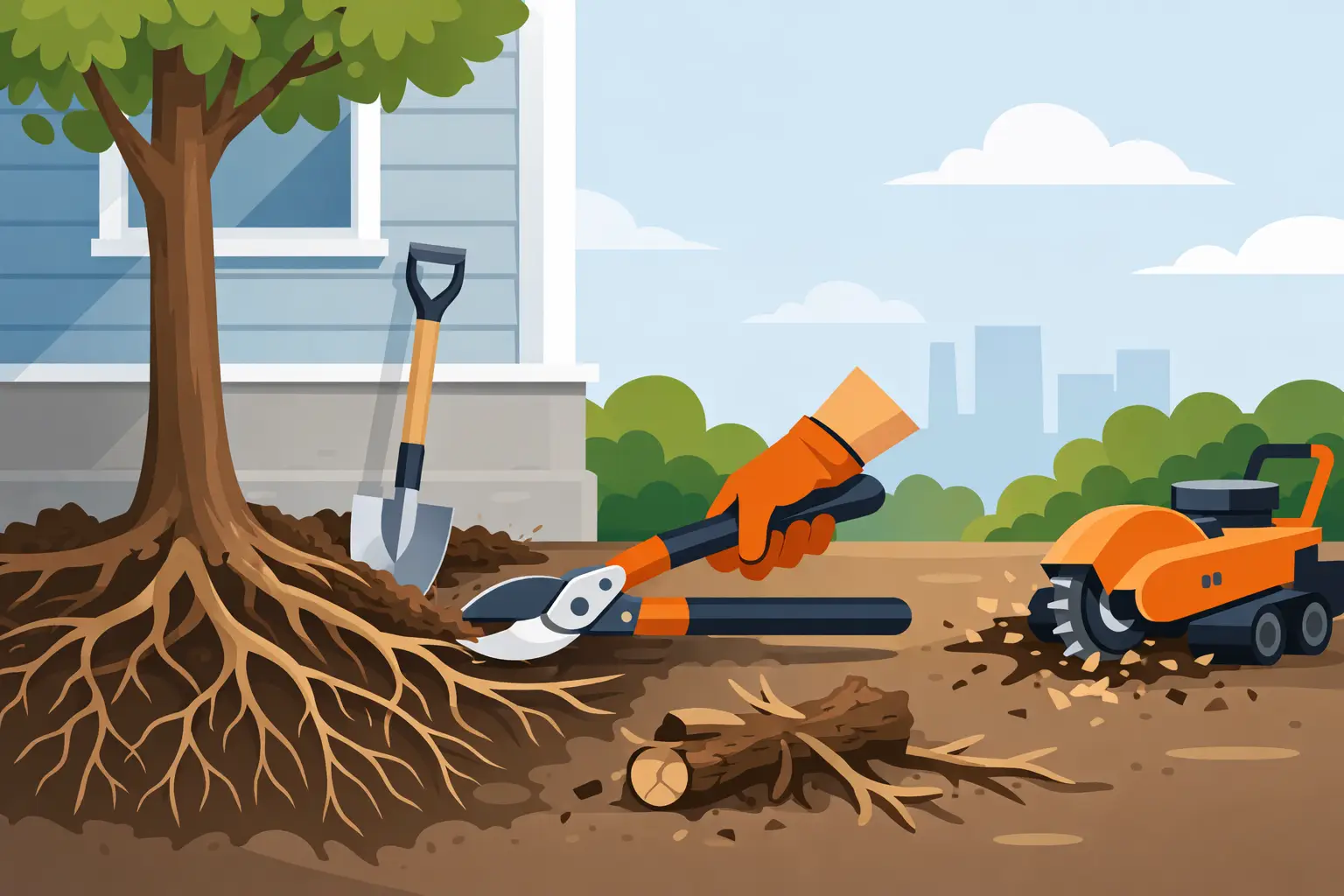
In many cases, the process begins with careful excavation rather than aggressive digging. Exposing the root path helps determine whether the root is crossing toward the structure, lifting hardscape, or simply running parallel along the surface. That alone can change the plan.
Once the roots are exposed, targeted cutting can be done with attention to spacing, depth, and tree stability. Smaller feeder roots are one thing. Major structural roots are another. A trained crew knows the difference and knows when the safer recommendation is partial removal, root pruning, or full tree removal instead.
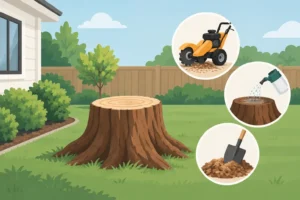
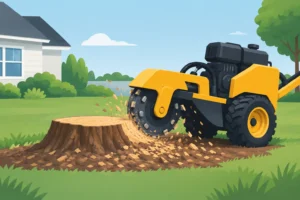
For stumps and deeper root systems, specialized equipment makes a big difference. Standard digging and grinding methods do not always reach cleanly into problem areas, especially where old stumps or thick lateral roots continue to interfere with yard use. That is one reason companies with dedicated root removal capability, including deeper extraction systems, can often deliver a cleaner result than a general tree contractor.
What to expect during root removal near a home
Homeowners usually want to know two things – will my house be safe, and what will my yard look like after the job is done?
A proper root removal job should protect both. The work area should be controlled carefully to avoid scraping siding, damaging foundation plantings unnecessarily, or tearing up more lawn than needed. If excavation is required, the operator should work with clear awareness of the foundation edge and nearby buried obstacles.
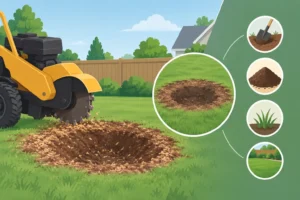
After removal, the area should be left clean and usable. Depending on the depth and scope of the work, that may involve backfilling, grading, and restoring the disturbed area so it does not become a drainage problem later. Good cleanup is not an extra. It is part of doing the job right.
Signs you should call for an estimate now
If a root is lifting a walkway near your front door, pushing into your driveway edge, crowding the side of the house, or making a narrow access route unsafe, it is time to get it looked at. The same goes for exposed roots around older homes, especially where there are existing cracks, water issues, or limited clearance between mature trees and the structure.
You should also call if a previous stump was ground but roots keep surfacing and causing problems. Surface grinding often leaves deeper root material behind. That can be enough for some jobs, but not for all of them.
In New Haven County, many properties have mature trees planted decades ago, when no one was thinking about today’s foundation plantings, additions, or paved areas. As those root systems expand, the conflict with the house becomes more obvious. Early action is usually simpler and less expensive than waiting until hardscape or access is badly affected.
Choosing the right contractor for foundation root work
This is not the place to hire the cheapest guy with a chainsaw and a pickup. Root work near a foundation calls for insurance, experience, and a crew that understands both tree biology and property protection.
Ask whether the company evaluates tree stability before cutting major roots. Ask how they handle cleanup and restoration. Ask whether they have experience with deeper stump and root extraction, not just surface-level grinding. Those details matter when the work is being done a few feet from your home.
Stumpbuster has been doing this kind of work in the New Haven area since 1985, with licensed arborist oversight and specialized root removal equipment designed to get cleaner results where standard methods fall short. That kind of experience matters most when there is no room for guesswork.
If roots near your house are starting to affect safety, access, or peace of mind, do not wait for the problem to spread. The best next step is a professional evaluation that looks at the tree, the structure, and the ground conditions together. A careful plan now can save you from bigger repairs later.