A limb hanging over your roof is not the time to guess who knows what they’re doing. Tree work can look simple from the ground, but once weight, decay, power lines, and property damage are part of the job, experience matters fast. That is where a tree service with arborist oversight makes a real difference.
For homeowners and property managers in New Haven County, the question usually is not whether a tree needs attention. It is whether the work will be done safely, cleanly, and with the right judgment. A qualified arborist brings more than a chainsaw crew. You get someone trained to assess tree health, structural risk, pruning needs, removal options, and the effect that work will have on the rest of your property.
What a tree service with arborist support really means
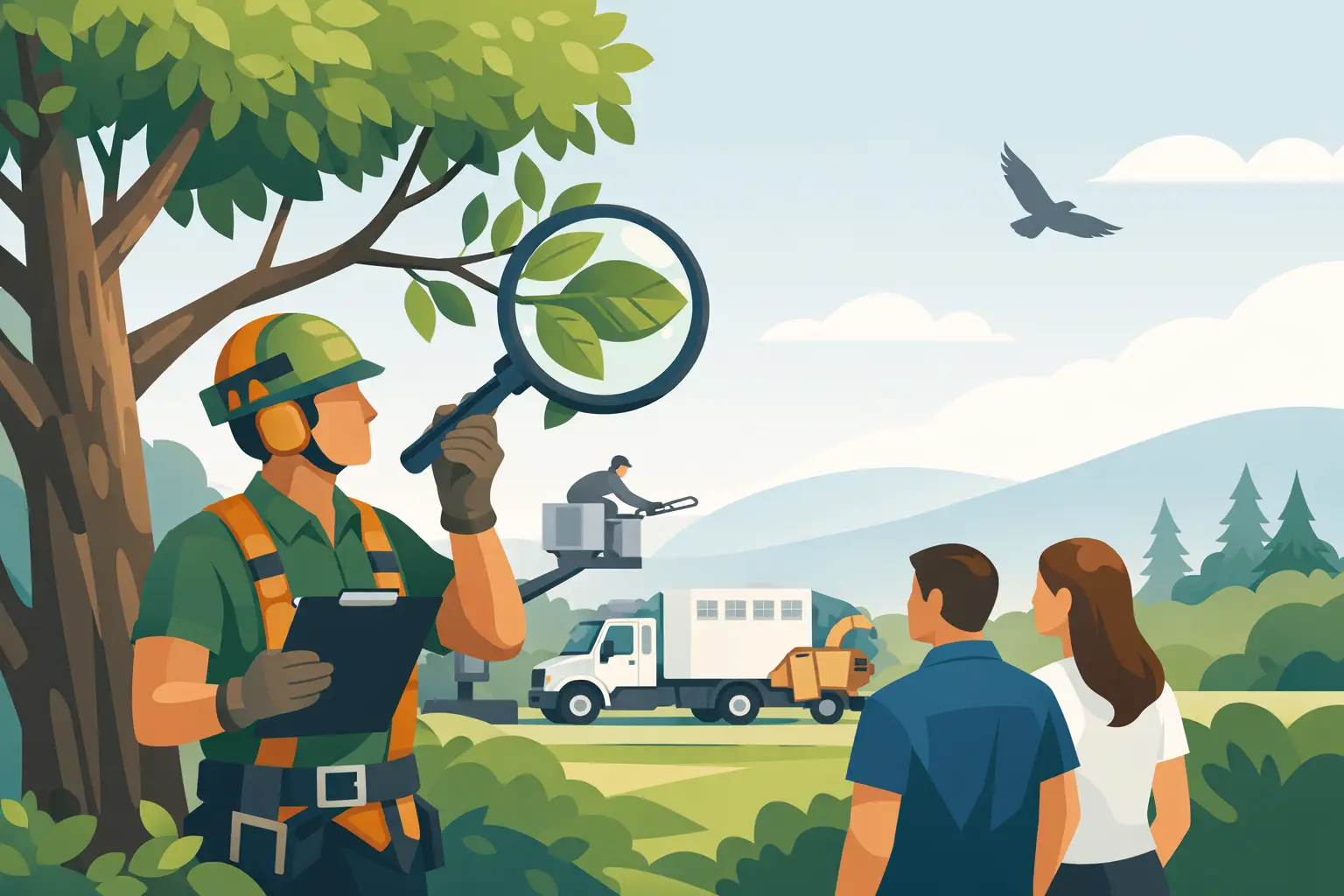
Not every tree company works from the same level of knowledge. Some crews are set up to cut and haul. A tree service with arborist support adds another layer – diagnosis, planning, and decisions based on tree biology, site conditions, and long-term property impact.
That matters when the answer is not obvious. A tree may look dead but still be stable. Another may look healthy while hiding internal decay. Large roots might be lifting a walkway, while stump remnants continue to spread underground. In those situations, the work should not start with equipment. It should start with a proper evaluation.
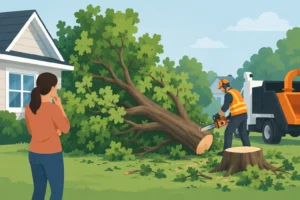
An arborist-led service also helps sort out whether trimming is enough or removal is the safer call. Sometimes selective pruning can reduce risk and preserve a mature tree. Other times, delayed action only raises the chance of storm failure, structural damage, or emergency removal at a much higher cost.
Why arborist judgment matters on residential properties
Most property owners are dealing with real-world issues, not textbook tree care. A branch is scraping the house. A maple is crowding the driveway. Roots are taking over a lawn area that used to be usable. A stump has been left behind for years and keeps causing problems.
In those cases, arborist judgment helps connect the visible problem to the right solution. If the canopy is too heavy on one side, pruning may improve balance and reduce failure risk. If a tree is declining from the base, trimming will not solve the problem. If roots are shallow and spreading into a landscape bed or hardscape area, stump grinding alone may not be enough.
This is where many property owners get frustrated. They hire a contractor for one piece of the problem, only to find out later that the roots are still in the way, the cleanup was incomplete, or the tree should have been removed in the first place. Arborist oversight helps avoid that kind of half-finished result.
Tree trimming, removal, and stump work are not separate issues
A healthy property usually depends on treating tree problems as connected. Trimming affects structure. Removal affects the surrounding soil and access. Stump grinding affects future yard use. Root removal affects grading, planting, mowing, and even drainage in some cases.
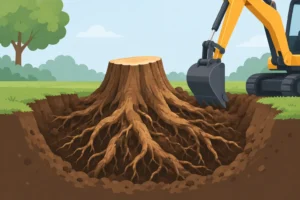
That is why a good tree service with arborist experience looks at the full picture. If a tree comes down but the stump and roots remain in the middle of the yard, you may still be left with an obstacle that limits use of the space. If roots are close to the surface or continue past the stump, they can keep interfering with lawn care, new landscaping, or planned construction.
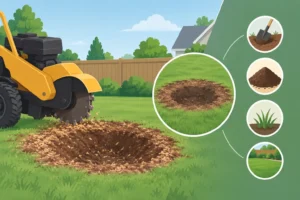
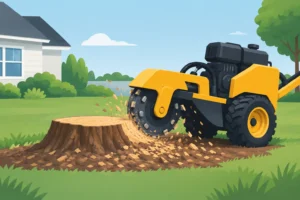
On some properties, basic stump grinding is enough. On others, deeper and cleaner extraction is the better choice, especially when the goal is to fully reclaim the area. That is one reason some local property owners choose Stumpbuster LLC – the company combines licensed arborist leadership with specialized root removal capability for tougher jobs where surface-level work is not enough.
When trimming makes sense and when it does not
Homeowners often hope trimming will solve everything because it sounds less disruptive than removal. Sometimes it does. Crown reduction, deadwood removal, and corrective pruning can improve safety, appearance, and tree health when the tree itself is sound.
But trimming is not a cure-all. If the trunk is compromised, the root system is failing, or the tree is growing in a location that creates ongoing risk to a house, garage, driveway, fence, or utility area, pruning may only buy time. In those cases, an arborist can explain whether the tree is still worth preserving or whether removal is the more responsible move.
That kind of honesty matters. Property owners do not need guesses or sales pressure. They need clear recommendations based on what the tree is actually doing and what the site can safely support.
Why insurance, equipment, and cleanup still matter
Arborist knowledge is a major advantage, but it should come with professional execution. Tree work is high-risk work. The company you hire should be insured, equipped for the job, and prepared to protect surrounding structures, driveways, lawn areas, and nearby plantings as much as possible.
Cleanup is part of that standard. A job is not done just because the trunk is on the ground. Brush, wood, sawdust, and stump debris affect how the property looks and how quickly you can use the area again. The difference between a rough contractor and an experienced service company often shows up after the cutting stops.
For commercial sites, that matters even more. Businesses, associations, and property managers need work completed efficiently and safely, with minimal disruption and a site that is left presentable. An arborist-led tree service helps keep the job organized from assessment through final cleanup.
Local experience counts in New Haven County
Tree care is never completely generic. The age of local neighborhoods, the mix of mature trees, storm exposure, tight lot lines, stone walls, older driveways, and proximity to homes all change how work should be handled.
A company that has worked in towns like North Haven, Hamden, West Haven, Branford, Guilford, and Wallingford has likely seen the same property challenges before. That local experience helps with access planning, equipment selection, and practical decision-making on older residential lots where there is little room for error.
It also helps with expectations. Local customers usually want the same things – a fair estimate, straight answers, safe work, and a clean finish. They want to know whether the tree can stay, whether it should come down, and what the property will look like when the job is done.
How to choose the right tree service with arborist experience
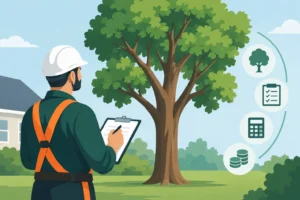
Start by asking how the company evaluates the tree, not just how fast they can cut it. You want to hear about condition, risk, location, and whether trimming or removal is actually the better fit. That tells you whether they are thinking beyond the immediate job.
Then ask about insurance, cleanup, stump options, and root removal if reclaiming the area matters to you. A lot of disappointment happens after removal, when the stump is still there and the ground is still not usable.
Finally, look at track record. Years in business do not guarantee quality by themselves, but they do say something when a local company has built its reputation over decades. Tree work is one of those services where consistency, judgment, and accountability are hard to fake.
The real value is fewer mistakes
The biggest benefit of hiring a tree service with arborist support is not just better tree care. It is avoiding the wrong call. Removing a tree that could have been saved costs money and changes the property permanently. Leaving a tree in place when it is structurally unsafe can cost far more.
That is why this kind of service matters. You are not only paying for labor. You are paying for informed judgment, safer execution, and results that hold up after the crew leaves.
If you have a tree that looks questionable, limbs getting too close to the house, or a stump and root system that still make part of your yard unusable, it is worth getting a professional opinion before the problem gets more expensive. The right advice at the start usually saves time, money, and trouble later.