A root running across the lawn can turn a routine mowing job into a mess fast. It catches blades, lifts the turf, creates trip hazards, and can start pushing at sidewalks or edging. If you’re trying to figure out how to remove surface roots, the right approach depends on why the roots are exposed, how large they are, and how close they sit to the tree.
In some cases, surface roots can be trimmed or removed with little impact. In others, cutting the wrong roots can weaken a tree, affect its health, or create a stability problem that shows up in the next big storm. That is why root work should always start with the tree, not just the root.
Why surface roots show up in the first place
Surface roots are common, especially around mature trees. Many species naturally grow shallow root systems, and roots often rise to the top when soil is compacted, erosion has reduced the grade, or the tree is searching for oxygen and moisture near the surface.
Maples, beeches, poplars, and some oaks are known for producing roots that travel close to the top of the soil. In older New Haven County neighborhoods, where mature trees and tight yard spaces are common, that can mean roots crossing lawns, reaching under driveways, or interfering with planting beds.
The presence of a surface root does not automatically mean something is wrong with the tree. It does mean you need to be careful. A root that is annoying in the yard may still be doing important structural work for the tree.
How to remove surface roots without causing bigger problems
The first step is to identify whether the root belongs to a tree you want to keep. If the root is attached to a tree that is healthy and worth preserving, avoid cutting blindly. As a general rule, the closer a root is to the trunk and the larger its diameter, the more risk there is in removing it.
Small roots that are well away from the base of the tree may sometimes be pruned cleanly. Large roots near the trunk are a different story. Removing those can reduce water uptake, open the tree to decay, and affect stability. If the tree is already stressed, even moderate root loss can push it further.
Before doing any cutting, expose the root and inspect the area. Clear away grass and loose soil so you can see where the root runs and how large it is. If multiple roots are surfacing in the same area, that may be a sign of a broader root flare or shallow root system, not just a single problem root.
Start with the least invasive option
In many yards, the best fix is not removing the root at all. Adding a thin layer of topsoil over minor exposed roots and reestablishing grass can improve appearance, although you do not want to bury roots too deeply. A light mulch bed around the tree is often a better option if mowing is the main problem. It protects the roots, reduces turf competition, and gives the tree more breathing room.
If the root is lifting a walkway or creating a hazard, grinding or shaving concrete, rerouting a hardscape edge, or adjusting the landscape design may be safer than cutting the root. That may not be the answer every property owner wants, but it is often the answer that protects the tree.
When cutting a surface root makes sense
If a root is clearly causing damage or making part of the property unusable, selective cutting may be appropriate. This usually applies to smaller roots that are not major structural anchors and are far enough from the trunk to reduce risk.
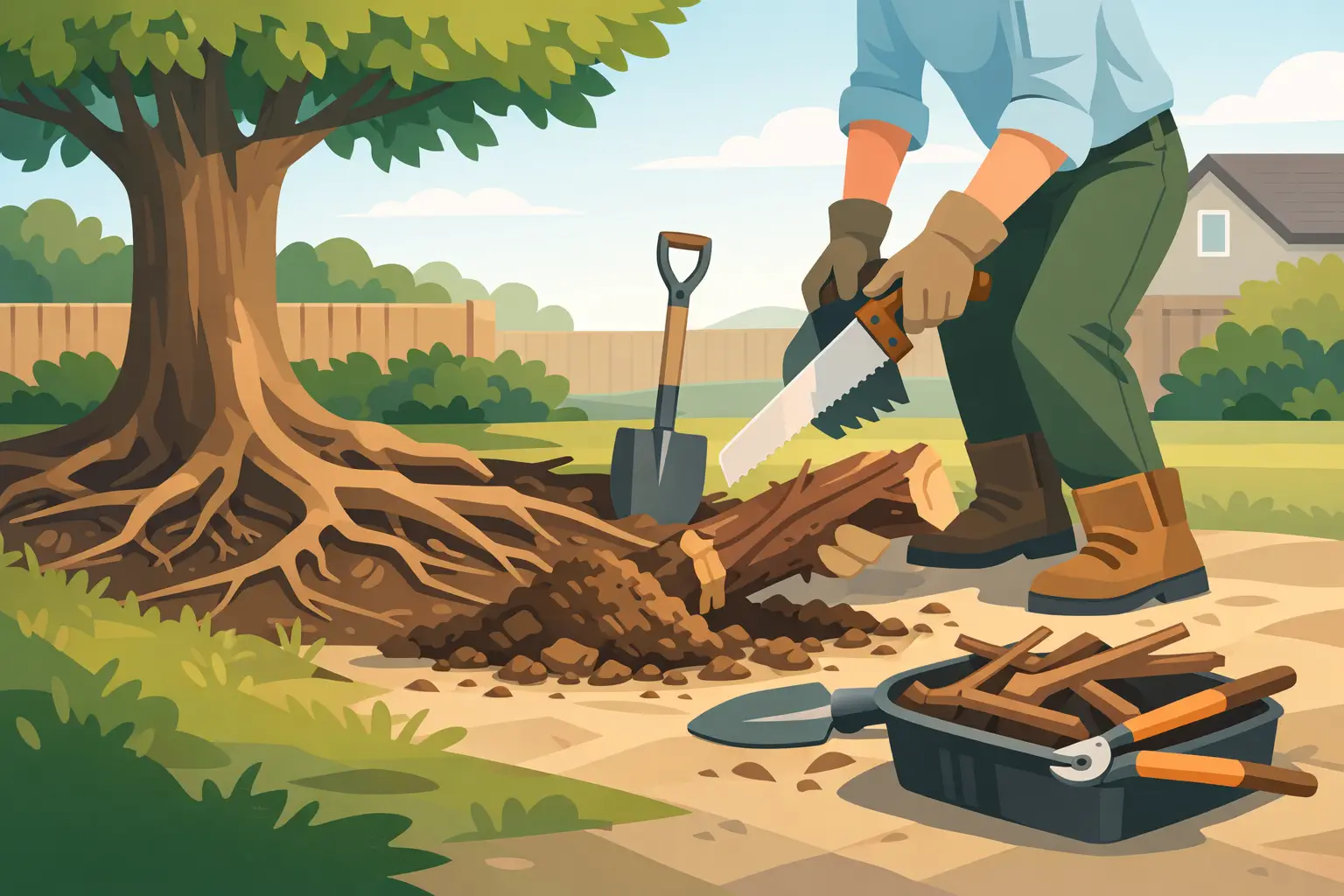
Use a sharp pruning saw or clean root-cutting tool, and make one clean cut rather than hacking at the root. Ragged cuts heal poorly and create more opportunity for decay. Do not tear roots out with a truck, pry bar, or excavator unless the tree is being removed. That kind of force can damage surrounding roots you cannot see.
After cutting, do not leave a trench open around the root zone. Backfill lightly with soil if needed, avoid piling on excess material, and keep the area watered during dry periods. A tree that loses roots may need some support while it adjusts.
Roots near sidewalks, foundations, and driveways
This is where things get more complicated. If a surface root is pushing up pavement, the issue is not just the visible root. The tree may have a broad shallow root plate, and cutting one or two roots may solve the hardscape problem while creating a tree problem.
Roots near foundations are also often misunderstood. Most tree roots do not break through solid foundations on their own. They tend to exploit existing cracks, gaps, or weak points. If you see roots near a wall or slab, that does not always mean root removal is the first move. It may mean the structure and the tree both need a closer look.
When roots are affecting pavement, walls, utilities, or drainage, it is smart to have the site evaluated before any removal begins. The cost of a wrong cut can be much higher than the cost of doing the job correctly the first time.
How to tell when root removal should be left to a professional
There is a big difference between trimming a small exposed root in an open lawn and removing roots around a mature tree near a house. If the root is more than a couple inches thick, close to the trunk, entangled with other roots, or tied into a stump from a removed tree, this is usually professional work.
The same goes for roots buried under compacted soil, wrapped around hardscape, or extending into planting beds, fences, and utility corridors. Proper root removal sometimes requires excavation, grinding, or specialized equipment to get below grade and clean out the root system without tearing up the entire property.
That is especially true when the goal is not just to cut a root, but to reclaim usable space. A partial cut may solve the surface issue for a season. It may not stop suckering, regrowth, or recurring bumps in the lawn. Deeper root removal is often the only lasting fix.
What happens after surface roots are removed
Once a root is removed, the area needs attention. Bare soil can settle, wash out, or become uneven. Grass may need to be reseeded. If the root came from a tree that remains in place, the tree should be watched for signs of stress over the next growing season, including dieback, sparse leafing, early color change, or increased lean.
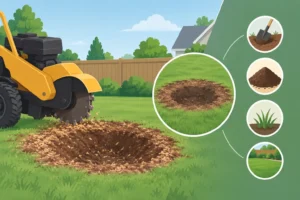
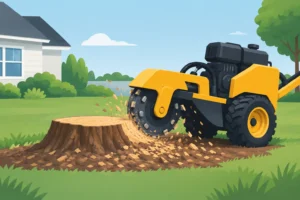
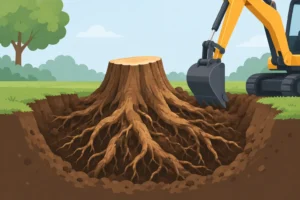
If the roots came from a removed tree or old stump, the concern is usually regrowth or leftover underground wood. That is where standard stump grinding and full root removal are not the same thing. Grinding the stump below grade improves the appearance of the site, but it may leave lateral roots in place. Depending on your plans for the area, that may be perfectly fine or it may not be enough.
For planting, paving, additions, or restoring clean yard space, deeper removal can make a real difference. This is one reason experienced contractors use more than a grinder when the job calls for full cleanup.
How to remove surface roots for good when the tree is gone
If the tree has already been removed and the surface roots are what’s left behind, the job shifts from tree preservation to site restoration. At that point, the question is less about protecting the tree and more about how completely you want the root system cleared.
Some roots can be cut and pulled by hand if they are small and shallow. Larger roots usually require mechanical removal. Digging them out with basic tools is time-consuming and often leaves sections behind. Those leftover roots can interfere with grading, lawn repair, and future landscaping.
For more complete removal, professional equipment can extract deeper root material with far less guesswork. Stumpbuster LLC has handled this kind of work across New Haven County since 1985, including jobs where standard grinding alone would not leave the site clean enough for the customer’s next step. When a property owner wants the area truly usable again, thorough root removal matters.
A few mistakes to avoid
The biggest mistake is cutting first and asking questions later. Another common one is adding too much soil over exposed roots and suffocating the root zone. Property owners also run into trouble when they assume every exposed root should be removed, or when they rent equipment that is too aggressive for a tight residential yard.
There is also the cleanup issue. Root work can leave behind trenches, torn turf, and scattered debris if it is done carelessly. Good removal is not just about cutting wood below grade. It is about leaving the property safe, clean, and ready for whatever comes next.
If you are looking at exposed roots and wondering whether they are a simple yard problem or part of a larger tree issue, trust what the site is telling you. The right fix is the one that solves the problem without creating a new one a few feet away.