A mature maple hanging over a driveway or an oak crowding a roofline can make a property owner want the fastest possible fix: cut the tree back hard. But tree trimming versus tree topping is not a choice between two versions of the same service. One method manages growth while protecting the tree. The other can create a weaker, more hazardous tree that costs more to manage later.
For homeowners and commercial property managers in New Haven County, that difference matters. Connecticut trees deal with heavy snow, ice, wind, summer storms, and crowded suburban lots. The wrong cuts can turn an overgrown tree into an ongoing liability near a home, sidewalk, parking area, or power line.
What Is Proper Tree Trimming?
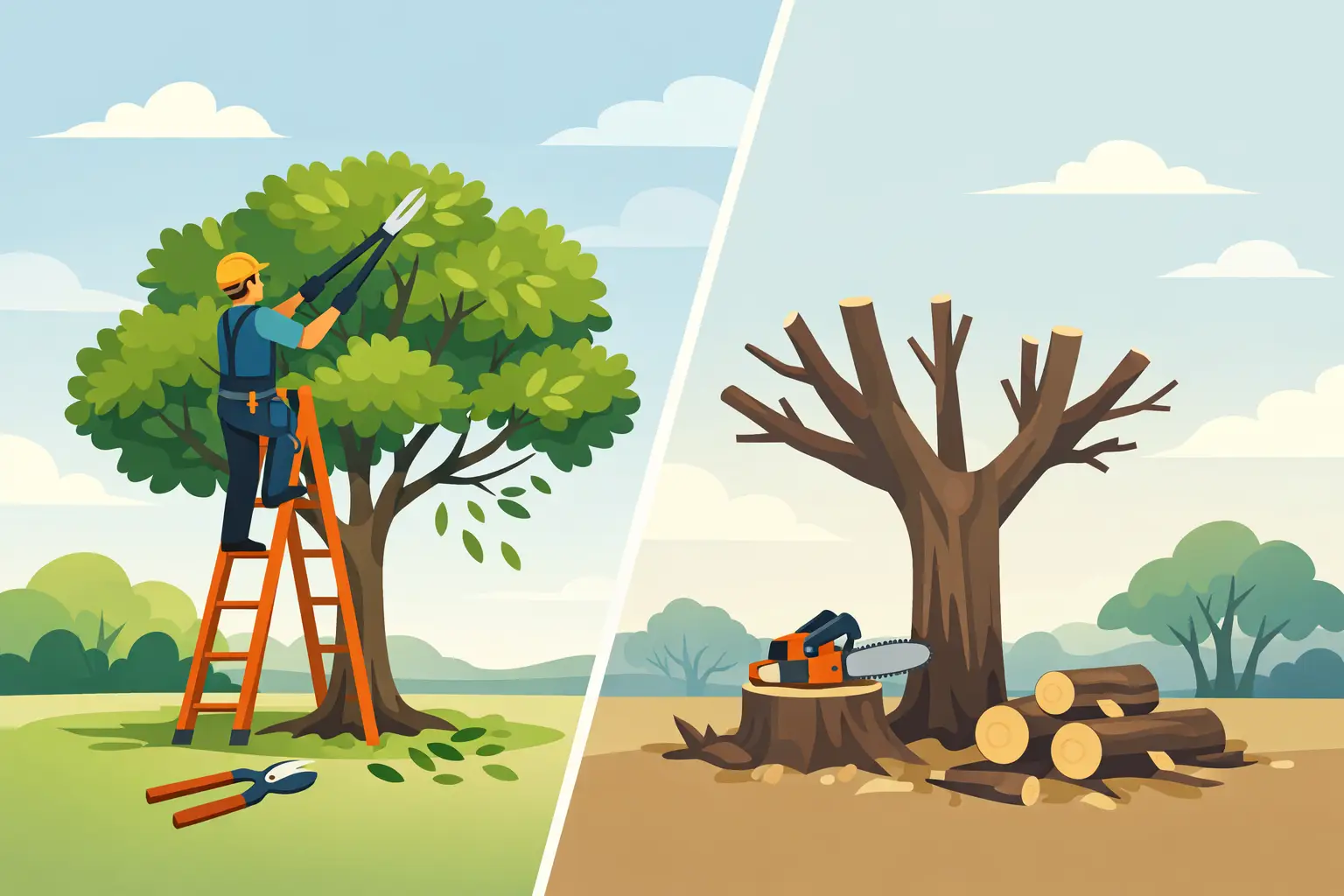
Tree trimming is the selective removal of branches to improve a tree’s health, structure, clearance, or appearance. A trained crew does not simply remove whatever looks long or inconvenient. Each cut is made with the tree’s branch structure, species, size, condition, and location in mind.
A proper trimming job may remove dead limbs that could fall, reduce branches rubbing against a roof, raise low limbs over a driveway, or thin selected growth to improve airflow and reduce wind resistance. It can also correct weak or poorly placed branches before they become a larger problem.
The goal is to keep the tree functioning as a tree. Leaves still produce food. Major limbs retain their natural form. The canopy remains balanced enough to handle weather and continue growing normally.
Common reasons to trim a tree
Most tree trimming is driven by a clear property concern. A branch may be extending over the roof, blocking a walkway, scraping a garage, shading a garden too heavily, or hanging over an area where people park and walk. Dead, cracked, diseased, and storm-damaged branches also need attention before they fail.
Trimming can be especially useful when a healthy mature tree has outgrown its space but does not need to be removed. Selective reduction can create needed clearance while preserving the shade, character, and value the tree provides.
What Is Tree Topping?
Tree topping means cutting back the upper portions of a tree or removing large limbs at arbitrary points, usually leaving blunt stubs. It is often done to make a tree shorter quickly. You may also hear it called heading, hat-racking, or stubbing.
The immediate result can look dramatic: a tall tree suddenly appears smaller. The problem is that topping removes a large amount of leaf-bearing canopy and disrupts the tree’s natural structure. A topped tree is not properly pruned into a safer shape. It has been severely wounded.
A healthy tree responds to this stress by pushing out fast-growing shoots below the cuts. These shoots, often called water sprouts, may create a dense green crown within a few seasons. That apparent recovery is misleading. The new branches commonly attach weakly to the remaining stubs and can break more easily in wind, snow, or ice.
Why topping creates long-term problems
Topping leaves large wounds that may not close well, especially on older trees. Decay organisms can enter through those cuts, compromising the remaining wood. The tree may also suffer sunscald when previously shaded bark is suddenly exposed to intense summer sun.
Just as concerning, topping does not usually solve the size issue for long. It often creates rapid, upright regrowth that can restore the tree’s height surprisingly fast. The owner is then left with a tree that needs repeated work, has less natural structure, and may be more expensive to maintain or remove.
Tree Trimming Versus Tree Topping: The Real Difference
The main difference is not how much wood comes down. It is whether the cuts work with the tree’s biology and structure.
Tree trimming uses selective cuts at suitable branch unions or back to a lateral branch that can take over growth. When reducing a limb, the remaining lateral branch should generally be large enough to support the limb’s role. This helps the tree direct growth naturally instead of forcing it to send out weak shoots from stubs.
Topping ignores those natural growth points. It removes sections of limbs without regard for where the tree can safely redirect energy. It is a shortcut that can give a temporary reduction in height, but it trades short-term appearance for reduced health and increased future risk.
There are cases where major reduction pruning is appropriate, particularly when a tree has grown too close to a structure or needs carefully planned clearance. That is not the same as topping. Reduction pruning requires judgment, proper cut placement, and a realistic understanding of how much canopy the tree can lose without serious stress.
When a Tree May Need More Than Trimming
Not every tree can be made safe with pruning. If a tree has severe internal decay, a split trunk, extensive root damage, major storm failure, or a dangerous lean, taking off branches may only delay a more serious problem. A licensed arborist can assess whether selective trimming, cabling, removal, or monitoring is the practical recommendation.
Species and age matter, too. Some trees tolerate pruning better than others. Large, old trees with broad canopies require a more conservative approach than young ornamental trees. A tree already weakened by insects, disease, drought, construction damage, or poor past pruning has less capacity to recover from heavy cuts.
This is why the lowest quote is not always the best value in tree work. Cutting a tree back aggressively may be quick, but the follow-up maintenance, storm damage, decline, or eventual removal can cost far more than proper pruning from the start.
Warning Signs of Poor Pruning
Property owners can often spot topping after the work is done. Large limbs end in flat, blunt stubs. The tree has an unnaturally flat or bare top. Clusters of thin upright shoots appear from the cut areas. The canopy looks stripped rather than shaped.
Poor pruning may also leave torn bark, ragged cuts, or large cuts made flush against the trunk. A correct pruning cut preserves the branch collar, the slightly swollen area where a branch joins the trunk or another branch. Cutting too close removes the tree’s natural defense zone. Leaving a long stub creates another path for decay.
A professional should also explain what will be removed and why before work begins. If the plan is simply to “cut it way back” without a discussion of tree condition, structure, clearance needs, or future growth, ask more questions.
How to Plan Safer Tree Care on Your Property
Start by identifying the actual problem. Is the concern dead wood, roof clearance, blocked access, storm exposure, a crowded canopy, or a tree that is simply too large for its location? The right answer depends on the problem.
For branches near utility lines, contact the utility provider or a qualified line-clearance contractor. This is specialized, dangerous work and should not be handled from a ladder or by an unqualified crew. Keep people, vehicles, and equipment clear of any branch that may be energized.
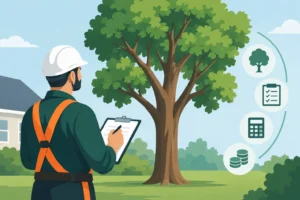
For trees near homes, driveways, sheds, patios, and commercial buildings, schedule an on-site evaluation. A qualified arborist can identify structural concerns that are not obvious from the ground, including cracks, weak branch unions, decay pockets, and root-zone issues.
At Stumpbuster LLC, arborist-led recommendations are based on what will improve safety and protect the property, not on making the fastest cuts possible. A clean work area matters as much as a careful pruning plan, particularly when crews are working around lawns, landscaping, fences, and hardscapes.
Choose the Result You Want Years From Now
A properly trimmed tree should not look butchered. It should look healthier, better balanced, and better suited to its space. In many cases, neighbors will notice the improved clearance and shape without immediately seeing where every cut was made.
If a tree needs drastic topping to fit beneath wires, away from a building, or within a small yard, removal and replacement with a better-sized species may be the more responsible option. That is a harder decision than cutting it down to stubs, but it can prevent years of weak regrowth, repeat service calls, and avoidable hazards.
Before approving major tree work, ask how the proposed cuts will affect the tree’s health and what the tree will look like in three to five years. That conversation is often the difference between a temporary fix and tree care that protects your property for the long haul.