A mature maple leaning over the service wire to a North Haven home can turn from a yard-maintenance concern into a safety problem fast. An example of utility line clearance is removing or pruning the limbs that are crowding that wire while protecting the tree, the property, and everyone on the ground.
This is not ordinary trimming. Trees and electrical lines are a dangerous combination, especially after heavy rain, wet snow, wind, or a branch failure. The right approach depends on which line is involved, who owns it, how close the tree is, and whether the work can be completed safely without entering the utility’s required clearance area.
A Real-World Example of Utility Line Clearance
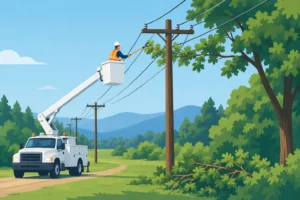
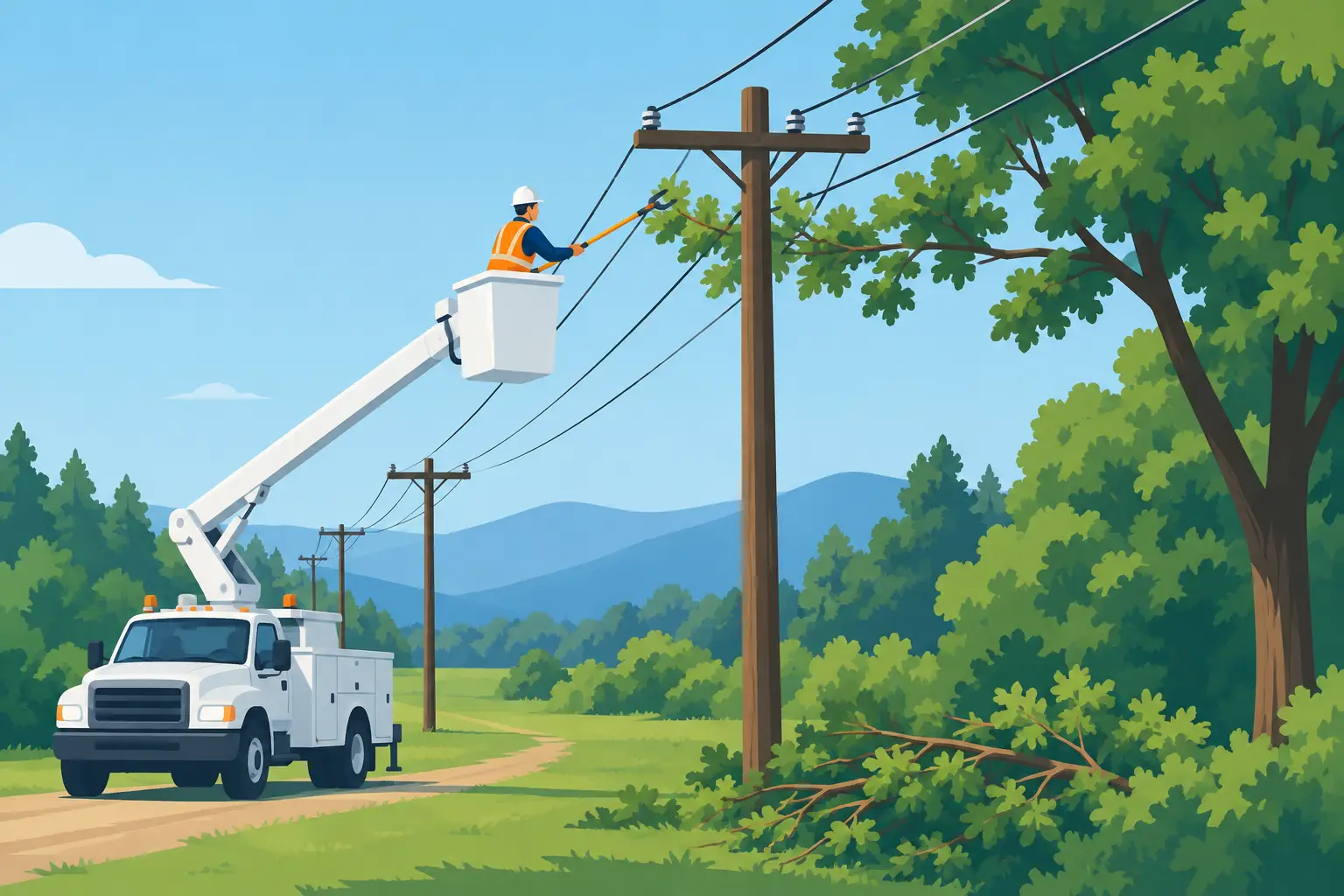
Picture a large oak at the edge of a driveway in Hamden. Several limbs have grown through the open space around the overhead lines. One branch is rubbing the insulated service drop that runs from the utility pole to the house. Another is hanging above the driveway, where it could fall onto a vehicle or block access after a storm.
The first step is not to climb the tree with a chainsaw. A qualified tree professional evaluates the entire situation from the ground. That includes the tree’s condition, the direction of limb weight, access for equipment, nearby structures, traffic, and the type and location of the lines.
If branches are near the line running from the pole to the home, the utility company may need to disconnect or otherwise address that service before tree work begins. If the limbs are near primary distribution lines higher on the pole, the utility or its approved line-clearance contractor generally handles that work. A homeowner or standard tree crew should never assume a line is safe simply because it appears insulated or because it has not caused trouble before.
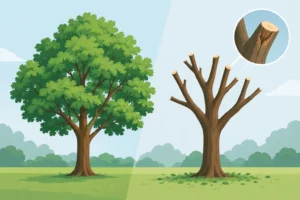
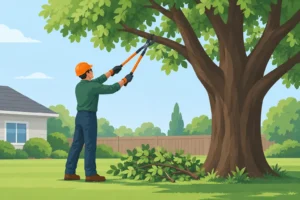
Once the electrical risk has been properly addressed, the tree crew can remove dead, damaged, or overextended limbs in manageable sections. The goal is not to strip one side of the tree bare. Good pruning removes the immediate conflict while preserving a balanced canopy whenever the tree’s condition allows it. If the tree is decayed, badly split, or structurally unsound, removal may be the safer option.
The finished result should be clear space around the line, no hanging branches above the driveway, and a clean work area. Just as important, the property owner should understand what was handled by the utility and what was handled by the tree service.
Why Line Clearance Is Different From Routine Tree Trimming
A branch can conduct electricity even without directly touching a wire. Wet wood, equipment, ladders, ropes, and the ground itself can all create serious hazards. Electrical current can also arc through the air when people or equipment get too close to energized lines.
That is why utility line clearance requires more than knowing how to make a clean pruning cut. It requires hazard recognition, proper work planning, specialized training, and clear communication with the utility when needed. The closer the tree is to energized conductors, the less room there is for guesswork.
Homeowners sometimes see utility crews prune trees aggressively and assume that any tree service can work in the same space. Utility pruning has a specific purpose: keeping electric service reliable and reducing outage risk. The utility may use its own standards, schedules, and approved contractors. A residential tree service may address branches on the customer’s side of the situation, but it should not perform work within the utility’s restricted zone unless it is specifically qualified and authorized to do so.
There is also a practical trade-off. Cutting back a limb may solve the immediate clearance issue, but repeated heavy pruning can weaken the tree or create large wounds. On a healthy tree with enough room to recover, selective reduction pruning can be a sound choice. On a tree that has outgrown its location, has major internal decay, or leans toward the lines and house, removal can be the more responsible long-term decision.
Who Is Responsible for the Tree Near the Wire?
Responsibility is not always as simple as “the tree is on my property.” The utility typically maintains its electrical system and the clearance required for its lines. The property owner is generally responsible for the trees and landscaping on private land, along with the service connection and other property concerns that fall outside the utility’s work scope.
The exact division can vary by utility, line type, and location. A service drop to a house, for example, may require coordination before a tree company can safely remove limbs nearby. A branch touching a high-voltage primary line is a utility matter first. If a storm brings a line down or a tree has pulled wires from a pole, treat it as an emergency and stay well away.
Do not attempt to pull a branch off a wire, cut it free, move a fallen wire, or use a ladder near the area. Keep people, pets, vehicles, and metal tools clear. Call the electric utility or emergency services when there is an immediate danger, fire risk, blocked roadway, or downed line.
Signs You Should Schedule an Inspection
Not every branch near a wire needs immediate removal. Trees grow gradually, and an experienced arborist can often spot developing conflicts before they become urgent. Early evaluation is especially useful for large mature trees around older New Haven County homes, where overhead utilities, narrow driveways, and established landscaping leave little working room.
Pay attention when you see branches resting on or growing directly toward a wire, cracked limbs above the service drop, visible decay near a major union, or a tree that has recently shifted after a storm. Repeated flickering lights, though not always caused by a tree, are also worth reporting to the utility. Do not investigate by getting closer to the lines.
Other warning signs include dead limbs over parking areas, vines climbing utility poles, roots lifting near a tree that is leaning toward wires, and canopy growth that has closed the open space around the line. A tree may look green and healthy while still having poor structure or hidden decay that makes it more likely to fail.
What a Qualified Tree Crew Should Consider
Safe line-clearance-related work starts before the first cut. A professional crew should identify the electrical hazard, determine whether utility coordination is needed, and establish a work plan that keeps workers and equipment out of danger. That plan changes with the site. A flat, open yard is very different from a tight West Haven lot with fences, sheds, parked cars, and overhead service lines crossing the access route.
The crew should also consider the tree’s natural response to pruning. Removing too much live growth at once can stress the tree and encourage weak new shoots. Whenever practical, cuts should be made back to appropriate lateral branches and focused on defective, interfering, or overextended limbs. When a tree cannot be safely retained, sectional removal may prevent uncontrolled damage to the lawn, roof, driveway, or nearby utility equipment.
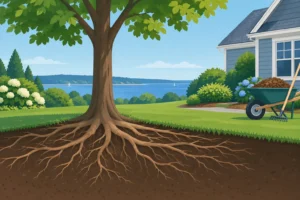
Cleanup matters as well. Branches, sawdust, and wood should not be left where they block walkways or hide hazards. If a stump is removed after a utility-conflict tree comes down, the location of underground utilities must be considered before grinding or root removal begins. Overhead clearance is only one part of working safely around utility infrastructure.
The Value of Acting Before a Storm
Most costly utility-tree problems do not start with a dramatic failure. They begin with a limb that has been rubbing a wire for years, a weak crotch that goes unnoticed, or a tree that keeps growing into a space too small for it. Storms simply expose the weakness.
For homeowners and commercial property managers, preventative pruning can reduce the chance of blocked driveways, damaged service lines, and rushed emergency decisions. It also gives you time to coordinate with the utility if the situation requires it, rather than waiting until a branch is hanging over a live wire in bad weather.
Stumpbuster LLC has worked on tree problems across New Haven County since 1985, and the same practical rule applies on every property: electrical hazards come first. A clear assessment from an experienced, insured tree professional can help you decide whether selective pruning, utility coordination, or full removal makes sense for the tree in front of you.
If branches are approaching your service line or a mature tree is growing toward overhead utilities, do not wait for wind or ice to make the decision for you. Have the situation evaluated while there is time to plan the work safely and protect the home, yard, and people who depend on it.