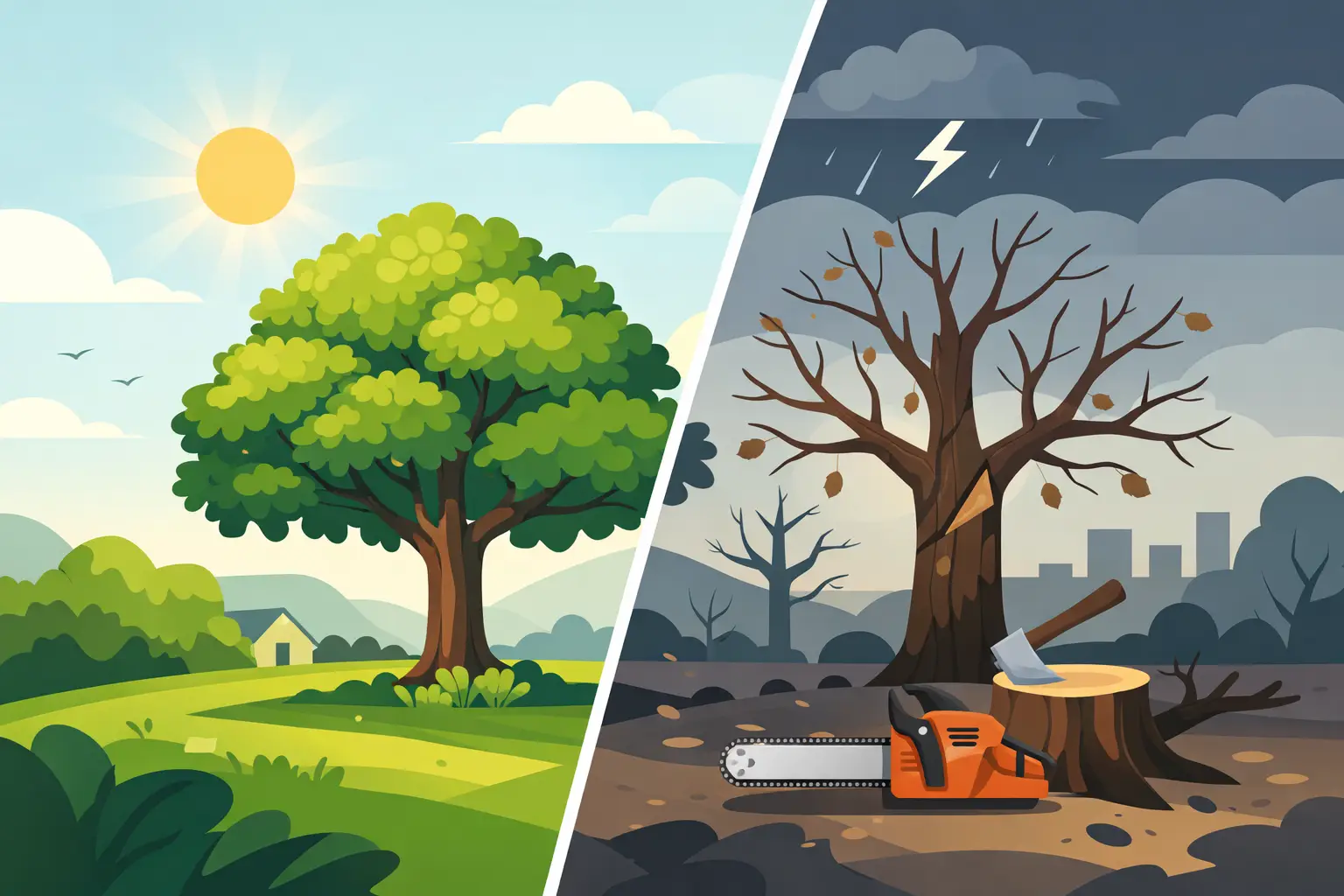
A tree does not have to be completely dead to become a real problem. If you are asking when should a tree be removed, the answer usually comes down to safety, location, structural condition, and whether the tree can still be preserved without putting your property at risk.
In Connecticut, mature trees add beauty, shade, and value. They also deal with heavy snow, wind, wet ground, storm damage, and years of gradual decline. Some trees can be pruned, treated, or monitored. Others need to come down before they fail on their own. Knowing the difference can save you from roof damage, driveway damage, utility issues, and costly emergency work.
When should a tree be removed instead of trimmed?
That is one of the most common questions property owners ask, and it is a fair one. Pruning can solve a lot of problems, but not all of them. If the issue is limited to overgrown limbs, isolated dead branches, light clearance work, or crown shaping, trimming may be enough. If the tree has major structural weakness, severe disease, extensive decay, root failure, or a bad location, removal is often the safer choice.
A good rule is this: if the defect is in the whole tree, not just one section of it, trimming usually will not fix the real problem. Cutting back a hazardous tree can reduce weight temporarily, but it does not rebuild strength in a rotted trunk or restore roots that are already failing.
Clear signs a tree may need to be removed
One obvious sign is a dead tree. If a tree no longer leafs out properly, has brittle branches throughout the canopy, and shows no meaningful new growth, it may already be beyond recovery. Dead trees dry out, weaken quickly, and can come apart without much warning.
Another major concern is trunk damage. Large cracks, deep seams, hollow areas, missing bark, or visible decay around the base are all warning signs. A tree can stay standing for years with internal decay, but that does not mean it is sound. Once the trunk starts losing strength, failure becomes less predictable.
Leaning is another issue people should not ignore. Some trees naturally grow with a slight lean and remain stable for decades. What matters is change. If a tree has recently started leaning, if the soil is lifting around the roots, or if you can see exposed roots pulling out of the ground, that is a serious hazard.
Fungal growth can also tell you a lot. Mushrooms or conks near the base of a tree often point to internal decay or root rot. Not every fungus means immediate removal, but it is a sign the tree should be assessed by someone who knows what to look for.
Then there is branch failure. If large limbs are breaking off for no clear reason, the tree may have underlying structural or health problems. Repeated limb drop, especially in calm weather, is not something to write off as normal aging.
Location can make a healthy tree a bad fit
Sometimes a tree is not badly diseased or visibly dead, but it still needs to be removed because of where it is growing. A healthy tree planted too close to a house, garage, retaining wall, fence, septic area, or utility line can create problems that get worse every year.
Roots can lift sidewalks, crack patios, invade drains, and make mowing or landscaping harder. Limbs can scrape roofs, drop debris into gutters, and hang over driveways or play areas. In narrow side yards or tight residential lots, a tree can outgrow the space long before it shows obvious signs of decline.
This is especially true with fast-growing species or older trees that were planted before nearby additions, sheds, pools, or parking areas existed. If the tree’s long-term growth pattern is working against the property, removal may be the more practical option than repeated trimming.
Storm damage changes the timeline
A tree that looked acceptable last season can become unsafe after one strong storm. Heavy snow loads, high winds, ice, and saturated soil can split major limbs, twist trunks, or weaken the root system. Sometimes the damage is immediate and obvious. Other times it shows up later as canopy dieback, fresh leaning, or cracks that continue to open.
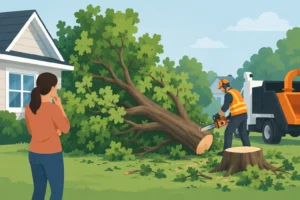
After a storm, property owners often focus on what fell. Just as important is what is still standing but no longer stable. A partially failed tree can be more dangerous than one that came down completely because it may still be loaded with tension and ready to drop more material.
If a tree has lost a major portion of its crown, suffered a trunk split, or had roots compromised by storm movement, removal may be the safest path. It depends on the species, the extent of the damage, and how close the tree is to people or structures.
Disease, insects, and decline are not all equal
Not every sick tree should be removed. Some can be treated, improved with pruning, or given time to recover. But when disease or infestation has spread too far, removal becomes the responsible decision.
What matters most is how much of the tree is affected and whether the structure is still sound. A tree with cosmetic leaf issues is very different from a tree with trunk cankers, root decay, major dieback, or extensive insect damage under the bark. If more than a significant portion of the canopy is dead, if the tree has poor vigor year after year, or if the base is deteriorating, the chances of recovery go down fast.
There is also the question of risk to nearby trees. In some cases, removing one declining tree helps protect the rest of the landscape from spreading problems or opens up space for healthier growth.
When should a tree be removed for safety?
If the tree could hit a house, parked car, walkway, deck, road, or power line if it fails, safety has to come first. The same goes for trees near schools, commercial lots, entryways, and anywhere people regularly gather.
Risk is never just about tree condition. It is also about what the tree can strike. A moderate defect in the middle of a large back lot is different from the same defect hanging over a bedroom roof or a busy driveway. This is where experience matters. The question is not just whether a tree has problems. It is how likely those problems are to cause damage if left alone.
For homeowners, that often means not waiting until the tree is in full collapse. Removal is usually cleaner, safer, and less expensive when it is planned before it becomes an emergency.
Why timing matters
People sometimes wait because the tree is still partly green or because it made it through the last storm. That can be a costly gamble. Hazard trees rarely improve on their own. Decay spreads. Cracks widen. Root issues get worse. And weather in New Haven County can turn a manageable problem into urgent work overnight.
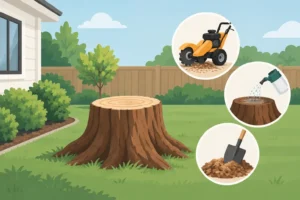
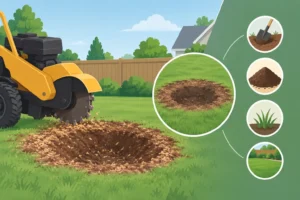
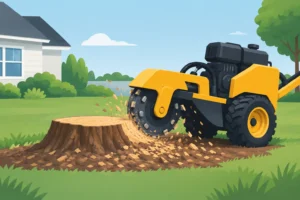
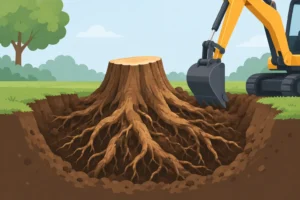
Planned removal gives you better control over scheduling, site protection, access, and cleanup. It also gives you time to consider stump grinding or root removal if the goal is to reclaim yard space, prepare for a new planting, or stop roots from interfering with the area.
That is one reason many local property owners prefer to have an arborist-led company evaluate the tree before the situation escalates. Stumpbuster LLC has been doing that kind of work since 1985, and that experience matters when the difference between trimming and removal is not obvious from the ground.
The value of a professional assessment
Tree removal decisions are not always simple. A tree can look rough and still be salvageable. Another can look fine from a distance and have serious internal decay. That is why a close inspection matters.
A qualified assessment looks at the canopy, trunk, root flare, surrounding grade, storm history, lean, branch structure, species behavior, and targets nearby. It should also consider whether pruning, cabling, monitoring, or removal is the better long-term answer. The goal is not to remove trees unnecessarily. The goal is to make the property safer and the landscape more manageable.
If you are unsure, trust your instincts enough to ask. Property owners usually call because something changed – more deadwood, new cracks, mushrooms at the base, roots lifting, or branches suddenly hanging over the house. Those are the right moments to get a trained opinion.
A good tree adds character and value to a property. A failing tree can take that away fast. If one on your property is showing warning signs, getting ahead of it now is usually the smartest move for your home, your yard, and everyone around it.