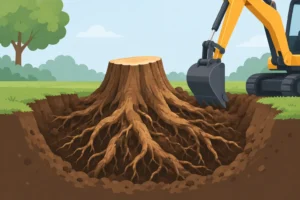
A stump can be ground below grade and still leave woody roots running through the lawn, garden bed, or near a driveway. That is why homeowners often ask, can you grind roots underground? The short answer is yes, in many situations, but it is not as simple as running a stump grinder across every root in the yard. The right approach depends on the root’s location, depth, size, and what is sitting above it.
For properties in New Haven County, the goal is usually practical: remove the tripping hazard, reclaim usable space, prepare for landscaping, or stop roots from interfering with a hard surface. A careful evaluation helps determine whether targeted grinding is enough or whether deeper root removal is the better solution.
Can You Grind Roots Underground Safely?
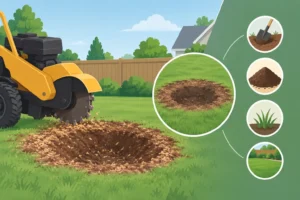
A professional stump grinder can grind the stump and the larger roots immediately surrounding it. This process removes wood below the soil surface, typically deep enough to cover the area with soil and restore the lawn. It is effective for the root flare around the base of the tree, which is where the biggest and most troublesome roots are often found.
Grinding roots farther from the stump is possible when they are exposed, shallow, and accessible. For example, surface roots pushing up through a lawn may be addressed in selected areas. But an experienced operator does not blindly chase roots across a property. Roots can extend well beyond the canopy of a mature tree, and grinding every root is usually unnecessary, disruptive, and potentially unsafe.
The main concern is what may be buried nearby. Utility lines, irrigation pipes, drainage systems, septic components, landscape lighting, and underground fences can all be damaged by aggressive digging or grinding. Roots near foundations, retaining walls, sidewalks, patios, and driveways also require a measured approach. In those cases, the safest answer may be selective removal rather than broad excavation.
What Stump Grinding Actually Removes
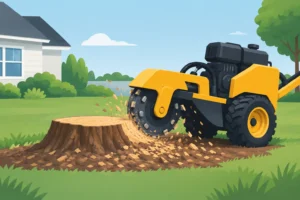
Stump grinding is designed to turn the stump and nearby root material into mulch-like wood chips. The machine uses a rotating cutting wheel to reduce the wood in layers. The remaining grindings can be removed, reused as mulch in appropriate areas, or mixed with soil depending on the plans for the site.
The depth of grinding matters. A shallow grind may be enough for a lawn area that will be reseeded. A deeper removal may be needed before installing a patio, shed base, fence, new tree, or planting bed. The correct depth is based on the project, not just on making the stump disappear from view.
What stump grinding does not always remove is the entire root system. Fine roots and long lateral roots are normally left to decay naturally underground. For many properties, that is completely acceptable. Once the stump is removed, the roots no longer have a living tree feeding them. Over time, they break down in the soil.
There are exceptions. If large roots are causing a visible problem, such as lifting a walkway, interfering with construction, or leaving a major void when they decay, they may need additional work. That is when a root removal method beyond ordinary stump grinding becomes valuable.
When Full Root Removal Makes More Sense
Complete root removal is not necessary after every tree removal. It is often the right choice, however, when the area needs to be cleared for a specific purpose. Homeowners planning an addition, pool, driveway replacement, drainage project, or major landscape renovation generally benefit from knowing what remains below grade.
Deep roots can also be a concern where a stump sits close to a structure or where the ground needs to be level and stable. Leaving large root sections in place may create settling later as the wood decays. That does not mean every root near a house should be aggressively removed. Cutting or excavating near foundations and utilities takes experience and a site-specific plan.
At Stumpbuster LLC, arborist-led crews use a proprietary Plowrake root removal system for jobs that require a deeper, cleaner extraction than conventional stump grinding alone. This approach is especially useful when a property owner wants to reclaim space rather than simply hide a stump below a layer of topsoil.
Common Situations Around Connecticut Properties
Older neighborhoods throughout North Haven, Hamden, Branford, Guilford, Wallingford, and surrounding communities often have mature trees with broad, established root systems. Those roots can create a range of issues, but the right fix varies.
A root growing across a lawn may be a mowing nuisance or tripping hazard. In some cases, targeted grinding and grading can improve the area. If the root belongs to a healthy, living tree, removal must be considered carefully. Severing large roots can affect the tree’s stability and health, particularly if the cuts are close to the trunk.
Roots beneath a sidewalk or driveway are different. Grinding from above may not solve the problem if the hardscape has already lifted or cracked. The damaged concrete or asphalt may need to be removed first, allowing the root issue to be addressed safely before the surface is rebuilt. Simply cutting roots without evaluating the tree can lead to future decline or a more serious hazard.
Roots from a removed tree are generally less complicated because they are no longer supporting a living canopy. Still, their location matters. Large buried roots near drainage lines, utility corridors, or old stonework should be handled with care rather than force.
Why DIY Root Grinding Can Create Bigger Problems
Rental stump grinders can be useful for small, open stumps, but underground root work is more demanding than it looks. The operator must control a heavy machine while watching for rocks, metal, buried debris, changes in grade, and nearby structures. A hidden piece of wire, old fence post, or utility marker can quickly stop a job or damage equipment.
There is also the question of cleanup. Grinding creates a considerable volume of wood chips and leaves a depression where the stump stood. If the area is not backfilled and graded properly, water can collect there, lawn growth can be uneven, and the site may remain unusable.
Professional crews bring the equipment and judgment to match the work to the property. They can determine whether a root should be ground, extracted, left to decay, or avoided because it is too close to something that should not be disturbed. That assessment is often what prevents unnecessary lawn damage and costly repairs.
What to Expect After Roots Are Ground
After grinding, the area is usually filled with a mix of soil and remaining wood chips, then leveled for the next step. If the goal is grass, the site may need topsoil, seed, and regular watering. Some settling is normal as buried wood breaks down and the soil adjusts, especially after a large stump removal.
For a garden bed, it is wise to remove excess wood chips from the planting area and add clean soil or compost before planting. Fresh grindings can temporarily tie up nitrogen as they decompose, which is not ideal directly around new plants. They are better used as mulch away from stems and trunks.
If you are building over the area, tell the contractor before root work begins. A stump location that is fine for a lawn may need deeper clearing for a paver patio, footing, utility trench, or driveway base. Planning the final use of the space early helps avoid doing the work twice.
The Best Answer Starts With the Site
Can you grind roots underground? Yes, but the best result comes from removing the roots that are actually causing a problem while protecting the lawn, utilities, hardscape, and any healthy trees nearby. A stump is rarely just a stump once you look below the surface.
If roots are taking up usable yard space or standing in the way of your next project, have the area evaluated before choosing a quick fix. The right removal plan should leave your property cleaner, safer, and ready for what comes next.