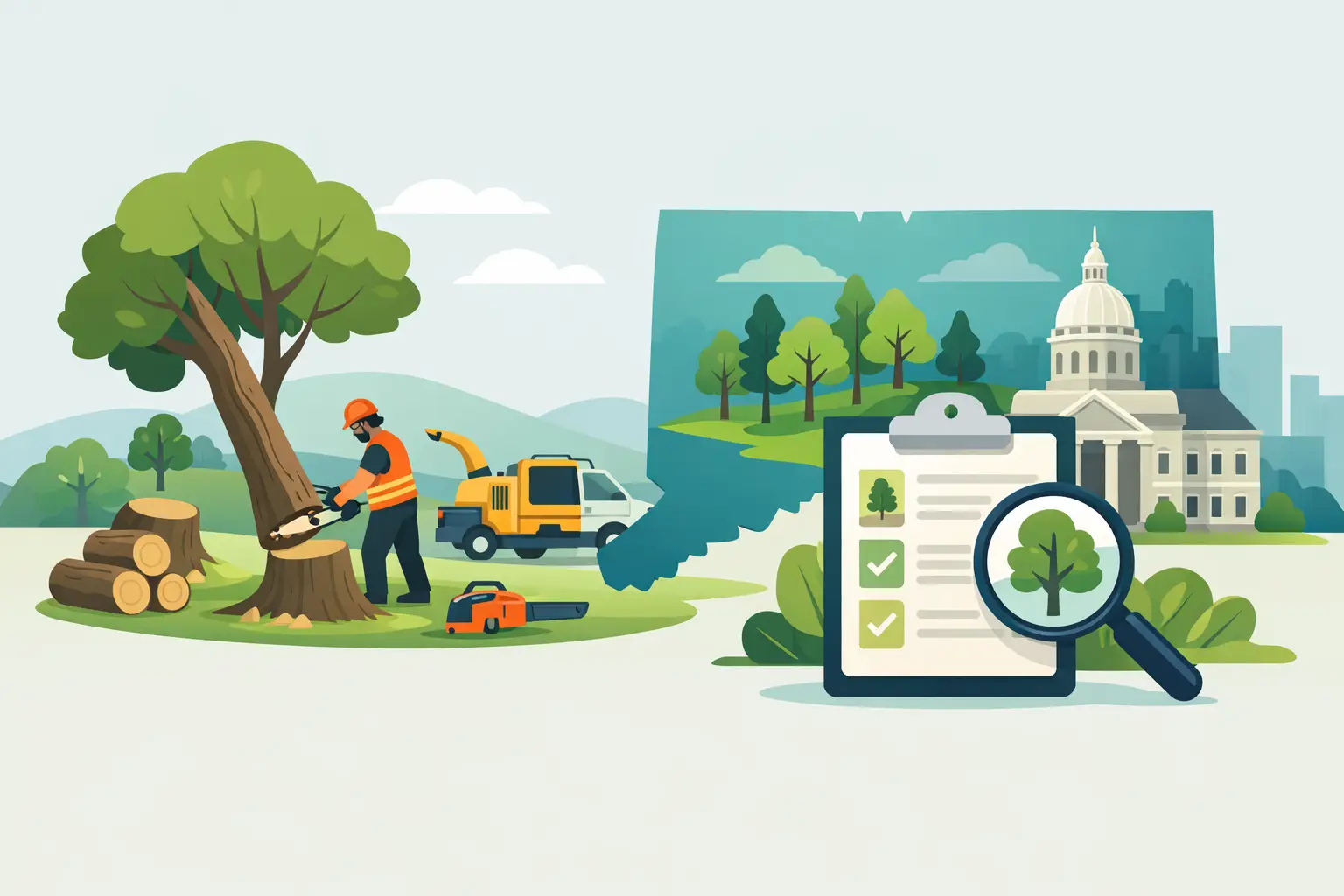
A tree can look like a straightforward removal job until a permit issue stops the work. If you are planning to take down a tree in New Haven County, this guide to tree removal permits can help you ask the right questions before equipment arrives. Permit rules can vary significantly by town, neighborhood, tree location, and the reason for removal.
For a clearly hazardous tree leaning toward a home, fast action matters. But even then, documentation and a call to the appropriate local office can prevent trouble later. For healthy trees, especially large or visible ones, planning ahead is usually the best way to avoid delays, fines, or a project that must be changed after the fact.
When Is a Tree Removal Permit Required?
There is no single Connecticut permit that covers every tree removal. In many cases, the rules come from your local municipality. Town zoning regulations, inland wetlands requirements, historic district rules, subdivision approvals, and public tree ordinances can all affect whether approval is needed.
A permit is more likely when the tree is on or near a regulated area, including wetlands, watercourses, a public right-of-way, a protected open-space area, or a property with a special zoning designation. Large trees may receive extra scrutiny in some communities, particularly if they are part of an approved landscape plan for a commercial property or development.
A tree close to the street may not be entirely under the homeowner’s control. Town-owned or town-maintained trees often sit within the public right-of-way, even when they appear to be in front of a private lawn. Removing or heavily pruning one without permission can create a problem. The local tree warden, public works department, or similar municipal office generally handles these questions.
Private residential trees outside regulated areas may not require a permit. That does not mean every removal is automatically clear. Property lines, conservation easements, utility lines, and neighborhood association rules can still affect the job.
Start With the Tree’s Location, Not Its Size
Homeowners often focus on how tall or unhealthy a tree is. Those details matter for safety, but the location is usually the first permit question. A medium-sized tree in a wetland buffer can require more review than a large dead tree in an open backyard.
Before scheduling removal, identify where the trunk sits in relation to your property line, the road, drainage areas, stone walls, streams, and overhead utilities. If the tree straddles a boundary, speak with the neighboring owner before work begins. Removing a shared boundary tree without agreement can lead to disputes, even if a permit is not required.
For commercial properties, look beyond the individual tree. Landscaping may be part of an approved site plan. Removing mature screening trees around a parking lot, apartment building, office, or retail property could trigger a request for replacement planting or site-plan review.
Watch for Wetlands and Watercourse Rules
Connecticut towns take wetlands and watercourses seriously, and for good reason. Removing a tree in or near a wetland can affect soil stability, drainage, habitat, and erosion. The tree itself may not be the only issue. Equipment access, stump grinding, root removal, and debris handling can all be considered regulated activity.
Do not assume a dry-looking section of yard is outside a regulated area. Wetland boundaries and review areas are determined locally and may extend beyond visible water. Contact your town’s inland wetlands office if the tree is near a brook, pond, drainage swale, marshy ground, or a low area that holds water seasonally.
If approval is needed, ask what work is included. A permit for cutting a tree may not automatically cover stump grinding, root extraction, grading, or bringing heavy machinery across the site. Clear answers up front keep the project moving safely and cleanly.
Emergency Tree Removal Is Different, but Not a Free Pass
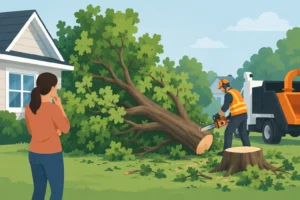
A split trunk over a roof, a tree uprooting after a storm, or a limb tangled in a service line is a safety issue first. Emergency removals are often treated differently from planned removals, particularly when there is an immediate threat to people, structures, or access.
Still, take photographs before work begins if conditions allow. Capture the crack, decay, root lift, storm damage, or contact with the structure. Keep any written assessment from an arborist and save invoices. These records can support an insurance claim and explain why immediate removal was necessary if a town asks questions afterward.
When a tree involves power lines, call the utility company rather than attempting removal yourself. A tree service can handle trees near service drops when conditions allow, but energized primary lines require coordination with the utility. No permit question outweighs electrical safety.
What to Ask Your Town Before You Hire a Crew
A short call to the right municipal department can save weeks of backtracking. Explain that you are considering removal of a tree on private property, give the address, and describe the tree’s location. Ask whether it is near the public right-of-way, wetlands, a historic district, or any other regulated area.
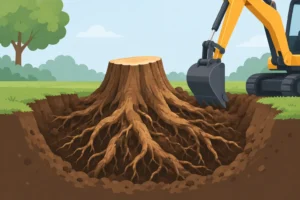
It also helps to ask whether a permit is needed for stump grinding or root removal. This is especially relevant when roots are lifting a walkway, reaching a foundation area, or interfering with a driveway or drainage system. The work may involve excavation, changes to grade, or underground utilities.
Have basic information ready: the tree species if known, approximate trunk diameter, condition, photos, and the reason for removal. If the tree is dead, diseased, storm-damaged, or structurally unsound, that information may affect the review process.
For most homeowners, the useful questions are straightforward: Which department reviews the request? Is there an application fee? Does the town need photos, a site sketch, or an arborist report? Will an inspection be required? Are replacement trees required? And how long does a decision normally take?
A Professional Assessment Can Clarify the Next Step
Not every declining tree needs removal. Some trees can be pruned to reduce weight on a weak limb, remove deadwood, improve clearance from a roof, or correct a developing problem. Other trees have internal decay, root damage, storm failure, or lean issues that make removal the sensible choice.
A licensed arborist can assess the tree’s condition and explain the risk in practical terms. That is useful when you need to decide between pruning and removal, and it can also provide helpful support for a permit application or insurance file. A clear assessment is more valuable than guessing based on a few bare branches or surface roots.
At Stumpbuster LLC, arborist-led planning means looking at the full job: the tree, access for equipment, nearby structures, utility concerns, cleanup, and what happens below ground after the tree is gone. That matters because removal is only part of restoring a safe, usable yard.
Do Not Overlook the Stump, Roots, and Cleanup Plan
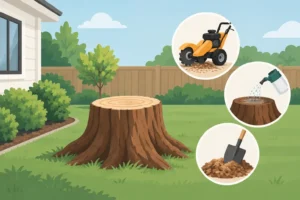
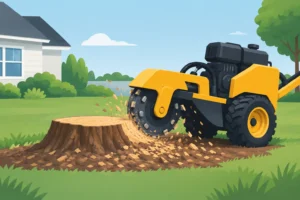
Permits and approvals may focus on the tree, but property owners should plan for the full site afterward. A remaining stump can attract insects, complicate mowing, and leave the area unusable. Surface roots can keep lifting pavement or interfere with a new lawn, fence, or planting bed.
The right approach depends on the location. In a tight garden bed, full root removal may disturb more soil than the site can handle. Near a foundation, utility line, septic system, or retaining wall, careful evaluation is necessary before grinding or extracting roots. In an open lawn where a stump is limiting use of the space, deeper removal may be the better long-term solution.
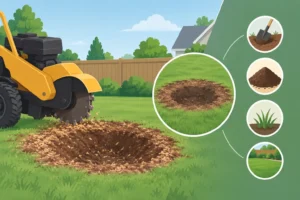
Ask your contractor how debris will be handled, whether the hole will be backfilled, and whether the work could affect nearby turf, drainage, or landscaping. Clean removal means more than getting the tree on the ground. It means leaving the property safe and ready for its next use.
The Cost of Skipping the Permit Check
Skipping a quick permit check may feel faster, but it can become expensive. A town may issue a stop-work order, require restoration, impose a fine, or require replacement plantings. On commercial and investment properties, unapproved work can also complicate future inspections, sales, or insurance questions.
There is a practical balance here. Do not delay emergency safety work while a dangerous tree threatens people or a building. But for planned removals, give yourself time to confirm the rules. Most calls take only a few minutes, and most applications go more smoothly when the site details are clear from the start.
A good removal plan protects more than the house. It protects your yard, your budget, and your ability to move forward without a preventable dispute. When you are unsure, get the local answer first, then have an experienced tree professional help you complete the work safely and leave the property clean.