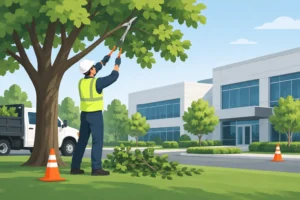
A branch brushing a roofline, hanging over a driveway, or reaching toward a service wire is not a problem to put off until the next storm. Good tree trimming tips start with knowing what is safe to handle from the ground and what requires trained crews, proper equipment, and arborist judgment. For New Haven County property owners, the goal is not simply to make a tree look smaller. It is to reduce hazards while preserving a healthy, well-shaped tree.
Start With the Reason for Trimming
Every cut should have a purpose. A dead limb above a parking area needs prompt attention because it can fail without warning. Branches rubbing the house, blocking a walkway, interfering with a driveway, or crowding other limbs may need selective trimming. A tree that has grown dense and top-heavy may benefit from careful thinning to improve light and air movement.
Avoid trimming just because a tree appears large. Mature trees provide shade, curb appeal, and value when they are structurally sound. Removing too much live growth can create a different set of problems: sunscald on previously shaded bark, weak new shoots, poor shape, and stress that leaves the tree more vulnerable to insects and disease.
Before making a cut, look at the whole tree. Are the branches dead, cracked, hanging, rubbing, or growing toward a structure? Is the trunk sound? Are there mushrooms, cavities, peeling bark, or soil heaving at the base? Those signs may point to a larger health or stability issue that pruning alone will not solve.
Tree Trimming Tips for the Right Season
Timing depends on the tree species, its condition, and the reason for the work. In Connecticut, late winter is often a practical time for routine structural pruning on many deciduous trees. Leaves are off, the branch structure is easier to inspect, and frozen ground can help limit lawn damage from equipment.
That does not mean every tree should be trimmed in winter. Spring-flowering trees can lose part of their bloom display if pruned too early. Oaks deserve special care because pruning at the wrong time can increase exposure to disease. Storm-damaged, broken, or dangerous limbs should be addressed whenever they pose a risk, regardless of the calendar.
Summer pruning can be useful for removing light growth, improving clearance, or correcting a specific problem. It should be measured. Heavy pruning during hot, dry periods can put extra strain on a tree already working hard to manage heat and moisture.
Remove Deadwood Before Cutting Healthy Limbs
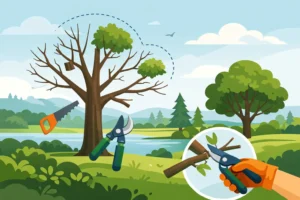
Dead branches are the first priority because they do not recover and can become a falling hazard. Look for limbs with no buds or leaves when neighboring branches are leafed out, loose bark, visible decay, or branches that snap easily. Deadwood over roofs, decks, sidewalks, play areas, and parked vehicles should be handled promptly.
Broken limbs also need clean corrective cuts. Leaving a jagged stub can invite decay and prevent the tree from sealing the wound properly. The right cut is made just outside the branch collar, the slightly swollen area where the branch meets the trunk or a larger limb. Do not cut flush against the trunk, and do not leave a long stub.
For small, reachable branches, sharp hand pruners or a pruning saw can make a clean cut. For larger limbs, use the three-cut method to prevent bark from tearing: make a small undercut, make a second cut farther out to remove the branch weight, then make the final cut just outside the collar.
Do Not Top a Tree
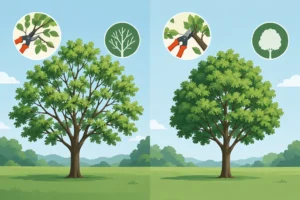
Topping means cutting major branches or the upper crown back to stubs. It may seem like a quick answer for a tall tree, but it is one of the most damaging practices in tree care. The tree responds by producing fast-growing, weakly attached shoots. Those shoots can become future hazards, while large wounds create entry points for decay.
If a tree is too tall for its location, selective reduction pruning may sometimes be appropriate. This shortens specific branches back to suitable lateral limbs and keeps more of the tree’s natural structure. It takes more judgment than topping, but it produces a safer, better-looking result when the tree is a good candidate.
Sometimes the honest answer is removal. A declining tree planted too close to a house, a tree with major trunk decay, or one that has outgrown a tight space may not be made safe through repeated trimming. A licensed arborist can help determine whether pruning, cabling, monitoring, or removal makes the most sense.
Keep Clearance From Homes, Driveways, and Utilities
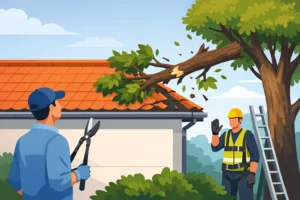
Branches should not scrape siding, roofs, gutters, or windows in the wind. Trim them back far enough that normal movement does not bring them into contact with the structure. This helps prevent roof wear, gutter blockages, moisture problems, and easy access for squirrels and other pests.
Driveways and walkways need clearance as well. Low limbs can obstruct vehicles, reduce visibility, and create a hazard for pedestrians. Commercial properties should pay close attention to parking areas, delivery routes, entrances, and signage. A limb that seems harmless over a lawn becomes a liability when it hangs over a place people use every day.
Utility lines are different. Never attempt to trim a tree near energized electrical wires. Branches can conduct electricity, and even a non-contact situation can become dangerous if a limb shifts or breaks. Contact the utility provider or an insured tree service equipped to work within appropriate safety limits.
Know When DIY Tree Trimming Stops Being Safe
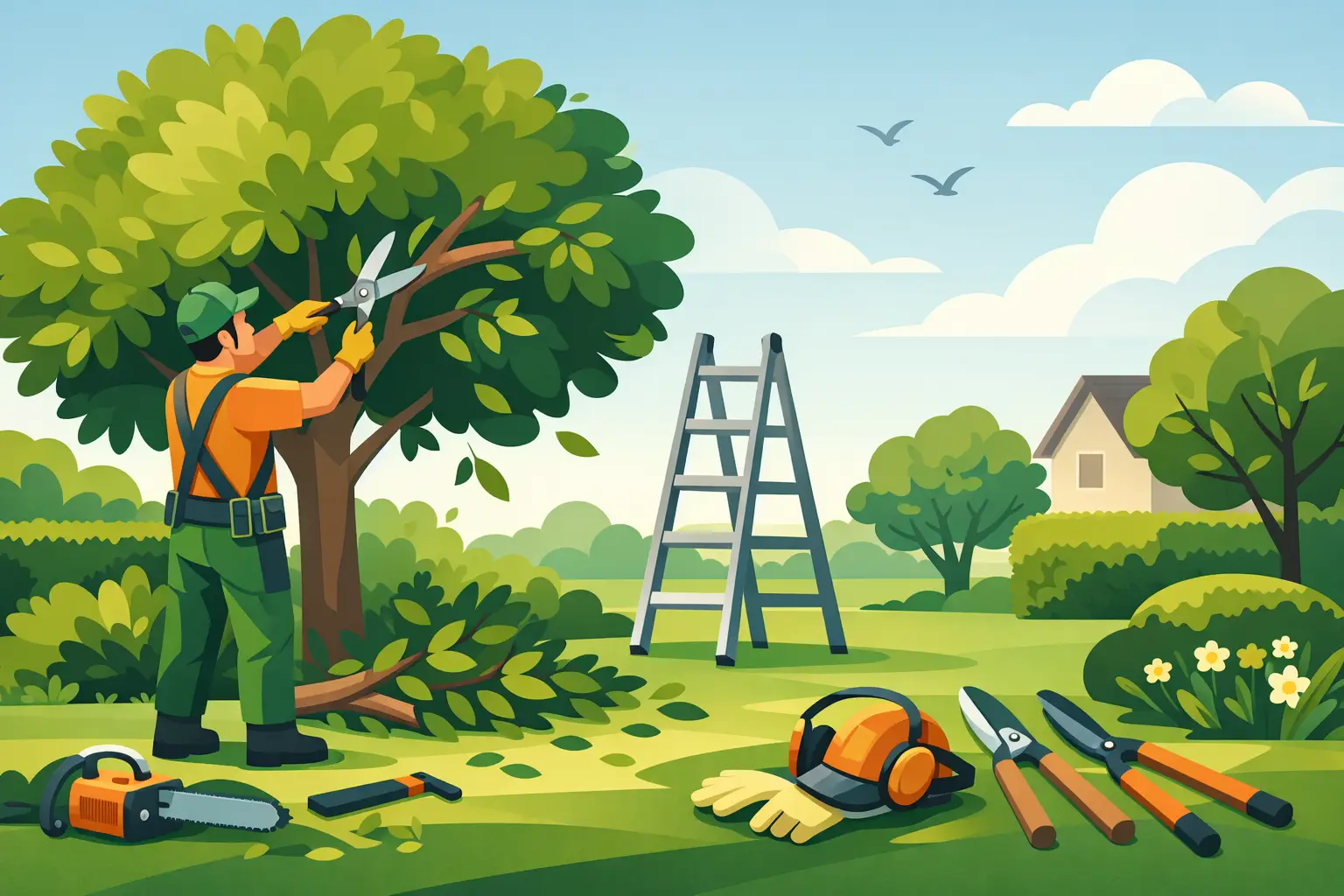
Homeowners can often handle light pruning on young trees and small branches from the ground. The situation changes quickly when a ladder, chainsaw, heavy limb, roofline, traffic area, or utility line is involved. Tree work is not just about making the cut. It is about controlling where the limb goes, protecting people and property below, and avoiding damage to the tree.
Call a professional when any of these conditions are present:
- The branch is large, high off the ground, or positioned over a home, car, deck, or sidewalk.
- The tree has cracks, cavities, dead sections, leaning, exposed roots, or signs of decay.
- Limbs are near power lines or other utility equipment.
- The work requires climbing, bucket equipment, rigging, or a chainsaw off the ground.
- A storm has left branches twisted, hung up, or partially broken.
An experienced crew can assess the load, choose safe cut locations, lower sections in a controlled way, and clean up the site afterward. That is especially valuable with mature trees common throughout Hamden, North Haven, Branford, Guilford, Wallingford, West Haven, and surrounding communities.
Protect the Tree After Trimming
Trees do not need wound paint after routine pruning. A clean, properly placed cut lets the tree begin its natural compartmentalization process. Wound dressings can trap moisture or interfere with that process, so they are rarely needed.
After trimming, watch the tree through the next growing season. Water newly planted or drought-stressed trees as needed, but do not overwater established trees. Keep mulch a few inches away from the trunk and avoid piling it against the bark. Deep mulch “volcanoes” hold moisture where it does not belong and can encourage root and trunk problems.
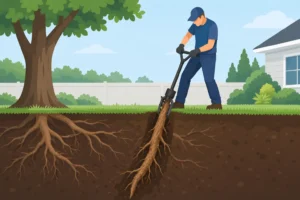
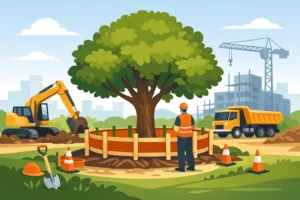
Also pay attention to the root zone. Construction activity, repeated vehicle traffic, trenching, and soil compaction can damage a tree long before the canopy shows symptoms. If a tree is declining after a landscaping project or nearby excavation, an arborist inspection can identify whether root injury is part of the problem.
Get Advice Before a Small Problem Grows
The best trimming job is often done before a branch becomes a major hazard. Young trees benefit from early structural pruning that encourages one strong central leader and well-spaced scaffold branches. Mature trees benefit from periodic inspection, deadwood removal, and thoughtful reductions instead of drastic cuts after years of neglect.
For difficult trees, Stumpbuster LLC brings licensed arborist oversight and decades of local field experience to each assessment. A careful look at the tree, its location, and the condition of the surrounding property can prevent a rushed decision after the next heavy wind or winter storm. If a limb has you second-guessing its safety, it is worth having it evaluated while there is still time to plan the work properly.