Tree roots can turn a good yard into a problem area fast. They lift sidewalks, crowd garden beds, interfere with mowing, push against retaining walls, and make a former stump feel like it never really left. The goal is to remove tree roots safely without creating a larger issue below ground, such as a damaged utility line, broken drainage pipe, unstable tree, or washed-out lawn.
For many New Haven County properties, the right approach depends on one question: Are you dealing with roots from a living tree, or roots left behind after a tree was removed? Those are two very different jobs. Cutting roots attached to a healthy mature tree requires caution. Removing the root system of an old stump often calls for specialized equipment and a more thorough excavation.
Know What the Roots Are Connected To
Before any digging or cutting begins, identify the source of the roots. A small surface root from a young ornamental tree may be manageable. Large roots extending from a mature maple, oak, or other established shade tree can be essential to the tree’s stability and health.
Roots commonly extend well beyond the canopy of a tree. In Connecticut’s compact soils, many of the roots that matter most are close to the surface, where they collect oxygen and moisture. Removing a large root near the trunk can reduce the tree’s ability to absorb water, create an entry point for decay, and make the tree less secure in high winds.
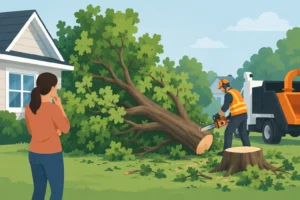
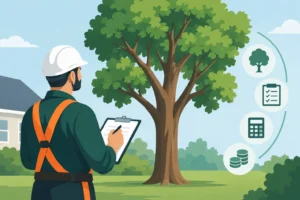
If the tree is still standing, do not assume an exposed root is safe to cut because it is in the way. Its size, distance from the trunk, and the overall condition of the tree all matter. A licensed arborist can assess whether pruning a root is reasonable or whether a different fix, such as adjusting a landscape bed or repairing a walk, will protect both the property and the tree.
Check for Underground Hazards First
Root removal is not just a digging project. Underground utilities may run through the same area, especially near homes, driveways, fences, sheds, and street-side trees. Gas, electric, cable, water, sewer, and irrigation lines may not be where you expect them to be.
Before working below the surface, arrange for utility lines to be marked and review any known private lines on the property. Utility marking typically does not cover every private system, including some sprinkler lines, landscape lighting wires, or lines running to a detached garage or pool. If there is any doubt, stop and verify the area before using power equipment.
Also look for signs of a drainage issue. Soft ground, standing water, a slow drain, foul odors, or a suddenly greener strip of lawn can point to a leaking or damaged pipe. Cutting and pulling roots around a compromised line can make a repair more difficult.
When You Can Remove Small Surface Roots
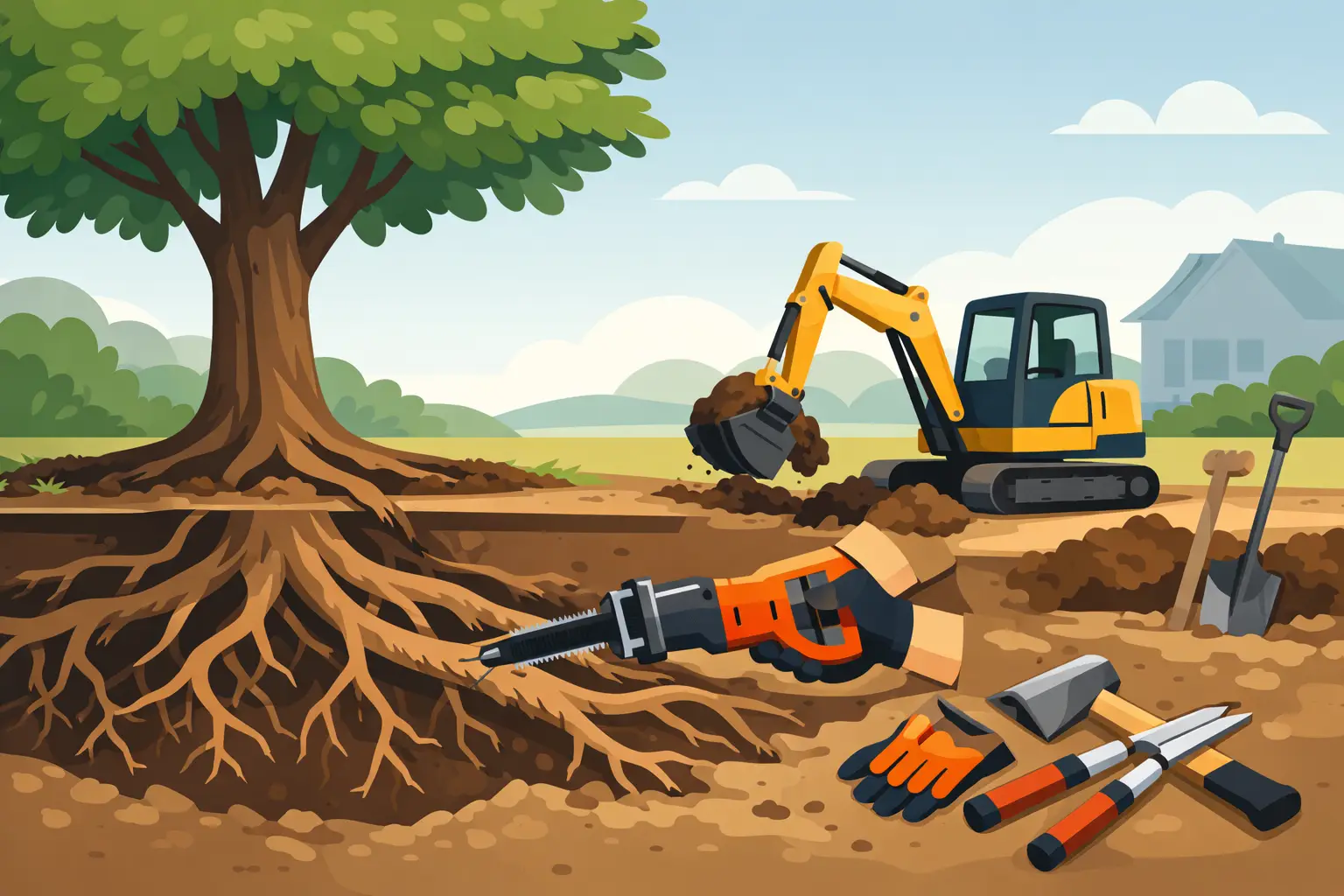
Small, shallow roots from a removed shrub or a minor volunteer tree can often be handled with hand tools. The work should be slow and controlled rather than aggressive. Expose the root with a spade, hand trowel, or digging bar so you can see its direction and size before cutting it.
For roots no longer connected to a live tree, cut manageable sections and pull them out as the soil allows. Avoid yanking on a root that disappears under a patio, fence footing, or driveway edge. Force can crack concrete, loosen pavers, or tear up more lawn than necessary.
After removal, backfill the hole with clean soil and compact it lightly. Leave room for topsoil and seed if the area needs lawn repair. Freshly disturbed ground settles, particularly after heavy rain, so check the grade again over the next few weeks.
How to Remove Tree Roots Safely Near a Living Tree
Root pruning should be treated as selective work, not a way to clear every root in an area. As a general rule, the farther a root is from the trunk and the smaller its diameter, the lower the risk. Even then, the result depends on the tree species, soil condition, age, past stress, and how many roots have already been disturbed by construction.
Avoid cutting major roots close to the trunk. Large roots provide structural support, and removing one can shift stress to the remaining root system. A tree may look fine immediately after the work, then decline over the next season or become more vulnerable during a storm.
When a root can be pruned, make a clean cut with the right tool rather than tearing it apart with an axe, backhoe, or truck. Torn roots heal poorly and create more opportunity for disease and decay. Do not apply wound paint or chemical treatments to the cut. The better protection is a clean cut, good soil conditions, and keeping the root zone free from unnecessary compaction.
If surface roots are disrupting a lawn but the tree is healthy, consider whether removal is truly the best answer. Adding a thin layer of topsoil, changing the planting area to mulch, or redirecting foot traffic can sometimes solve the practical problem without compromising the tree.
Stump Roots Need a Different Method
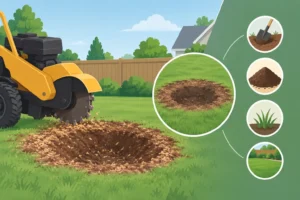
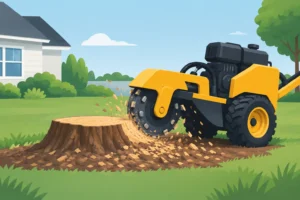
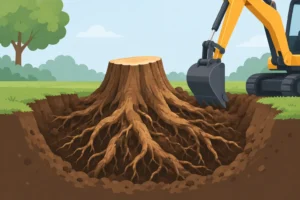
A stump left in the ground can keep sending up shoots, interfere with replanting, and leave a network of woody roots under the lawn. Grinding the stump below grade is often the first step, but shallow grinding alone does not always remove the larger roots that keep an area uneven or unusable.
This is where professional root removal makes a visible difference. The crew needs to locate the main roots, work around buried obstacles, and remove material without leaving a broad, poorly filled trench. On old or large stumps, the roots can extend a surprising distance, especially in open lawn areas where the original tree had decades to grow.
Stumpbuster LLC uses its proprietary Plowrake root removal system for jobs that require deeper, cleaner extraction beyond ordinary surface stump grinding. That approach is especially useful when a homeowner wants to reclaim space for a lawn, garden, patio, driveway work, or new planting. The objective is not simply to make the stump less noticeable. It is to leave the site ready for its next use.
Do Not Use Chemicals as a Shortcut
Chemical stump killers and root treatments are often marketed as an easy fix. In practice, they are slow, unpredictable, and rarely solve a root problem near a structure or landscaped area. They can also be a poor choice around desirable trees, vegetable gardens, pets, and drainage paths.
A chemical may help accelerate decay in a stump under the right conditions, but it does not provide immediate access to the yard or guarantee that major roots will break down quickly. Physical removal is usually the more dependable option when roots are lifting hardscape, blocking construction, or preventing new landscaping.
Never pour fuel, salt, bleach, or other household chemicals into a stump or root area. These methods can damage soil, harm nearby plants, and create a cleanup problem without removing the root system.
Signs It Is Time to Call a Professional
Some root work is clearly beyond a hand-tool project. Call for an experienced assessment when roots are lifting a sidewalk or driveway, growing near a foundation, crowding a septic or drainage area, or coming from a large living tree. The same applies if the roots are near marked utilities, if the tree shows dead branches or leaning, or if the stump is too large to handle safely.
A professional can determine whether the concern is tree health, property damage, or both. That distinction matters. A root pressing against a walkway may call for selective pruning and concrete repair. A decaying stump in the middle of a future garden may need full removal and proper grading. The right solution protects the investment you are making in the property.
Plan for Cleanup and the Next Use of the Space
Root removal does not end when the last piece is pulled from the ground. The area needs to be graded, filled, and prepared according to what comes next. Lawn areas need quality soil and seed. Garden beds may need amended soil. Areas intended for a shed, patio, or other structure may need more settling time and a properly compacted base.
If you are planting another tree where a stump stood, shift the new planting location away from the old root zone when possible. Old wood can continue decomposing underground for years, which may cause minor settling and compete with a new tree’s roots during establishment.
A clean, level yard is easier to mow, safer to walk, and more useful for the way you actually live or work on the property. When roots are causing trouble, a careful assessment and the right equipment can turn an obstacle back into usable ground. For property owners in New Haven County, a free estimate is a practical first step before cutting into roots that may be doing more underground than they appear to be doing above it.