A branch hanging over a driveway, brushing a roof, or blocking a window may look like a simple weekend job. In practice, one poor cut or one unexpected fall can damage a healthy tree, break a gutter, pull down a service line, or cause a serious injury. This guide to safe tree pruning helps New Haven County property owners make sound decisions before picking up a saw.
Pruning has a purpose beyond making a tree look neater. Done correctly, it removes dead or weak wood, improves clearance around structures, reduces certain hazards, and supports a tree’s natural form. Done carelessly, it can create decay, trigger weak regrowth, and leave the property with a larger problem than it had before.
Start With the Tree, Not the Tool
Before deciding what to remove, look at the entire tree from a distance. Notice its height, canopy shape, lean, major dead limbs, and how close it stands to the house, garage, fence, driveway, and utility lines. Then look at the ground below. A safe landing area matters just as much as the branch itself.
A small branch on a young ornamental tree may be a reasonable homeowner task. A large limb over a roof is not. Size, height, tree condition, and targets below all change the risk. A branch can be sound on the outside but cracked, hollow, or heavily decayed near its attachment point.
Do not prune if you see a trunk split, mushrooms or decay around the base, uplifted roots, a sudden lean, or major limbs resting on wires. Those are signs to stop and have the tree assessed by a qualified, insured tree professional.
A Guide to Safe Tree Pruning: Know What to Remove
Good pruning is selective. The goal is not to make every branch shorter or make the canopy perfectly even. Trees do not grow like hedges, and aggressive cutting often causes more harm than benefit.
Dead, broken, rubbing, and clearly diseased branches are the usual first candidates. Branches that interfere with a roof, walkway, driveway, or building may also need attention. When two limbs cross and rub, removing the weaker or less favorably positioned one can prevent future wounds.
Keep these priorities in mind before making a cut:
- Remove deadwood that could fall or strike people, vehicles, or structures.
- Maintain reasonable clearance from roofs, chimneys, windows, and driveways.
- Correct small structural problems early, before limbs become large and heavy.
- Preserve the tree’s natural branch spacing and overall balance.
- Leave utility-line clearance to trained crews and the appropriate utility provider.
Avoid topping a tree – cutting main leaders or major limbs back to blunt stubs. Topping leaves large wounds and often leads to fast, weakly attached shoots. It can make a tall tree more hazardous, not less. Likewise, avoid stripping out the interior of a mature tree simply to let in more light. Too much thinning can expose bark to sun damage and reduce the tree’s ability to produce energy.
As a general rule, do not remove more than about one-quarter of a healthy tree’s living canopy in one season. Many mature trees need far less. If substantial reduction seems necessary, the work should be planned by an arborist who can determine whether pruning, cabling, removal, or monitoring is the better option.
Make Cuts That Let the Tree Heal Properly
Every pruning cut is a wound. Trees do not heal in the same way people do, but they can seal off damaged tissue over time when cuts are placed correctly.
When removing a branch, find the branch collar – the slightly swollen area where the branch joins the trunk or parent limb. Cut just outside that collar. Do not cut flush against the trunk, which removes protective tissue, and do not leave a long stub, which can decay before the tree closes the wound.
For branches too heavy to hold with one hand, use the three-cut method. Start with a small undercut several inches out from the trunk. Make a second cut from the top farther out on the branch so the weight breaks away without tearing bark. Then remove the remaining stub with a final cut just outside the branch collar.
That extra step prevents a long strip of bark from peeling down the trunk as the branch falls. It is a simple technique, but it only works when the branch is within your control and there is no chance it will swing, bounce, or strike a target below.
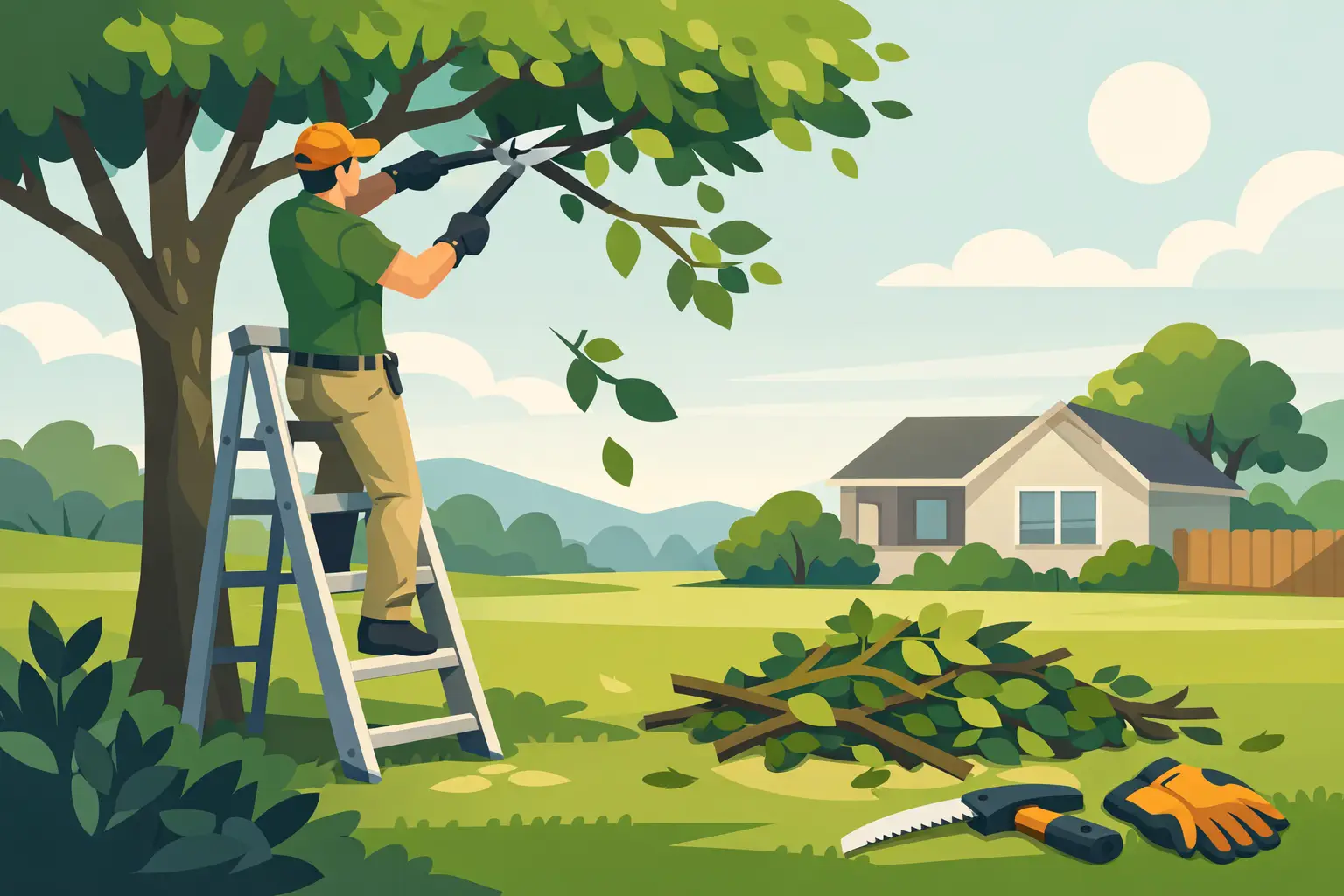
Sharp, clean hand pruners and loppers are suitable for small branches. A hand saw works well for somewhat larger limbs when both feet are on stable ground. Chainsaws, pole saws, ladders, and climbing equipment raise the risk sharply. A pole saw can be especially deceptive because the cut branch may drop directly toward the operator.
Set Limits Before You Start
The safest tree-pruning decision is often deciding not to do the work yourself. Never use a ladder with a chainsaw or attempt to hold, cut, and control a heavy branch at the same time. Branches rarely fall straight down. They can twist, kick back, catch on other limbs, or roll after landing.
Do not work near overhead power lines. Even a branch that does not touch a wire can shift unexpectedly during removal. Assume all overhead lines are energized, and keep people, tools, ladders, and branches well away from them.
Weather also matters in Connecticut. Wind turns a predictable branch into an unpredictable one, while rain, ice, and wet leaves make footing unsafe. Postpone the work if the ground is soft, the branches are wet, or gusts are moving the canopy. Cold-weather pruning can be appropriate for some trees, but frozen ground and icy surfaces still create hazards for the person doing the work.
Before any small, ground-level pruning project, wear eye protection, gloves, sturdy boots, and close-fitting clothing. Clear children, pets, vehicles, and outdoor furniture from the work area. Let someone know you are working outside, and keep a clear path away from the drop zone.
Timing Depends on the Tree and the Goal
There is no single perfect pruning date for every tree. For many deciduous shade trees, late winter is a practical time for structural pruning because leaves are off and the branch arrangement is easier to see. Dormant-season work may also reduce stress on certain species.
But timing depends on the tree. Spring-flowering ornamentals are often best pruned shortly after they bloom if preserving next year’s flowers matters. Oaks should be handled carefully during periods when certain diseases are active, and storm-damaged branches may need prompt attention regardless of the season.
Hazard removal should not wait for an ideal calendar date. A broken limb over an entrance, a branch resting on a roof, or a split leader needs a professional evaluation now. Healthy-tree pruning can usually be scheduled. Immediate safety issues should be addressed before the next windstorm.
Watch for Problems Pruning Cannot Solve
Pruning can improve clearance and remove defective limbs, but it cannot fix every tree problem. A tree with significant trunk decay, root damage, poor anchoring, or a severe lean may remain hazardous even after branches are reduced. Cutting back the canopy can sometimes lessen wind resistance, but it is not a guarantee that a compromised tree will stay standing.
Construction damage, compacted soil, repeated flooding, root loss, and past topping can all affect stability. Trees near patios, retaining walls, foundations, and parking areas deserve extra attention because there is little room for error if they fail.
This is where experienced judgment matters. A licensed arborist can evaluate the tree’s structure, identify defects that are easy to miss from the ground, and recommend a practical course of action. Sometimes that means careful pruning. Sometimes it means removal before the tree damages a home, vehicle, or neighboring property.
When to Call a Professional Tree Service
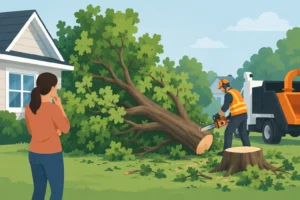
Call for help when branches are over a roof or driveway, the work requires climbing or a ladder, limbs are larger than you can safely control, or the tree is close to wires. Professional service is also the right choice for storm-damaged trees, hanging limbs, trees with visible decay, and any tree that could strike a structure if it fails.
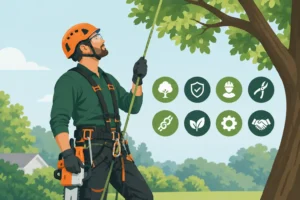
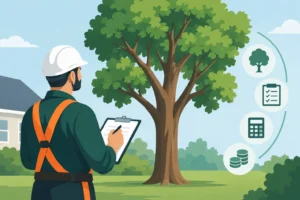
For property owners in New Haven County, Stumpbuster LLC brings arborist-led experience to pruning decisions that should not be guessed at. A proper on-site assessment considers the tree, the surrounding property, access for equipment, and cleanup – not just the branch that first caught your attention.
A healthy tree should look natural after pruning, not cut back into submission. If a branch is beyond safe reach, too heavy to predict, or too close to something you cannot afford to damage, leave it in place and arrange a professional estimate. That caution protects more than your tree. It protects the people and property underneath it.