A low-hanging limb over a parking space, roots lifting a sidewalk panel, or a dead tree near a building can turn into a liability problem fast. This guide to commercial property tree care is built for Connecticut property owners and managers who need their grounds to stay safe, presentable, and workable without wasting money on unnecessary tree work.
Commercial landscapes take more abuse than residential yards. Trees grow around pavement, utility lines, signage, loading areas, entrances, and tenant parking. They also have to stand up to New Haven County weather, from heavy wet snow and ice to summer storms that expose weak limbs and unstable trees. A practical tree-care plan protects people first, then buildings, vehicles, and the appearance of the property.
Start With Safety and Site Access
The highest-priority trees are not always the largest ones. A modest-sized tree leaning over an entrance or dropping branches near customer parking may need attention before a mature shade tree in an unused corner of the lot. Walk the property with safety and access in mind, especially after storms and before seasonal maintenance begins.
Look for dead, hanging, cracked, or broken limbs over sidewalks, drive lanes, dumpster areas, loading zones, patios, and building entrances. Watch for branches rubbing roofs, siding, gutters, light poles, signs, or utility equipment. Any tree that has shifted in the ground, developed a noticeable lean, or shows exposed roots around its base deserves a closer inspection.
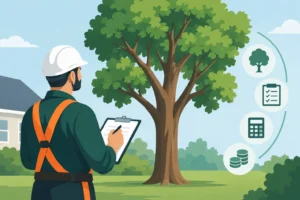
Do not assume a tree is safe because it still has leaves. Trees can have internal decay, storm damage, or weakened branch connections that are not obvious from the ground. A licensed arborist can assess whether selective trimming will correct the problem or whether removal is the safer choice.
Access matters just as much as the tree itself. Commercial jobs often require equipment to work around parked cars, curbs, landscaping, fences, delivery schedules, and tenant activity. Planning the work area in advance helps prevent disruption and keeps the job moving safely.
Build a Commercial Property Tree Care Schedule
Tree care works best as planned maintenance, not as a reaction after something falls. The right schedule depends on the age and condition of the trees, the amount of traffic on the site, and how close trees are to structures and paved areas.
For most commercial properties, a professional inspection once a year is a sensible starting point. Properties with mature trees over parking, sidewalks, public areas, or buildings may need seasonal checks, particularly before winter and after major storms. Retail centers, apartment communities, offices, medical facilities, and industrial sites all have different traffic patterns, but none can afford an avoidable hazard near a common area.
Spring is a good time to identify winter damage, remove broken limbs, and check for trees that have declined. Summer trimming can improve clearance around buildings, lights, signs, and roadways, though major pruning should be based on tree species and condition rather than a calendar alone. Fall is often the time to remove deadwood before snow and ice add weight to weak branches. After a significant storm, inspect the property promptly even if the trees appear intact from a distance.
Keep a simple record of inspections, recommendations, completed work, and storm-related issues. This gives property managers a clearer maintenance history and makes budgeting easier. It also helps identify repeat trouble spots, such as a row of trees along a heaved sidewalk or branches that continually interfere with exterior lighting.
Trim for Clearance, Structure, and Appearance
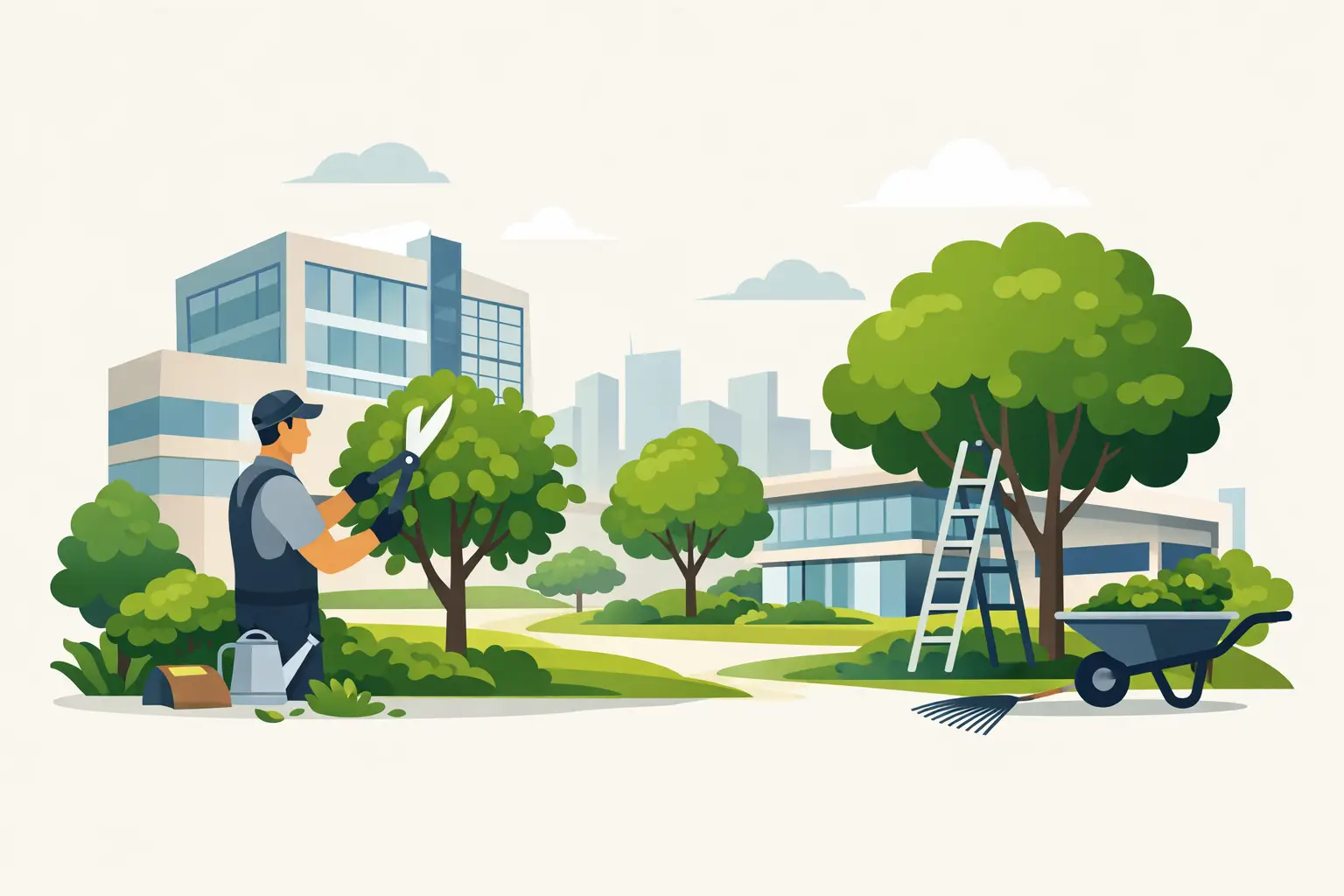
Commercial tree trimming is not just about making trees look neat. Proper pruning removes dead or damaged limbs, improves clearance, reduces overcrowding, and helps preserve a sound branch structure. Done correctly, it can extend the useful life of a tree while keeping it from becoming a problem for the property.
The wrong kind of trimming can create more issues than it solves. Cutting too much foliage at once can stress a tree. Topping, or cutting large upper limbs back indiscriminately, often leads to weak regrowth and a less stable canopy. A tree may look smaller for a short time but become more difficult and costly to manage later.
Instead, focus on the result the property needs. That may mean raising branches above parking and walkways, removing limbs that touch a roof, thinning selected areas to reduce wind resistance, or clearing sightlines around security cameras and signs. In a busy lot, maintaining visibility around entrances and lighting can be as important as the tree’s appearance.
Trees near power lines require special caution. Never treat utility clearance as regular pruning. If branches are near energized lines, contact the utility provider or a qualified tree professional equipped to assess the situation safely.
Know When Removal Is the Responsible Option
A healthy, well-placed tree adds shade, curb appeal, and value to a commercial property. But removal is sometimes the responsible decision. A dead tree, a tree with severe structural damage, or one growing too close to a building can create ongoing risk that trimming will not solve.
Removal may also make sense when roots are causing repeated damage to pavement, foundations, retaining walls, or underground areas. The decision is rarely as simple as seeing surface roots and cutting them. Removing major roots can destabilize a tree or cause decline, while leaving an aggressive root system in place can continue damaging the site. That is why the tree, the root system, and the surrounding infrastructure should be evaluated together.
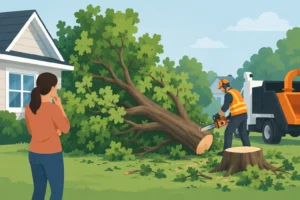
Commercial removals need careful coordination. The crew may need to control access to parking areas, protect landscaped features, work around tenants, and remove material without leaving debris behind. Insurance, trained operators, and the right equipment are essential when a tree is close to vehicles, structures, or public spaces.
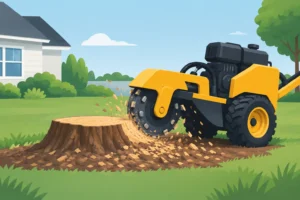
If a tree must come down, do not stop at the stump unless the location allows it. A stump in a lawn, planting bed, or future improvement area can become a tripping hazard, interfere with mowing, and limit how the space can be used.
Address Stumps and Roots Before They Create New Problems
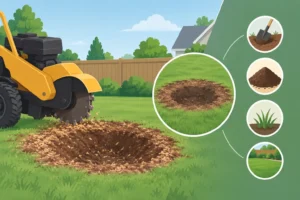
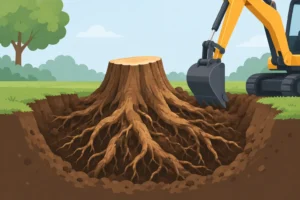
Stump grinding restores a cleaner surface, but commercial properties sometimes need more than a shallow grind. Remaining roots can interfere with paving, fencing, new landscaping, drainage work, or construction plans. They can also make a previously unusable section of the property difficult to maintain.
The needed level of removal depends on what comes next. If the area will remain a planted bed, grinding may be sufficient. If you are repairing a sidewalk, expanding parking, installing a fence, or rebuilding a landscape area, deeper root removal may be needed to prevent future complications.
Stumpbuster LLC uses its Plowrake root removal system for jobs where thorough root extraction is needed. That type of work can help open up usable ground and prepare an area for the next phase of property maintenance. It is especially useful when old stumps and heavy roots have become an obstacle rather than a minor cosmetic concern.
Protect Buildings Without Overcorrecting
Trees close to commercial buildings are common, and not every nearby tree needs removal. The question is whether the tree has enough room to grow without damaging the structure or creating a recurring maintenance burden.
Branches should be kept clear of roofs, siding, gutters, HVAC equipment, and exterior lights. This reduces abrasion, clogged drainage, moisture problems, and easy pathways for pests. It also makes routine building maintenance safer and more manageable.
Pay attention to trees planted in narrow strips between a building and pavement. Their root systems may be restricted on one side and forced toward foundations, curbs, or walkways. Early action is usually less expensive than waiting for roots to lift hardscape or for limbs to become large enough to threaten the roofline.
At the same time, avoid removing healthy trees simply because they are close. Mature trees provide shade and visual value, and removal changes drainage, heat exposure, and the look of the site. An arborist’s assessment helps determine whether trimming, monitoring, root management, or removal is the most practical option.
Choose a Tree Service That Understands Commercial Work
Commercial tree care should be handled by a company that can assess risk, communicate clearly, and complete the work without creating a second problem on the property. Ask about insurance, arborist qualifications, equipment, cleanup standards, and how the crew will manage traffic, tenants, and access during the job.
A detailed estimate should explain the scope of work. It should identify whether the job includes trimming, removal, stump grinding, root removal, hauling, and site cleanup. Vague pricing can lead to misunderstandings, especially when a project involves difficult access or hidden root systems.
For New Haven County property owners, local experience matters. A crew familiar with Connecticut tree species, storm patterns, tight commercial sites, and the practical needs of property managers can make better recommendations from the start.
A well-maintained property does not need to look overly manicured. It needs trees that are healthy where possible, hazards addressed before they become emergencies, and grounds that support the people who use them every day. If a tree, stump, or root system is getting in the way of that goal, schedule an evaluation before the next storm or maintenance issue makes the decision for you.