A branch hanging over the fence rarely stays a small problem. One windy storm, one blocked driveway, or one conversation with a frustrated neighbor is usually all it takes to turn an overgrown edge of the yard into a real property issue. If you need tree service for overgrown property lines, the goal is not just to cut things back. The goal is to solve the problem safely, protect the tree when possible, and avoid creating a bigger issue with damage, liability, or poor pruning.
When property line tree growth becomes a real problem
Trees do not pay attention to fences, survey pins, or lot maps. Over time, limbs stretch into neighboring yards, brush crowds parking areas, and root systems start affecting lawns, walkways, and hardscapes. In many cases, the problem builds slowly enough that owners put it off until there is a clear hazard or a complaint.
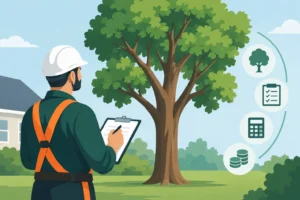
That is usually the wrong point to start. Once a tree is scraping a roof, dropping large limbs over a shared boundary, interfering with service lines, or blocking access, the work becomes more urgent and often more complicated. A proper assessment matters because not every overgrown property line tree should be handled the same way. Some need selective pruning. Some need weight reduction and canopy balancing. Some are damaged, declining, or poorly located and are better candidates for removal.
The right answer depends on species, tree health, growth pattern, distance to structures, and how much of the canopy has extended beyond the original growing space. It also depends on whether the issue is above ground, below ground, or both.
What a tree service for overgrown property lines should actually include
A lot of people assume this kind of work means cutting every branch back to the fence line and calling it done. That may look simple on paper, but in the field it can be the fastest way to stress the tree, create an unbalanced canopy, or leave weak regrowth that causes more trouble later.
A professional approach starts with evaluating the full tree, not just the part crossing the boundary. If one side is heavily cut and the rest is left untouched, the remaining structure can become uneven. That matters for both tree health and storm resistance. Arborist-led work focuses on where cuts should be made, how much material can be removed without overthinning, and whether the tree can still be managed long term.
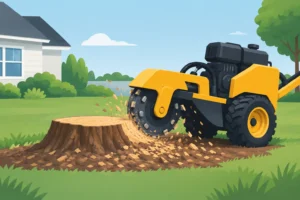
A complete service may involve crown reduction, selective limb removal, deadwood removal, clearance trimming near structures, and in some cases full tree removal if the location is no longer workable. If roots are also surfacing into adjacent areas or invading usable yard space, stump and root removal may be part of the long-term fix after removal.
Tree service for overgrown property lines near homes, fences, and driveways
Property line trees are rarely standing out in an open field. More often, they are wedged between a fence, a garage, a shed, utility lines, landscaped beds, or a neighbor’s paved area. That is where experience shows.
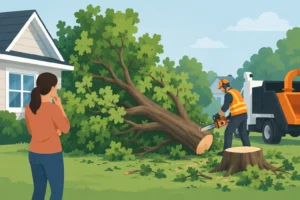
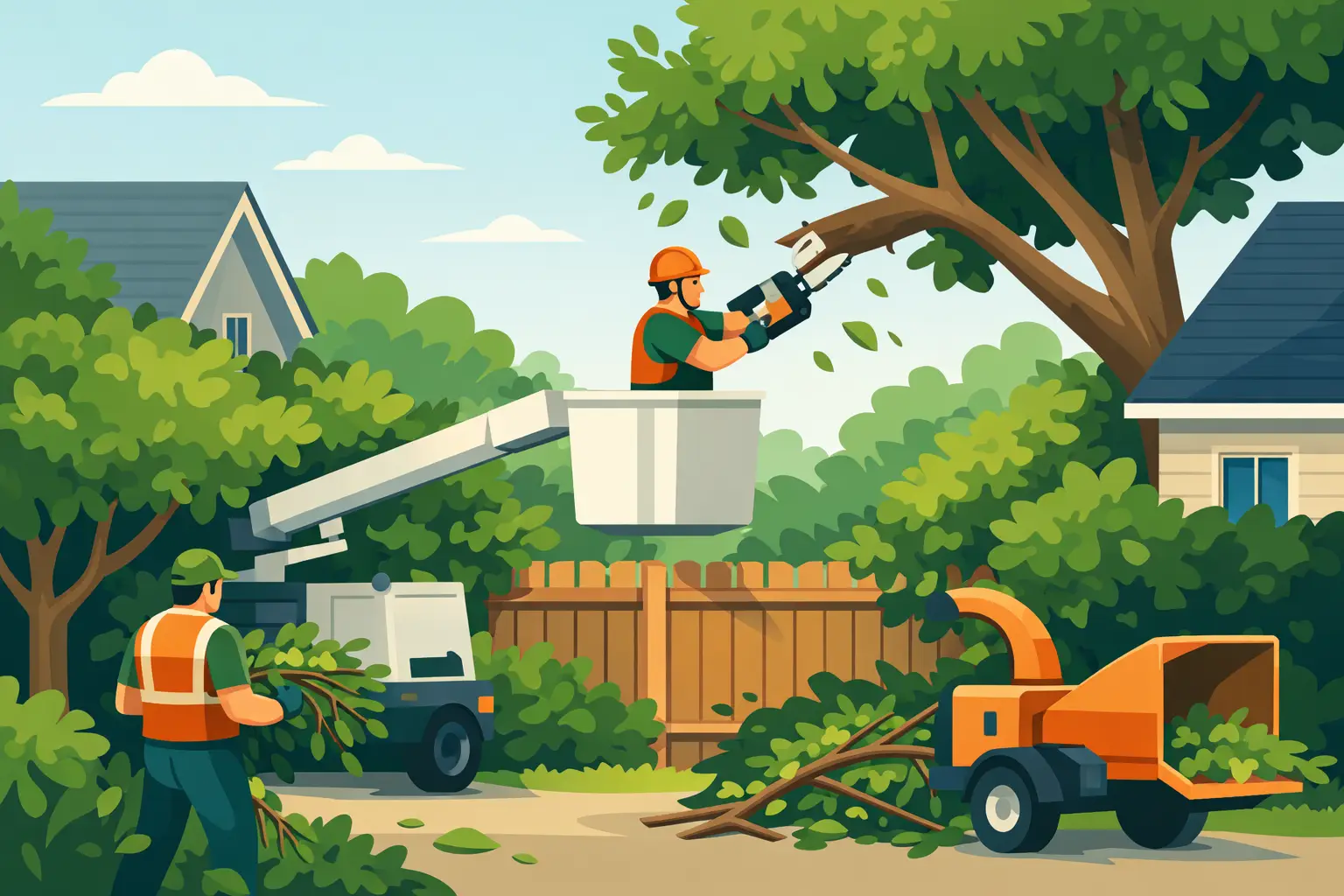
Cutting a limb is one thing. Cutting and lowering it safely in a tight space without damaging fencing, siding, lawn areas, or nearby plantings is another. The same goes for removals. A tree that might be straightforward in the middle of a yard can require sectional dismantling, controlled rigging, and careful cleanup when it is growing right on the edge of two properties.
For homeowners and commercial property managers, the practical concern is simple. You need the problem fixed without trading it for cracked fences, torn-up grass, or debris left on both sides of a boundary. Skilled crews plan for access, drop zones, rigging points, and cleanup before the first cut is made.
Trimming vs. removal – what makes sense?
This is where a lot of property owners want a one-size-fits-all answer, but it depends. If the tree is healthy, structurally sound, and simply extending too far across a lot line, pruning may be enough. Good trimming can restore clearance, reduce overhang, improve appearance, and lower the chance of storm breakage.
If the tree has multiple defects, major deadwood, trunk decay, root instability, or a growth habit that keeps creating the same problem year after year, removal may be the smarter investment. That is especially true when the tree is already too close to a home, crowding a driveway, or repeatedly affecting neighboring property.
There is also the question of repeat maintenance. Some trees respond well to periodic pruning. Others grow aggressively and require frequent work to keep the line clear. In those cases, removal may cost more upfront but save money and aggravation over time.
Why poor pruning creates bigger problems
Bad tree work can hide for a season or two before the consequences show up. Topping, random heading cuts, or aggressive side cutting along a property line often leads to dense, weak regrowth. It can also expose larger wounds, increase decay risk, and leave the tree looking lopsided and unnatural.
That matters because an over-pruned tree does not just lose appearance. It may become less stable in wind, more vulnerable to disease, and harder to manage later. A cut made in the wrong place can change how weight is distributed through the canopy. On a property line tree, that can shift future failure risk toward the house, the fence, or the neighbor’s side.
Experienced arborist oversight helps avoid that. The point is to reduce the problem while preserving sound structure whenever possible. That takes judgment, not guesswork.
Roots at the property line are part of the same problem
Overgrown property lines are not always just about branches. In older neighborhoods across New Haven County, mature trees often send roots into lawns, patios, sidewalks, and bed edges long before owners realize how extensive the spread has become.
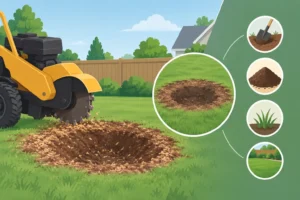
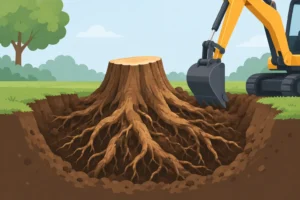
If the tree stays, root issues may need to be managed carefully to avoid destabilizing it. If the tree comes down, removing the stump but leaving major roots behind can limit how usable the space becomes. That is why deeper root removal can make a real difference when reclaiming yard space, resetting a fence line, or preparing for new landscaping.
This is one area where equipment matters. A contractor with the ability to remove roots more thoroughly can often leave a cleaner result and make the area easier to regrade, reseed, or rebuild.
Choosing a contractor for property line tree work
Not every tree company is equipped for this kind of work, and not every trimming crew is making decisions with tree health and liability in mind. Property line jobs call for more than a chainsaw and a truck. They require insurance, controlled work practices, and someone who understands both pruning standards and removal strategy.
Ask how the tree will be evaluated, what type of pruning is recommended, and whether removal is being suggested for a real structural reason or just because it is easier. Ask how access will be handled and what cleanup includes. If the work is near structures, neighboring property, or hard-to-reach areas, that conversation matters.
This is also where local experience counts. A company that has spent decades working on mature Connecticut properties has likely seen the full range of line-grown maples, neglected evergreens, storm-damaged limbs, and tight-access removals that show up in older residential neighborhoods. Stumpbuster LLC has been doing that work since 1985 under licensed arborist leadership, and that kind of field experience is hard to fake.
Timing matters more than most owners think
Many owners wait until summer growth is heavy or until storm season exposes the problem. Sometimes that is unavoidable, but earlier action usually gives you more options. Lighter corrective pruning done before limbs become oversized is often better for the tree and easier on the budget.
The same goes for removals. A tree that is already declining along a property line can become much harder and more expensive to remove after additional breakage, ground saturation, or access restrictions. Planning ahead gives you more control over scheduling and reduces the chance of emergency work.
If there is neighbor tension involved, acting sooner can help there too. A clear plan and professional scope of work often settles concerns faster than informal promises to get to it later.
What property owners should expect from the result
Good property line tree work should leave you with more than a shorter branch. You should have safer clearance, a cleaner edge, better access, and a tree that still looks like it belongs on the property if it remains standing. If removal is the right choice, the site should be left cleaner, more usable, and easier to maintain going forward.
That is the standard worth looking for. Overgrown property lines affect curb appeal, safety, usability, and neighbor relations all at once, so the work needs to solve the whole problem, not just the most visible part.
If a tree on the edge of your property is starting to control how you use the space, it is probably time to have it looked at by someone who knows what to cut, what to keep, and when removal is the better call.