A shopping center with low limbs over the parking lot, an office property with dead branches near the entry, a condo complex with roots lifting sections of sidewalk – these are not small problems you put off until next season. Commercial tree maintenance services are about safety, appearance, liability, and keeping the property usable every day.
For commercial properties in New Haven County, tree work needs to be handled with more than a chainsaw and a truck. You need experienced judgment, proper insurance, clean execution, and a crew that understands how tree decisions affect tenants, customers, foot traffic, vehicles, signage, drainage, and structures. That is where arborist-led service makes a real difference.
What commercial tree maintenance services actually include
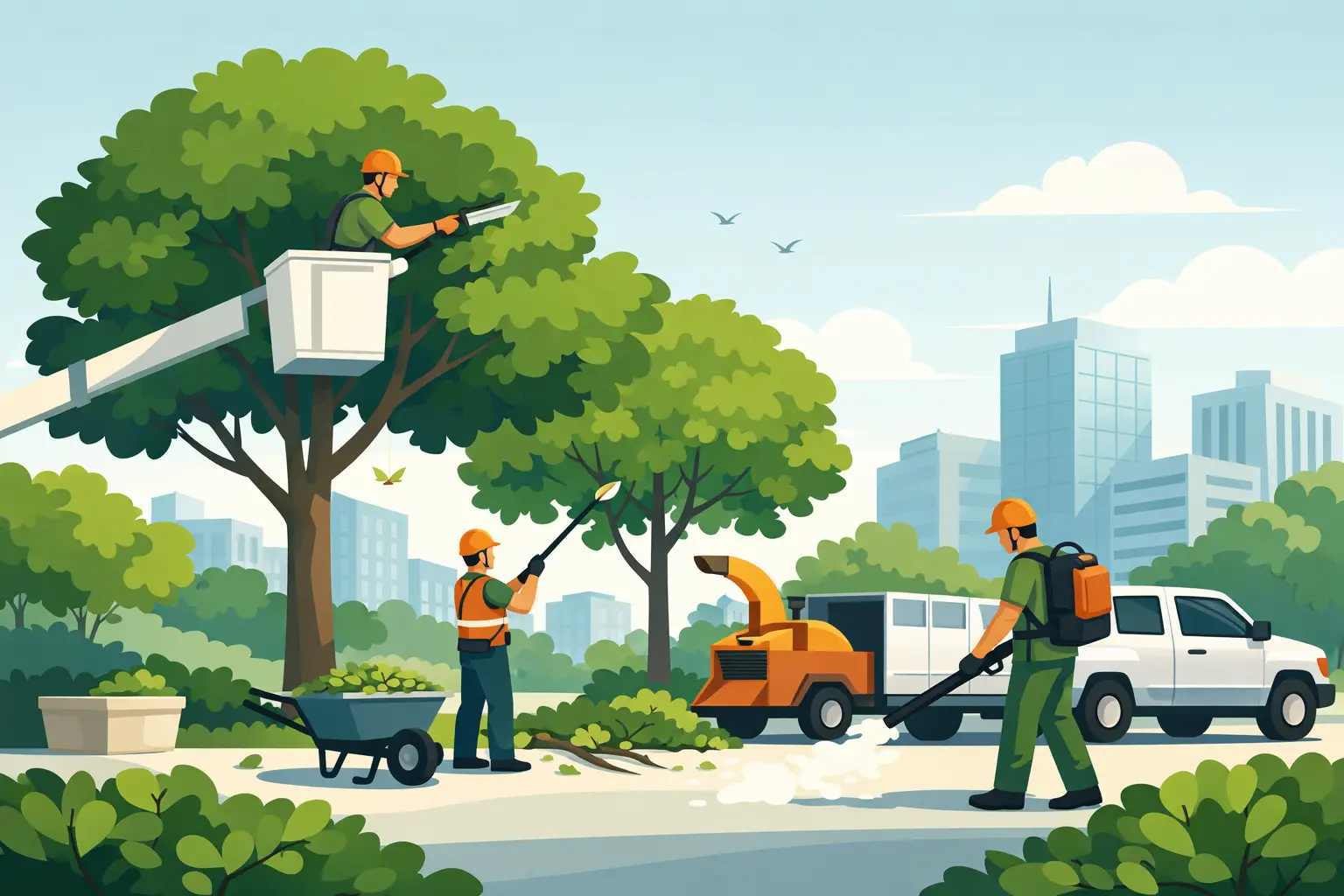
At the commercial level, tree maintenance is rarely just one task. Most properties need a mix of pruning, hazard reduction, selective removals, stump grinding, root management, and routine cleanup. The right scope depends on the age of the trees, the layout of the property, how the site is used, and what risks already exist.
Pruning is often the first and most cost-effective step. Removing deadwood, thinning crowded canopies, and raising low limbs can improve clearance over drives, sidewalks, loading zones, and building entrances. Good pruning also helps with sightlines around signs, lights, and security cameras. It is not just about making trees look neat. It is about reducing risk while preserving healthy structure where possible.
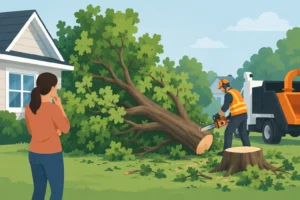
Removal becomes necessary when a tree is dead, severely declining, storm-damaged, hollow, unstable, or simply planted in the wrong place. Commercial sites often have trees growing too close to buildings, utility corridors, fences, paved areas, and common-use spaces. In those cases, waiting usually makes the job more expensive and the risk harder to control.
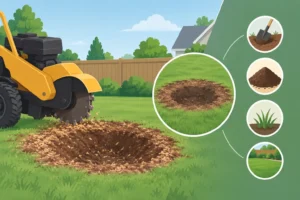
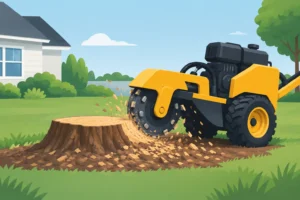
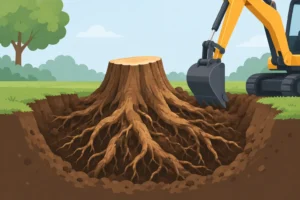
Stump and root work matters more on commercial properties than many owners expect. An old stump in a lawn area is one thing. A stump near a walkway, parking edge, or landscaped entrance is another. Surface roots can create trip hazards, interfere with mowing, damage pavement, and make a property look neglected. On sites where presentation matters, complete follow-through after removal is part of the job.
Why commercial properties need a different approach
Residential tree work and commercial tree work overlap, but they are not the same. Commercial properties bring more people, more vehicles, tighter access issues, and a higher expectation for scheduling, documentation, and jobsite control. A crew working at a retail plaza or apartment complex has to think about traffic patterns, operating hours, tenant concerns, and visible cleanup.
There is also the liability side. If a hanging limb drops over a sidewalk or a root causes a fall near a common area, the property owner or manager may be the one answering for it. Regular maintenance helps show that the site is being managed responsibly. It does not remove every risk, but it does reduce preventable ones.
This is also where experience counts. Mature trees can add real value to a commercial property. They soften the site, improve curb appeal, provide shade, and make the grounds look established. But mature trees also need better judgment. Over-pruning can weaken them. Ignoring defects can leave you with storm damage or emergency removal. The best work is usually not the most aggressive work. It is the work that solves the actual problem without creating a new one.
Commercial tree maintenance services and property appearance
A property does not need to be a country club to benefit from professional tree care. Medical offices, schools, churches, apartment buildings, industrial sites, office parks, and small retail centers all make an impression before anyone walks through the door. Trees with broken limbs, overgrowth, dead tops, or old stumps around the grounds can make a place feel poorly maintained fast.
Well-managed trees do the opposite. Proper trimming improves shape and clearance. Removing problem growth opens up entrances and signage. Clearing out dead or declining material gives the whole property a cleaner, more cared-for look. For businesses and property managers, that matters because appearance ties directly to tenant satisfaction, visitor perception, and long-term maintenance value.
It also affects how other site work performs. Landscapers can mow and edge more effectively when roots and stumps are not in the way. Parking areas stay cleaner when low branches are addressed before they start shedding over vehicles. Lighting works better when canopies are not blocking visibility where you need it most.
When routine maintenance is enough – and when it is not
Not every tree problem calls for removal. In many cases, strategic pruning and monitoring are the right answer. A healthy tree with a few dead limbs, overextended branches, or poor clearance can often be corrected without taking the whole tree down. That is why an arborist-led evaluation matters. You want to know whether the issue is structural, biological, environmental, or simply overdue maintenance.
On the other hand, some warning signs should not be brushed aside. Large dead sections, split trunks, active decay, root plate movement, repeated limb failures, and major lean changes are different from cosmetic concerns. Trees near buildings, playgrounds, power lines, parked cars, and public walkways need quicker decisions because the margin for error is smaller.
There is also an in-between category that many commercial properties deal with: trees that are not failing today but are clearly headed in the wrong direction. Maybe roots are pushing at hardscape. Maybe a neglected line of trees is now crowding the building. Maybe storm damage from past seasons was never fully corrected. This is often the best time to act, because planned work is almost always easier and less disruptive than emergency work.
The value of arborist-led planning
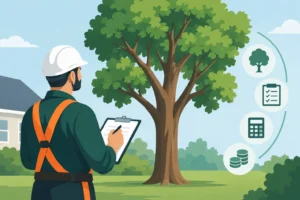
A licensed arborist brings more than technical vocabulary. The real value is practical judgment. Which trees are worth preserving? Which ones are becoming liabilities? How much can be pruned safely? What sequence of work makes sense if the site has several issues at once? Those are the questions property owners and managers need answered clearly.
For small-to-midsize commercial clients, this can help with budgeting as much as safety. Some properties do not need everything done at once. A phased plan may make more sense, especially if there are immediate hazards in one area and lower-priority cleanup in another. What matters is knowing what truly needs attention now and what can be scheduled later without creating a larger problem.
That practical, field-based approach is one reason local experience matters. Trees in coastal Connecticut, inland neighborhoods, and built-up commercial corridors do not all behave the same way. Soil conditions, storm exposure, species mix, and site constraints all affect the right decision. A contractor who has spent decades working in New Haven County is going to spot issues faster and work more efficiently than someone treating every property the same.
Cleanup, stump work, and the details clients notice
Commercial clients notice the finish. They notice whether the crew leaves ruts, debris, exposed roots, and half-done cleanup behind. They notice whether the area is left ready for normal use or whether the property staff now has a second problem to deal with.
That is why thorough stump grinding and root removal can be a major advantage, especially on sites where future use matters. If the goal is to restore lawn area, clear space for replanting, remove a tripping hazard, or fully reclaim the footprint of a removed tree, surface-level work is not always enough. On some properties, deeper and cleaner extraction makes the difference between a temporary fix and a lasting one.
Stumpbuster LLC has built its reputation on that kind of complete work, including specialized root removal capability that goes beyond basic grinding. For commercial clients, that means fewer leftovers underground, cleaner restoration, and more usable space once the job is finished.
Choosing the right commercial tree maintenance services provider
Price matters, but it should not be the only filter. Tree work on a commercial property affects safety, operations, and liability. You want a contractor that is insured, experienced, and able to explain the work in plain terms. You also want a crew that shows up when scheduled, manages the site professionally, and leaves it clean.
Ask how they evaluate tree health versus removal. Ask how they handle access, pedestrian safety, and cleanup. Ask whether they have experience with stump and root issues, not just trimming. A company that has been doing this work for decades will usually be more straightforward about what is urgent, what is optional, and what is not worth spending money on.
For property managers, facility teams, HOAs, and business owners, the best commercial tree maintenance services are the ones that prevent bigger headaches later. Safe access, healthier trees, better appearance, and clean grounds are not extras. They are part of keeping a property functional and presentable.
If your site has overgrown limbs, declining trees, old stumps, or roots starting to create problems, it is better to address it before it turns into an emergency. A quick estimate now is a lot easier than explaining later why the warning signs were ignored.