An excavator can stay well clear of a tree trunk and still do serious damage. Most construction-related tree loss happens below ground, where roots are cut, compacted, buried, or left without water. Effective tree protection during construction starts before equipment reaches the property, not after leaves begin to brown.
For homeowners and contractors in New Haven County, protecting a mature oak, maple, beech, or ornamental tree can preserve shade, privacy, curb appeal, and property value. It can also prevent the much larger expense of removing a declining tree once the project is complete.
Why construction damages trees so easily
A tree’s roots extend far beyond the visible trunk. Many of the fine feeder roots that collect water and nutrients sit in the upper layers of soil, often outside the drip line. Those roots are especially vulnerable to excavation, trenching, grading, stockpiled materials, and repeated equipment traffic.
The trouble is that damage may not show right away. A tree can look healthy when the addition, driveway, patio, septic work, or utility installation is finished. Then, one to three years later, it may develop dieback, thinning foliage, dead limbs, disease problems, or instability. At that point, the original construction work is long over, but the hazard remains.
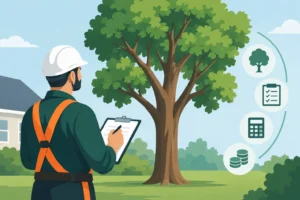
Not every tree can be saved. A tree with major decay, poor structure, or roots already compromised by age and past site changes may be a poor candidate for retention. A licensed arborist can help make that call before construction plans force a rushed decision.
Plan tree protection during construction before site work
The best time to protect trees is during design and project planning. Identify the trees worth keeping before the contractor marks excavation lines or chooses access routes. A large, healthy tree in the right location is often more valuable than a replacement tree that will take decades to provide the same shade and presence.
Start by considering the tree’s species, size, health, structure, and position relative to the planned work. A mature tree close to a new foundation may create unavoidable conflicts. A healthy tree along the edge of a proposed work area may be easy to preserve if the site plan is adjusted early.
An arborist should inspect retained trees for deadwood, weak unions, decay, root flare problems, and branches that could interfere with equipment or workers. Pruning for clearance may be appropriate, but it should be selective. Removing too much live canopy before construction adds stress at the exact time the tree needs its reserves.
Establish a protected root zone
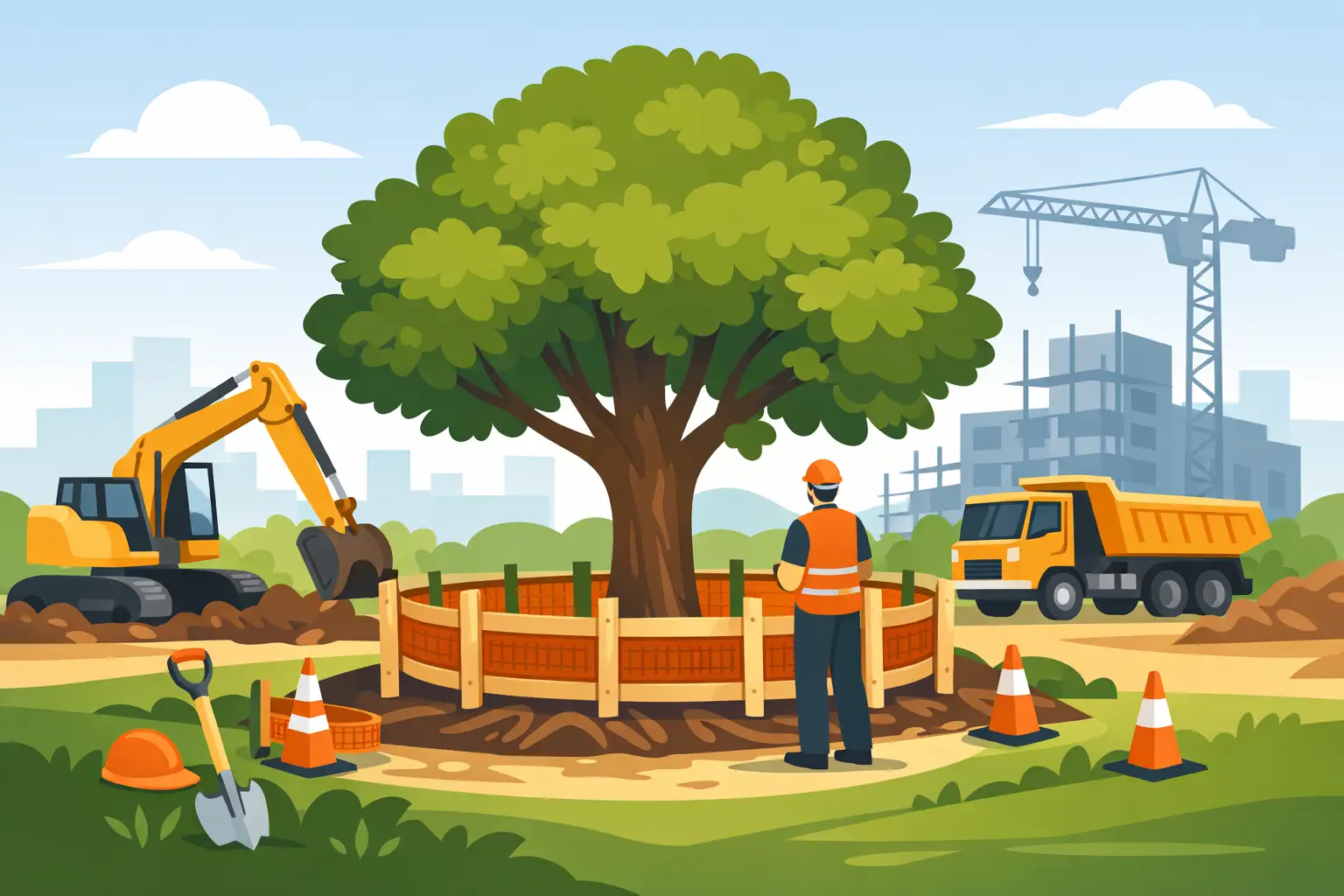
A protected root zone is the area around a tree where soil disturbance and equipment traffic are kept out. The ideal size depends on the tree, soil conditions, construction scope, and available room. In practical terms, more protected area means a better chance of long-term survival.
Install sturdy, highly visible fencing around the root zone before demolition, grading, delivery of materials, or utility work begins. Do not rely on caution tape or a few cones. They are too easy to move when a truck needs room or a crew is trying to keep a project moving.
The fence should remain in place through the entire job. It is not a suggestion. It marks an area where vehicles, dumpsters, tools, spoil piles, concrete washout, and stored materials do not belong.
Give every crew clear instructions
Tree protection fails when only the property owner understands the plan. The general contractor, excavation crew, landscaper, utility contractor, and delivery drivers all need to know which trees are being protected and where they may travel or stage materials.
Before work starts, establish the equipment route, material storage area, soil stockpile location, and washout area. If access inside the root zone is unavoidable, discuss alternatives first. Sometimes temporary ground protection, hand excavation, air excavation, directional boring, or a revised utility route can reduce root loss substantially.
The construction practices that cause the most harm
Several common job-site activities create lasting tree problems. Watching for them early is more effective than trying to treat a damaged tree later.
- Soil compaction: Repeated traffic from trucks, skid steers, loaders, and even parked equipment compresses the soil. Compacted soil has fewer air spaces, making it difficult for roots to take in oxygen and water.
- Root cutting: Trenches, foundation excavation, curb installation, and grading can sever structural roots. Cutting large roots near the trunk can reduce stability as well as tree health.
- Grade changes: Adding even a few inches of fill soil over roots can limit oxygen exchange. Removing soil can expose and injure roots that were previously protected.
- Material storage: Lumber, gravel, topsoil, pallets, and debris piles add weight and often change drainage. Wet concrete, fuel, paint, and other chemicals can also contaminate soil.
- Trunk and branch injuries: Equipment contact can tear bark, crack limbs, and create wounds that invite insects and decay organisms.
A tree cannot simply be “repaired” after these problems occur. Some damage can be managed with proper pruning, watering, soil care, and monitoring, but prevention remains the less expensive and more reliable approach.
Protect roots when excavation cannot be avoided
Some projects require work near a retained tree. In those cases, the goal is to limit disturbance and avoid unnecessary cuts. Do not let an operator trench blindly through roots just because the tree is outside the foundation footprint.
Where roots may be present, expose the area carefully before final excavation. Hand digging or air excavation can locate major roots with far less damage than a machine bucket. Once roots are identified, an arborist and contractor can decide whether the route can shift, whether a root can be cleanly pruned, or whether the tree is no longer safe to retain.
Clean cuts are better than torn roots, but that does not make root pruning harmless. Large roots provide support and transport water and nutrients. The closer a major root is cut to the trunk, the greater the risk to the tree. Root cutting should be treated as a design issue, not a last-minute field adjustment.
Avoid piling soil against the trunk or over the root flare. The root flare is where the trunk widens at the base before transitioning into roots. It should remain visible. Burying this area can lead to girdling roots, decay, and poor tree health over time.
Care for retained trees during and after the project
Construction stress can continue after the equipment leaves. Retained trees may need attention through the first few growing seasons, especially during dry Connecticut summers.
Water deeply during dry periods, focusing on the protected root area rather than soaking the trunk. A layer of organic mulch can help conserve moisture and moderate soil temperature, but keep mulch several inches away from the bark. A mulch volcano against the trunk holds moisture where it does not belong and can encourage decay.
Watch for warning signs such as early fall color, small or sparse leaves, dead branch tips, canopy thinning, mushrooms near the base, new cracks, or a noticeable lean. These symptoms do not always mean immediate removal is necessary, but they do justify an arborist inspection. A stressed tree near a home, driveway, play area, or commercial parking lot should not be ignored.
Know when removal is the safer construction choice
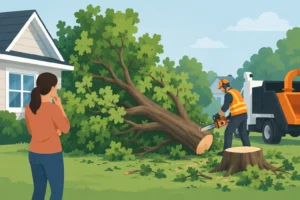
Saving every tree is not always the right outcome. If a tree has severe decay, major root loss, poor structure, or unavoidable conflicts with a new building or utility line, removal before construction may be safer and less costly than trying to preserve it.
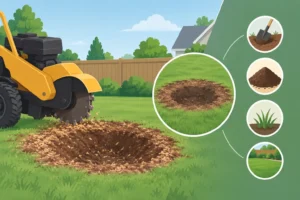
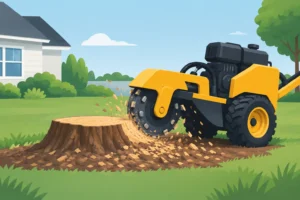
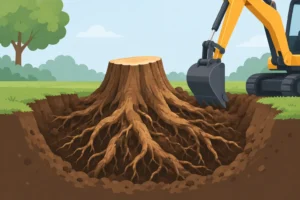
This is especially true when a damaged tree could later strike a roof, vehicle, fence, utility line, or occupied area. Professional removal before a project begins gives crews room to work and eliminates the risk of leaving behind a tree that is likely to fail after the site is finished. Stump and root removal may also be needed where a new patio, lawn, driveway, or foundation is planned.
A mature tree is an asset, but only when it can remain healthy and structurally sound in the finished landscape. Before the first machine arrives, have the trees on your property assessed, fence off the root zones that matter, and make tree decisions part of the job plan. Stumpbuster LLC has helped New Haven County property owners make those calls since 1985, with licensed arborist guidance for trees that need protection, pruning, or safe removal.