A sidewalk panel that suddenly lifts, a wet patch that never seems to dry, a driveway crack that keeps spreading – these are often the top signs roots are causing damage, not just normal settling or wear. Tree roots can do a lot of quiet damage before most property owners realize what is happening. By the time the problem is obvious, the repair is usually more expensive and the root system is harder to manage safely.
In New Haven County, mature trees are part of what makes residential and commercial properties look established and valuable. But older trees, aggressive root growth, poor planting locations, and neglected stumps can create problems under the surface. The key is knowing what to watch for early, before roots interfere with structures, utilities, drainage, and usable yard space.
Top Signs Roots Are Causing Damage Around Your Property
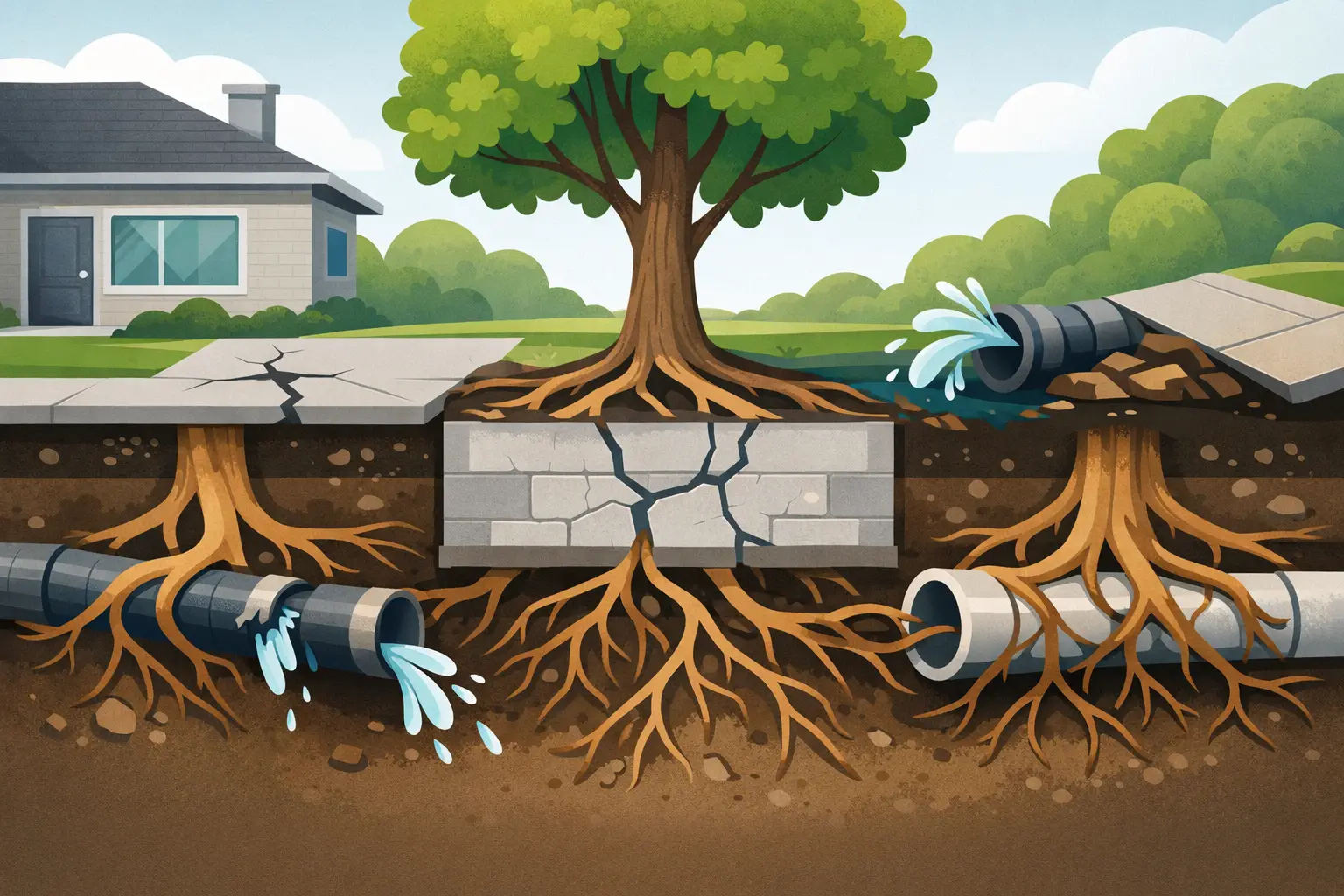
One of the most common signs is hardscape movement. If your walkway, patio, driveway edge, or retaining wall starts shifting out of place, roots may be pushing from below or wrapping tightly around nearby materials. This usually does not happen overnight. It starts with subtle lifting, uneven sections, or cracks that reappear after patching.
You may also notice lawn changes that do not make sense at first. A strip of grass may dry out faster than the rest of the yard, or one area may stay soggy long after rain. Roots can redirect moisture, compete heavily with turf, and interfere with normal drainage patterns. In some cases, surface roots become exposed and create trip hazards or make mowing difficult.
Another warning sign is unexplained plumbing trouble. If a sewer or drain line starts backing up repeatedly, roots may have found their way into a small crack or joint in the pipe. Once inside, they expand where water and nutrients are available. Many property owners first notice this as a slow drain problem, but underground root intrusion can become a major repair issue if left alone.
Cracks near a foundation or along a slab can also raise concern, although this is an area where it depends. Not every crack means tree roots are to blame. Concrete can crack from age, frost, poor base preparation, or settling. But if the cracking appears alongside nearby large trees, visible surface roots, or sections of slab that are beginning to lift, roots should be part of the conversation.
Damage to Sidewalks, Driveways, and Patios
Hard surfaces usually show the first visible evidence of root pressure. Sidewalks are especially vulnerable because they are shallow and often installed close to street trees or older landscape trees. If one slab edge is higher than the next, roots may be pushing upward from below.
Driveways can show similar symptoms, especially along the margins where roots spread outward in search of water and oxygen. Asphalt may buckle or develop waves. Concrete may crack in a pattern that follows the root path. Patios and paver areas can become uneven as roots shift the base material under them.
This kind of damage is not only cosmetic. It creates tripping hazards, water pooling, snow removal headaches, and liability concerns for both homeowners and commercial property owners. If you are seeing movement year after year, patching the surface without addressing the root cause usually buys only limited time.
Signs Roots Are Affecting Foundations and Walls
Foundation damage from roots is often misunderstood. In many cases, roots do not break through a solid foundation wall by brute force. More often, they exploit weak points, contribute to soil movement, or disturb slabs and nearby structures as they grow. That distinction matters because the fix is not always tree removal, and it is not always a structural issue alone.
Watch for cracks that widen over time, gaps where a patio or stoop pulls away from the house, and areas where adjacent concrete appears raised. Basement moisture problems can also overlap with root-related drainage issues. If roots are altering how water moves around the home, that can add pressure to the problem.
The closer a large mature tree is to the structure, the more carefully it should be evaluated. Species, soil conditions, past excavation, and property grading all matter. A licensed arborist can help determine whether the root system is actively contributing to damage or whether another issue is the main driver.
Underground Utilities and Pipe Problems
Some of the costliest root damage happens where you cannot see it. Sewer lines, older clay pipes, and drain systems are frequent targets because roots naturally seek out moisture. Once roots enter a tiny opening, they keep growing and trap debris, eventually restricting flow.
A few recurring signs are worth taking seriously. Toilets that gurgle, drains that run slow in multiple areas, bad odors outdoors, or repeated sewer backups may point to root intrusion. Wet ground near a pipe route can also be a clue.
This is one area where guessing can get expensive. Cutting roots without understanding what utility they are affecting can lead to bigger problems. A proper inspection helps confirm whether the issue is root intrusion, a collapsed line, or a combination of both.
Tree and Yard Symptoms You Should Not Ignore
Sometimes the tree itself gives away the problem. If you see major roots circling at the base, surface roots spreading aggressively, or root flare issues from poor planting depth, the tree may already be structurally compromised or positioned for future property damage. A tree that was planted too close to a house, fence, septic area, or pavement often becomes more problematic as it matures.
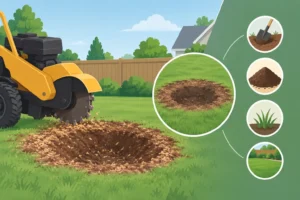
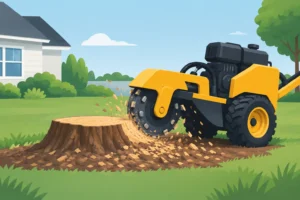
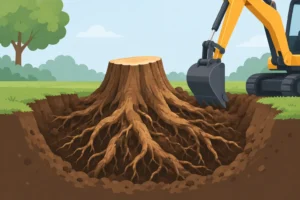
Stumps are another overlooked source of trouble. Even after a tree is cut down, remaining roots can continue to interfere with mowing, landscaping, and new construction plans. In some cases, roots decay slowly and leave voids. In others, they remain solid enough to obstruct excavation or attract unwanted growth around the old stump zone.
If you are planning a fence, addition, pool, new lawn, or patio, existing roots need to be part of the plan. What looks like a simple site prep job can turn into delays and added cost if deep roots are left in place.
When Root Damage Is Not Obvious Yet
The top signs roots are causing damage are not always dramatic. Sometimes the earliest clue is just a pattern. You keep repairing the same crack. Water keeps pooling in one corner of the yard. One section of the sidewalk becomes harder to shovel each winter because it is no longer level. These smaller signs matter because root problems usually progress, not improve, on their own.
It is also common for property owners to focus on the visible symptom instead of the source. Replacing a few pavers or filling a crack may make the area look better for a while, but if the root system remains active underneath, the pressure returns. Good property care means solving the actual cause where possible.
What to Do if You Suspect Root Damage
Start by documenting what you see. Take photos of cracks, lifting pavement, wet spots, exposed roots, and any recurring drainage or plumbing issues. If the problem changes with seasons or after heavy rain, note that too. Those details help separate a root issue from general settling, water runoff, or seasonal movement.
The next step is getting the area evaluated by someone who understands both trees and property risk. This is where arborist oversight matters. Root systems can be managed in different ways depending on the tree, the damage, and the desired outcome. Sometimes selective root removal is enough. Sometimes stump and root removal makes more sense, especially when the tree is already gone. In other cases, preserving the tree while correcting surrounding site issues is the better path.
What should be avoided is random cutting. Removing major roots without a plan can destabilize a tree, stress its health, or fail to solve the damage. The right approach depends on how large the roots are, how close they are to the trunk, what structures are affected, and whether the tree should stay or go.
For property owners in this area, that practical field judgment is what matters most. A company like Stumpbuster LLC, led by a licensed arborist and backed by decades of local experience, can identify whether roots are the real problem and remove them thoroughly when needed, especially where old stumps and deeper root systems are involved.
If something on your property looks off, trust that instinct. Small changes in pavement, drainage, or lawn condition often point to a larger issue underground, and catching it early usually gives you better options.