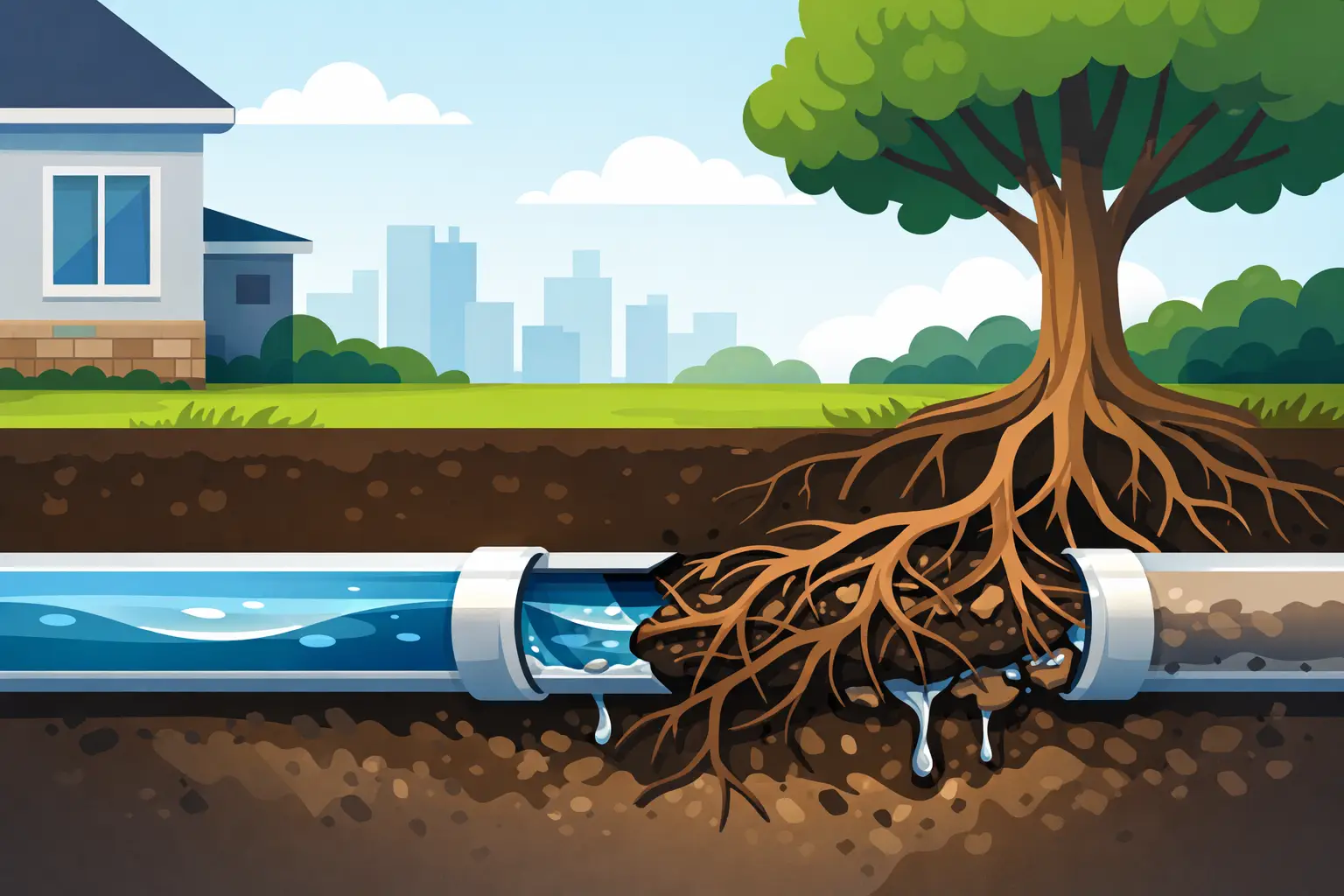
If your toilet starts gurgling after a rainstorm or the tub drains slower every month, it is fair to ask: can roots clog drain lines? Yes, they can, and around older homes in Connecticut, it happens more often than many property owners realize. Tree roots do not usually crush a sound pipe out of nowhere. They find weak points, slip into small openings, and keep growing until wastewater flow is restricted or completely blocked.
That is why this problem can sneak up on you. The tree in the yard may look healthy. The drain may still work, just slower than it used to. By the time sewage backs up or a section of pipe fails, what started as a small root intrusion can turn into a much bigger repair.
Can roots clog drain lines, or just damage them?
They can do both. In many cases, the first problem is not full pipe collapse. It is root intrusion through a loose joint, hairline crack, offset connection, or aging material such as older clay or cast iron piping. Once roots sense moisture and nutrients, they follow that path and expand inside the line.
At first, that growth may only catch toilet paper, grease, soap residue, and other debris. Then the opening narrows. Flow slows down. Backups become more frequent. If the intrusion keeps growing, the line can clog completely.
In other cases, roots contribute to structural damage over time. A compromised pipe gives them room to expand, and that pressure can worsen existing breaks or separation. So the answer is not either-or. Roots can clog the line, and they can make pipe damage worse.
Why roots are attracted to drain lines
Roots are always searching for water, oxygen, and nutrients. A sewer or drain line with even a minor leak offers all three. That does not mean every tree near a pipe is a problem, but it does mean any underground line with age, wear, or poor connections becomes a target.
Mature trees are often the biggest concern because their root systems extend well beyond the canopy. Homeowners are sometimes surprised to learn that the root causing trouble is not from the small ornamental tree near the walk. It may be from a large maple, oak, willow, or other established tree farther away.
Soil conditions matter too. In parts of New Haven County, older neighborhoods, mature landscaping, and aging underground utilities make root intrusion more likely than on newer lots with modern pipe materials. That is one reason this issue shows up repeatedly on long-settled residential and commercial properties.
Common signs roots are clogging a drain line
The earliest warning signs are usually easy to dismiss. One sink drains slowly. A toilet bubbles once in a while. The line clears for a bit, then the problem returns. Recurring symptoms are often the biggest clue that the issue is not a simple indoor clog.
Watch for slow drains in multiple fixtures, frequent backups at the lowest drain in the building, gurgling sounds when water is running, foul sewer odors indoors or outdoors, and soggy ground above the line. If the problem gets worse after heavy water use, that can also point to a restricted main line rather than a single fixture blockage.
Outside, you may notice unusually lush grass over the pipe path. That does not always mean roots are inside the line, but it can signal a leak underground. Where there is leaking wastewater, roots tend to follow.
Which trees cause the most trouble?
There is no honest way to say one species always causes drain problems and another never does. Root behavior depends on species, age, soil moisture, available space, and the condition of nearby pipes. That said, fast-growing and moisture-seeking trees are often more aggressive around underground utilities.
Large shade trees with extensive root systems deserve the most attention, especially when planted close to older homes, sidewalks, septic components, or sewer laterals. A healthy tree is not doing anything unusual by growing roots where water is available. The real conflict happens when the tree and a vulnerable pipe occupy the same space.
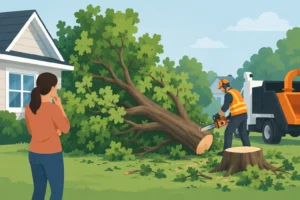
That is why removal is not automatically the first answer. Sometimes the pipe condition is the core issue. Other times, the tree location is simply too risky for the property layout. Good decisions come from looking at both the underground utility problem and the root source, not guessing at one or the other.
Can you clear the clog without removing the tree?
Sometimes, yes. If a drain specialist cuts or clears roots from inside the line, flow may be restored for a while. That can be a practical short-term solution, especially if the tree has value and the pipe is not badly damaged. But if the root entry point remains, the roots usually come back.
That is the trade-off property owners need to understand. Clearing the blockage and solving the problem are not always the same thing. A recurring root intrusion often means the pipe needs repair, replacement, or more serious attention above ground where the root system is involved.
In some situations, selective root removal near the affected area helps reduce pressure and future intrusion risk. In others, a problematic tree or stump near the line needs to be addressed because the underground conflict will keep repeating. Every site is different, which is why quick fixes can become expensive if the larger root pattern is ignored.
What not to do when roots clog drain lines
The biggest mistake is waiting too long. A line that is draining slowly today can become a messy emergency with very little notice. Backups into a basement, lower-level bathroom, or commercial space are far more disruptive than dealing with the warning signs early.
The next mistake is attacking roots blindly. Random digging near a sewer lateral, foundation, or utility corridor can create more damage than the roots themselves. Cutting major roots without understanding the tree’s stability can also affect safety, especially with large mature trees close to structures.
Chemical root killers are another area where caution matters. Some products may suppress fine root growth inside a pipe, but they are not a cure for broken joints, separated sections, or collapsed material. They also do not address the landscape problem if large roots are interfering with the yard, hardscape, or underground systems more broadly.
When root removal becomes part of the real solution
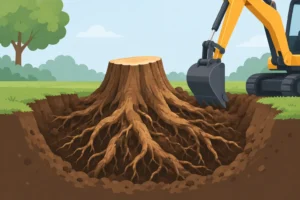
If roots are repeatedly interfering with drain lines, walks, patios, or usable yard space, it may be time to look beyond the pipe itself. Surface roots and deeper structural roots can both create ongoing property issues. At that point, the goal is not just getting the toilet to flush again. It is reducing the source of repeated underground conflict.
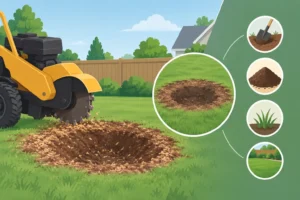
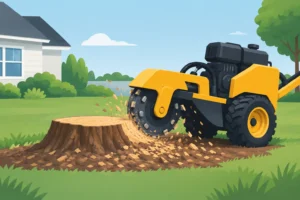
This is where experience matters. Root systems are not uniform, and removal needs to be handled with a clear plan. On some properties, the right move is targeted removal. On others, stump and root extraction after tree removal is what truly clears the area and prevents future headaches. That decision should be based on site conditions, nearby structures, and the long-term use of the property.
For homeowners and commercial property managers in New Haven County, that often means bringing in a contractor who understands both tree biology and practical excavation realities. An arborist-led company like Stumpbuster LLC approaches root problems with that bigger picture in mind, especially when roots are affecting more than one part of the property.
How to reduce the risk going forward
The best prevention starts before a blockage happens. If you have older pipes and mature trees on the lot, pay attention to recurring drain issues early. A one-time slowdown may be nothing. A repeating pattern usually means it is time to inspect the problem properly.
Smart tree placement also matters. New plantings should be chosen and located with underground utilities in mind, not just curb appeal. Large trees need room, and putting them too close to sewer lines, foundations, or paved areas tends to create expensive conflicts later.
If a tree has already been removed, do not assume the underground problem is gone. Old roots can continue to affect the area, and leftover stumps can make future use of the space harder than expected. Thorough cleanup and root management often make the property easier to maintain and less likely to develop repeat issues.
A clogged drain line rarely starts as a dramatic event. More often, it begins with a small weakness underground and a root system doing what roots naturally do. If you are seeing the signs, act early, get the line evaluated, and make sure the root issue is looked at as carefully as the plumbing problem.