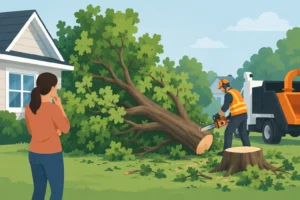
A lot of property owners call after a tree comes down and ask the same basic question: do you need the stump ground out, or do you need the roots removed too? When it comes to stump grinding versus root removal, the right answer depends on what you want to do with the area afterward, how close the tree was to structures, and how much of the root system is actually causing a problem.
Both services solve a different part of the same issue. Stump grinding takes care of the visible stump and clears the surface so the area looks better and becomes more usable. Root removal goes further. It targets buried wood and major roots that may interfere with regrading, paving, planting, construction, drainage, or future use of the property.
Stump grinding versus root removal: what is the difference?
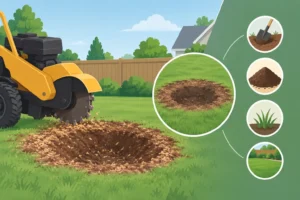
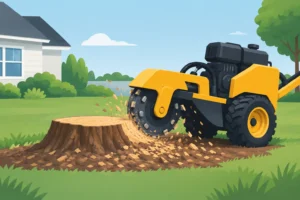
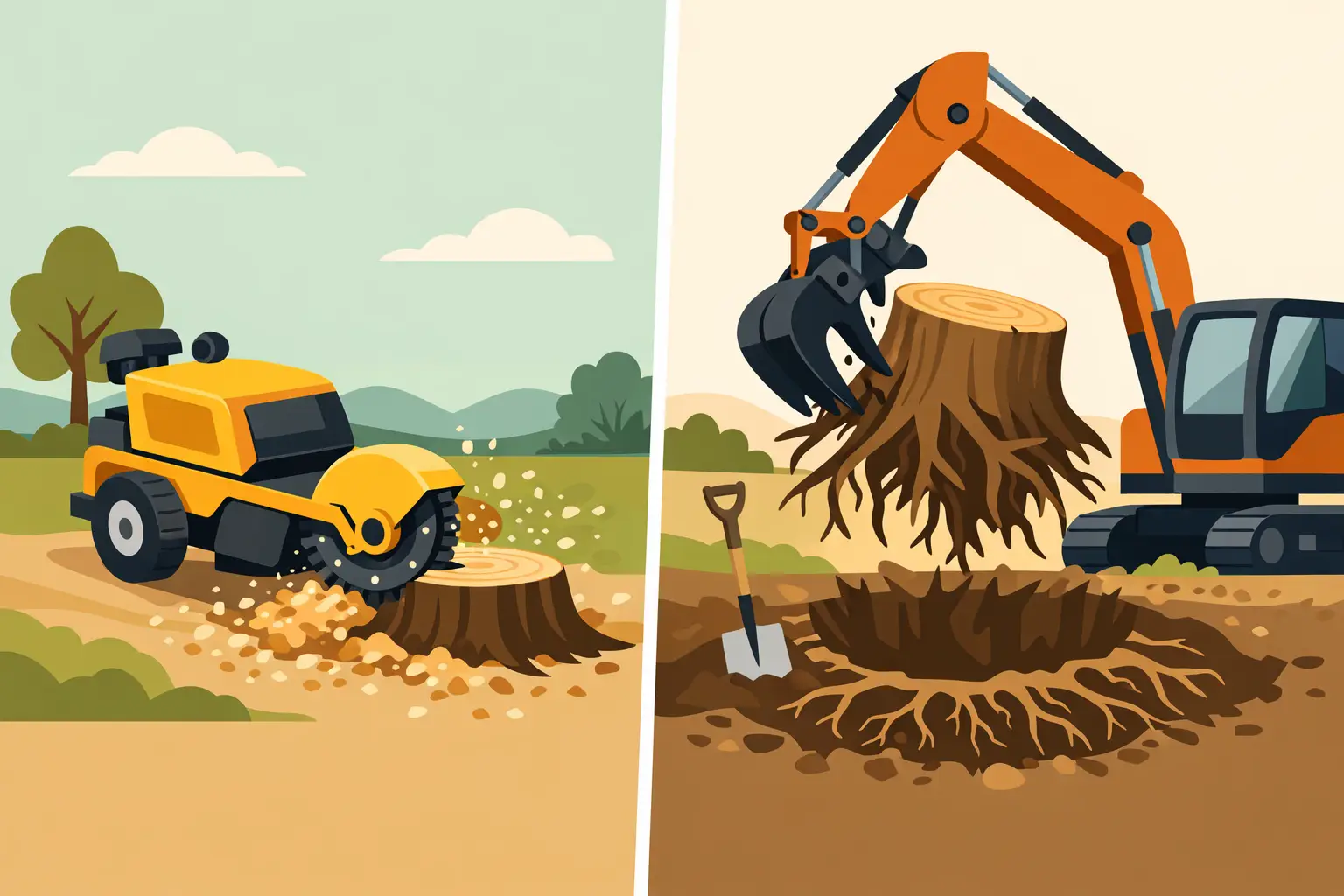
Stump grinding is usually the faster and less invasive option. A stump grinder chews the stump down below grade, turning the wood into chips. In most cases, that removes the obstacle you can see and restores the look of the lawn or planting bed without tearing up the whole yard.
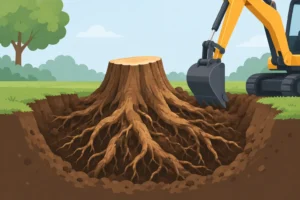
Root removal is a deeper extraction process. Instead of stopping at the stump, the work focuses on major structural roots and buried wood that remain underground. That matters when roots are lifting a surface, blocking excavation, crowding a foundation area, or keeping you from putting the space to a new use.
This is where many homeowners get tripped up. They assume that grinding the stump automatically removes the entire root system. It does not. Most roots remain in the ground after grinding and break down over time. In many situations, that is perfectly fine. In others, it leaves behind the exact problem that needs to be fixed.
When stump grinding is the better choice
If your goal is to improve appearance, eliminate a trip hazard, make mowing easier, or open up yard space, stump grinding is often the practical solution. It is efficient, cost-conscious, and easier on the surrounding landscape than full extraction.
For many residential properties, that is all that is needed. Once the stump is ground below the surface, the area can often be filled, leveled, and seeded. If there are no major root conflicts nearby, there is no reason to disturb more of the yard than necessary.
Stump grinding also makes sense when the tree was in an open lawn area and the remaining roots are unlikely to interfere with anything. Over time, those roots naturally decay underground. That process is slower with larger hardwoods than with smaller trees, but it is usually not a structural concern on its own.
The trade-off is simple. Grinding handles the stump well, but it does not create a root-free excavation zone. If you plan to build, install hardscape, or rework the soil in that exact area, grinding alone may not get you far enough.
When root removal is worth it
Root removal becomes the better investment when the buried material matters as much as the stump itself. If you are planning a patio, driveway extension, retaining wall, fence line, drainage work, or a new planting layout, hidden roots can slow the job down or cause trouble later.
It is also a smart option when roots are already affecting the property. That might mean raised lawn areas, roots crowding a foundation edge, interference with utility trenches, or a section of ground that needs to be regraded cleanly. In those cases, surface improvement is not enough. The problem is below grade.
This is especially true around older properties in towns like Hamden, North Haven, Branford, and Guilford, where mature trees often have broad, established root systems. Removing the tree does not erase decades of underground growth. If the site has a next step, whether that is construction or landscape restoration, root removal may be the cleaner path.
A deeper removal approach does come with more disruption than basic grinding. There may be more soil disturbance, more cleanup, and more planning around access. But when the end goal requires clear ground, it usually saves time and frustration compared with trying to work around buried roots later.
How future plans should drive the decision
The best way to choose between stump grinding versus root removal is to think one step past the tree work. What needs to happen in that area next?
If the answer is grass, mulch, or simple cleanup, stump grinding is often enough. If the answer is excavation, paving, replanting with a large specimen, or any project that depends on clean subsurface space, then root removal deserves serious consideration.
This is where experienced evaluation matters. Not every root system needs to come out, and not every stump can be treated the same way. Tree species, stump size, location, depth, and site access all affect the recommendation. A stump near a back fence with no future use planned is a different situation from a stump sitting in the footprint of a future shed or parking area.
Why depth and equipment matter
There is a big difference between removing enough material to make a stump disappear and removing enough material to truly clear the site. That difference comes down to depth, reach, and the ability to deal with major roots, not just the center stump.
General tree contractors may offer stump grinding as an add-on service, but deeper root extraction takes a different level of planning and equipment. That is one reason property owners often call after another company has already removed the tree but left behind a site that still cannot be used the way they intended.
At Stumpbuster LLC, that deeper capability is where arborist-led experience matters. A proprietary Plowrake root removal system allows for more complete extraction when standard grinding is not enough. For customers who need a cleaner result below grade, that can make the difference between a cosmetic fix and a site that is actually ready for the next phase.
Common situations where people choose the wrong service
One of the most common mistakes is choosing stump grinding before a landscape redesign. The stump disappears, but the roots remain exactly where new plantings, edging, or grade changes are supposed to go. Another is assuming roots near sidewalks or driveways will stop being an issue once the stump is gone. If the root mass is what is causing the problem, grinding the stump does not solve it.
There is also the opposite mistake – paying for extensive root removal when basic grinding would have done the job. If the stump is in a low-impact area and the only concern is appearance, full removal may be more than the property actually needs.
That is why a good estimate should not feel generic. The recommendation should match the site, the condition of the ground, and your plans for the area.
Cost, disruption, and long-term value
In plain terms, stump grinding is usually less expensive because it is quicker and more targeted. Root removal costs more because it is more involved. But lower upfront cost is not always better value.
If you grind a stump and then hit major roots during a patio install, fence project, or drainage repair, the job becomes harder and more expensive later. On the other hand, if you pay for full root extraction in an area that just needs to be mowed and maintained, you may be solving a problem you do not really have.
The right value comes from matching the service to the outcome you need. For some properties, that means a fast, clean stump grind and done. For others, it means taking the extra step now so the area is truly usable and trouble-free later.
What to expect from a professional assessment
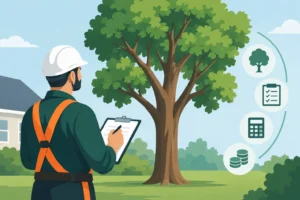
A proper assessment should look at stump size, species, depth, root spread, access for equipment, proximity to structures, and what the customer wants to do with the area. It should also account for practical concerns such as cleanup, surface restoration, and whether surrounding lawn or landscape features need protection.
That is one advantage of working with an arborist-led company instead of a one-size-fits-all contractor. The answer is not always the bigger job. It is the job that fits the property.
If you are staring at an old stump or a root system that is getting in the way, the best next step is simple: look at the site with the end use in mind. A yard that just needs to look clean calls for one approach. A yard that needs to be rebuilt, replanted, or built on calls for another. Getting that part right saves money, avoids repeat work, and leaves the property in better shape for whatever comes next.