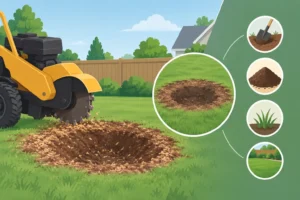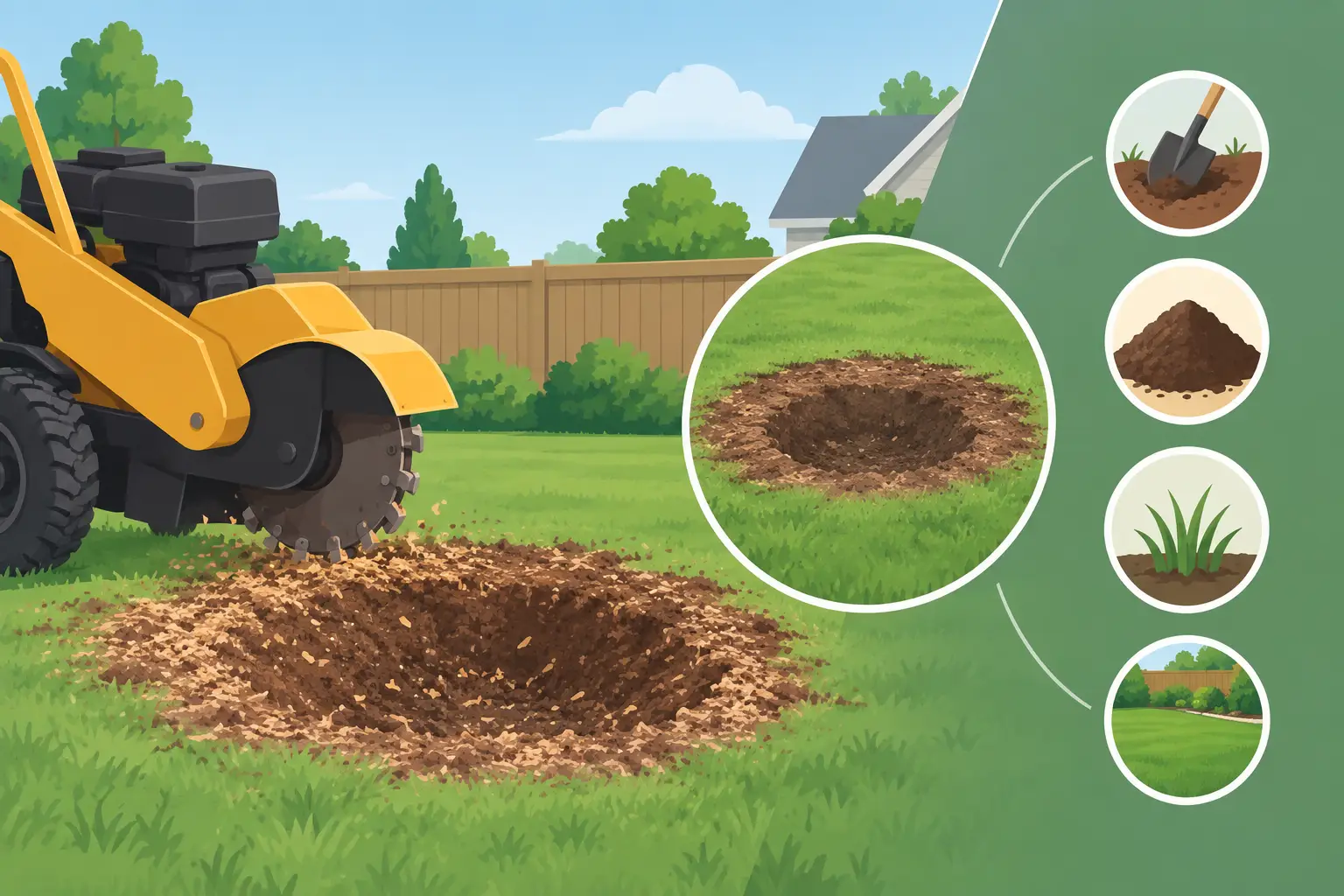
A stump can be gone in an afternoon, but the spot it occupied still needs attention. Stump holes after grinding are normal, and handling them correctly keeps a former problem tree from becoming a low spot, tripping hazard, or muddy patch in your yard.
The right next step depends on what you want from the area. A lawn needs a different finish than a planting bed, patio, driveway edge, or future fence line. The depth of the grind, the size of the original tree, and the remaining root system also affect how much material the area will need over time.
Why Stump Holes After Grinding Are Normal
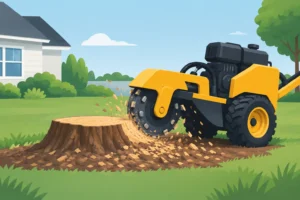
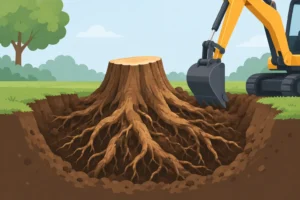
Stump grinding removes the visible stump by turning the wood into small chips below ground level. It does not mean every major root is removed from the property. Those roots can remain underground and gradually decay, especially with older, larger trees.
The resulting hole is often several inches deep and wider than the stump itself. During grinding, the operator needs room to work below the soil line and remove the woody crown where roots spread outward. A deeper grind gives you a better starting point for restoring the surface, but it also means the hole needs proper backfilling.
Many homeowners are surprised by the amount of wood chips left behind. Those chips are a normal byproduct of the work. They can be useful in some landscape areas, but they are not usually the best material for filling a hole where you want grass to grow.
Start by Deciding How You Will Use the Space
Before filling the hole, consider the finished use of the area. If the goal is simply to restore lawn, the process is straightforward: remove excess grindings, add suitable soil, grade the surface, and seed or sod the area.
A new shrub bed or mulched landscape area gives you more flexibility. Some wood chips can stay as mulch on top of the bed, although they should not be mixed heavily into the planting soil. As wood decomposes, it can temporarily use nitrogen from the soil, which may affect young plants.
For a patio, walkway, shed, fence post, or other structure, do not assume a soil-filled stump hole is ready to support weight. Buried roots and decaying wood can create future settling. That kind of project may call for additional excavation, root removal, and a properly compacted base designed for the planned structure.
Remove or Reuse the Grinding Debris Carefully
A small amount of fine grinding debris can be blended into surrounding soil, particularly if the area will become a mulched bed. But a hole filled mostly with fresh wood chips will settle substantially as the material breaks down. It may also stay soft, hold too much moisture, and make lawn restoration difficult.
For a lawn area, remove most of the grindings first. They can be spread lightly as mulch around established trees and shrubs, kept out of contact with trunks and stems. If there is more debris than you can use, it is often better to have it hauled away than to bury it in the hole.
Do not pile stump grindings against your foundation, garage, deck, or fence. Organic debris holds moisture and can encourage insects or fungal growth where you do not want it. Keep mulch and chips several inches away from wood siding and structural elements.
Use Clean Fill for the Lower Portion
A deeper hole may need clean fill soil in the lower section, followed by quality topsoil near the surface. Fill is used to take up space and establish the rough grade. Topsoil provides the growing medium grass seed, sod, or new plants need.
Add soil in layers rather than dumping everything in at once. Lightly compact each layer by tamping or watering it in, especially if the hole is large. The goal is firm, stable soil without packing it so tightly that water and roots cannot move through it.
Finish the area slightly higher than the surrounding lawn, usually by an inch or two. This is not a mistake. Soil will settle, and remaining roots below ground may decay over the next few years. A modest crown now helps prevent a depression later.
Watch for Settling Around Old Roots
Settling is the main reason a restored stump area sometimes looks good for one season and sinks the next. Large trees may have major roots extending well beyond the stump hole. When those roots decay, pockets can form underground and the soil above can drop.
This does not always happen, and it is usually manageable when the area is lawn or garden. Check the location after heavy rain and again each spring. If a low spot develops, add more screened topsoil, level it, and reseed as needed.
It is a different matter near a driveway, retaining wall, septic component, utility line, or building foundation. If the old tree was close to a structure or roots are visibly affecting hardscape, a more thorough root removal plan may be the better choice. Removing problem roots before a new project begins can prevent costly rework later.
How to Restore Grass Over a Ground Stump
Once the hole is filled and graded, rake the top few inches of soil until it is loose and even. Use a grass seed suited to Connecticut conditions, or install sod if you need faster coverage. Early fall is usually an excellent time for seeding because the soil is still warm and weed pressure is lower, though spring seeding can also work with consistent care.
Keep newly seeded soil evenly moist until germination. The surface should not dry out completely, but it should not stay saturated either. Heavy watering can wash seed into the low edge of the repair and create an uneven patch.
For sod, make sure the finished soil level matches the surrounding lawn after allowing for the sod thickness. Press the sod firmly into place, water it thoroughly, and avoid heavy foot traffic while roots establish. If the area settles after installation, lift the affected section if possible, add soil beneath it, and reset the sod.
When a Hole Needs More Than Soil and Seed
A simple lawn repair is not the right answer in every case. Professional follow-up is worth considering when the stump was very large, the hole is close to a structure, or you plan to build over the area. It also makes sense when surface roots remain in the way of mowing, planting, or installing a new landscape feature.
Some trees produce dense, stubborn root systems that keep occupying usable yard space long after stump grinding. In those situations, specialized root removal can be more effective than repeatedly filling and leveling around roots that are still present. A thorough approach is especially valuable where a homeowner wants a clean slate for a new lawn, garden, patio, or expansion project.
At Stumpbuster LLC, licensed arborist oversight and specialized root-removal equipment help property owners address not only the visible stump but also the below-ground issues that can interfere with the next use of the space.
Common Mistakes to Avoid
The most common mistake is filling the hole entirely with stump chips and expecting grass to grow normally. Another is leveling the soil flush with the lawn and overlooking the settling that comes later. Both can leave you with a recurring low spot.
Avoid planting a new tree directly in the old stump location when possible. The remaining roots, compacted soil, and decomposing wood can make establishment harder for a young tree. Move the new planting location several feet away, then choose a species appropriate for the available sunlight, mature size, and distance from your home, utility lines, and pavement.
Also pay attention to drainage. If the former stump sits at the bottom of a slope, use soil grading to direct water away from buildings and prevent the repair from becoming a puddle. A stump hole should restore the yard’s intended grade, not interrupt it.
A properly finished stump area should disappear into the rest of the property. Give the soil time to settle, check it through Connecticut’s changing seasons, and add a little topsoil when needed. That small amount of follow-up is what turns a ground stump into safe, usable yard space again.