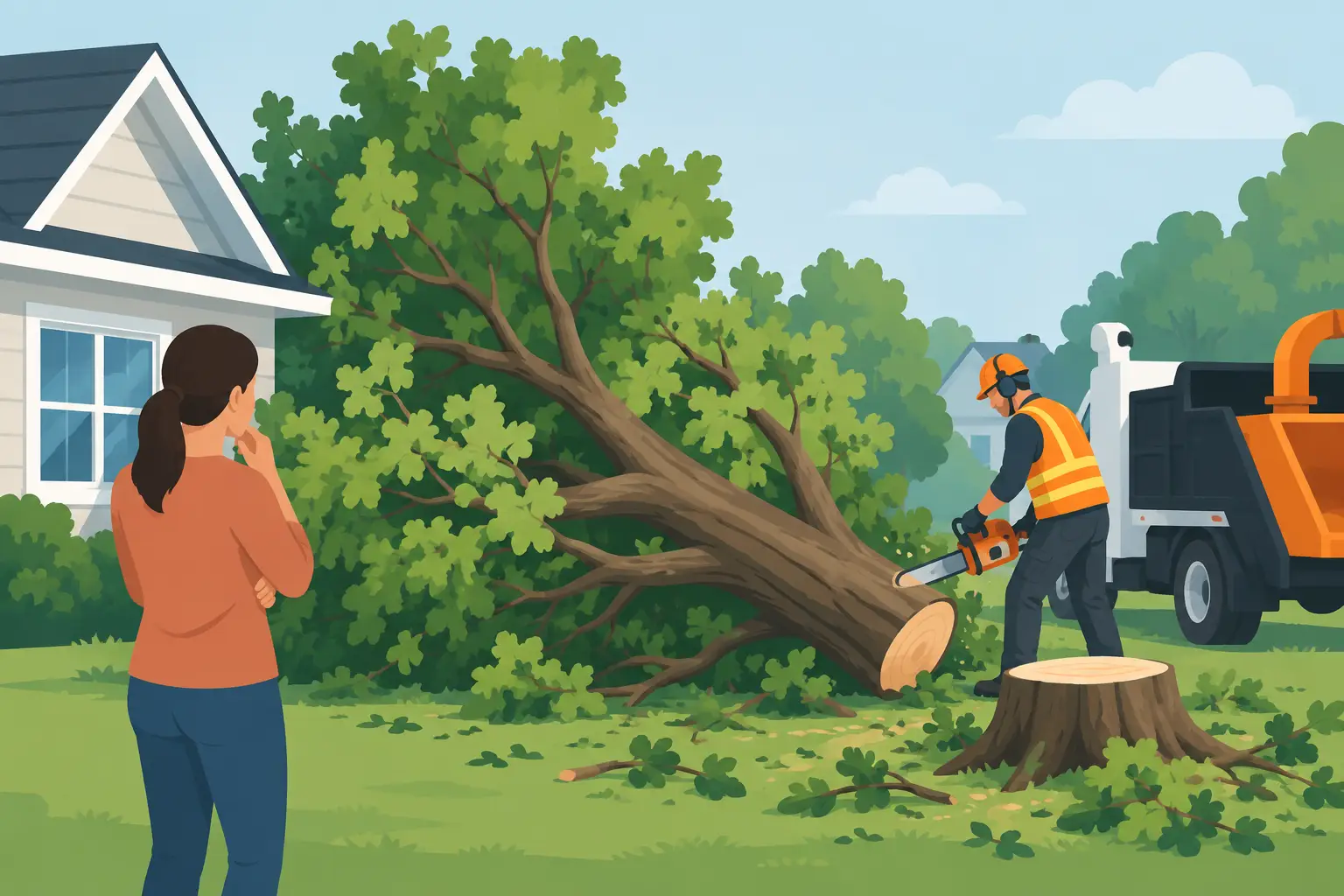
A mature oak leaning toward a roof after a Nor’easter is not a problem to watch for a few days. Neither is a split limb hanging over a driveway, a tree resting on service wires, or a trunk that has suddenly cracked at the base. This guide to emergency tree removal explains what property owners should do first, what a qualified crew will assess, and why the safest decision is often to keep people well away until the hazard can be controlled.
Emergency tree work is different from routine trimming or planned removal. The priority is not appearance or convenience. It is preventing injury, protecting structures, and stopping a damaged tree from creating a larger problem.
What Counts as an Emergency Tree Removal?
A tree does not have to be completely on the ground to be an emergency. In many cases, the greatest risk is a tree or limb that is partly failed and still under tension. Wind, saturated soil, ice, decay, or a lightning strike can leave a tree unstable even when it looks mostly intact from a distance.
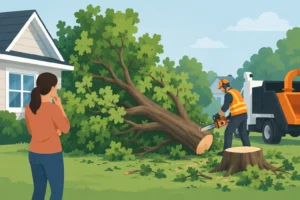
Call for urgent professional assessment when a tree or major limb has fallen on a home, garage, vehicle, fence, or access road. The same applies when a tree is leaning sharply after a storm, when fresh cracks appear in the trunk, or when roots are lifting from the ground near the base. A large branch suspended over a walkway, driveway, or play area also deserves immediate attention.
Some situations require another call before a tree company can begin. If wires are down, sparking, sagging, or in contact with a tree, treat every line as energized. Stay clear, keep others away, and contact the utility provider or emergency services as appropriate. Tree crews cannot safely remove material from energized utility lines without the proper utility clearance and specialized qualifications.
The First Minutes: Keep the Scene Safe
The urge to inspect damage up close is understandable, especially when a tree is near your house. But storm-damaged wood can shift without warning. A cracked limb may be held in place by a few fibers. A leaning trunk can be supported by compromised roots that give way when the ground dries, softens further, or catches another gust of wind.
Take these immediate steps while waiting for help:
- Move people, pets, and vehicles out of the drop zone and away from the affected area.
- Do not stand beneath hanging limbs or climb on a fallen tree to inspect it.
- Keep at least 30 feet away from downed or suspected power lines and anything touching them.
- If a tree has damaged the home, leave the affected rooms if doing so is safe and watch for falling debris, damaged wiring, or a compromised roof.
- Take photos from a safe distance for insurance documentation, but do not delay a safety call to get better pictures.
Avoid cutting, pulling, or attaching a rope to damaged limbs. A homeowner with a chainsaw can create a more dangerous situation in seconds, particularly when wood is twisted, compressed, or suspended. Even a branch that appears small can release stored force as it is cut.
What an Arborist Looks for at an Emergency Site
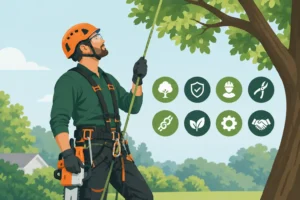
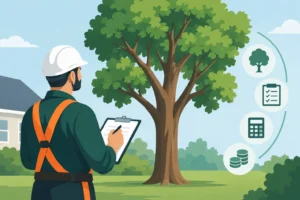
A proper emergency response begins with a hazard assessment, not with starting a saw. A licensed arborist or experienced tree professional evaluates where the tree may move, what it can strike, and how to remove it in controlled sections.
The crew will look at the lean, soil condition, root plate, trunk cracks, canopy weight, and visible decay. They also consider the location of homes, fences, driveways, utility lines, septic areas, landscaping, and neighboring property. A tree that can be dropped safely in an open yard may need to be dismantled piece by piece when it is close to a house.
This assessment also determines whether equipment can access the site. Depending on the property and the damage, removal may involve climbing, rigging, aerial equipment, cranes, or carefully staged ground work. The right method depends on the tree, the available space, and the immediate hazards. Faster is not always safer, and the least disruptive approach is not always possible after a severe storm.
In New Haven County, wet ground can add another layer of concern. Heavy rain saturates soil and weakens a tree’s hold, especially where roots are already restricted by construction, compacted soil, or decay. A tree can remain standing after the first storm and fail during the next one. That is why a new lean or lifted root area should never be ignored.
Emergency Removal Is More Than Cutting the Tree Down
The visible tree is only part of the job. Emergency crews must manage the entire site, including unstable limbs, access hazards, debris, and cleanup. A professional crew establishes a work zone, controls traffic around the property when needed, and uses the right rigging and equipment to prevent additional damage during removal.
For example, a limb resting on a roof cannot simply be cut free at the point of contact. Removing the wrong section first can cause the remaining weight to slide, punch through shingles, or pull more branches into the structure. The crew needs to reduce weight gradually and direct each section to a safe landing area.
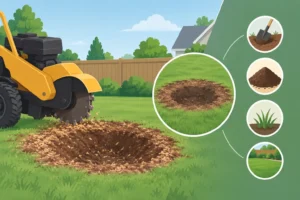
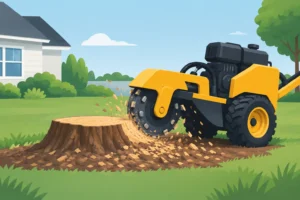
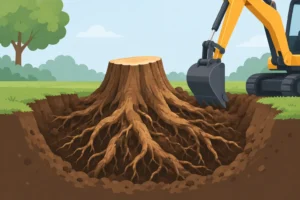
Once the immediate danger is removed, the next decision is whether to address the remaining trunk, stump, and roots. If the tree has failed at the base, stump removal may be part of restoring the area safely. If roots have heaved a walkway, damaged a lawn, or interfered with future repairs, deeper root removal may also make sense. That work can sometimes wait until the emergency scene is stable, but it should be discussed before the crew leaves.
Stumpbuster LLC has served local property owners since 1985, bringing licensed arborist oversight and specialized equipment to difficult removals, stump grinding, and root removal. For emergency work, experience matters because every damaged tree behaves differently once cutting begins.
Insurance, Documentation, and Cleanup
After everyone is safe, documentation helps move the recovery along. Take wide photos of the tree, the damage, and the surrounding area from a safe location. Note the date, weather conditions, and any visible changes you observed before the failure. Keep copies of estimates, invoices, and communication related to the work.
Insurance coverage varies by policy and by the cause of the damage. A fallen tree that damages an insured structure may be handled differently than a tree that falls harmlessly in the yard. Do not assume coverage or wait for a claim decision if there is an active safety risk. Necessary work to prevent further damage is often time-sensitive, but you should communicate with your insurer as soon as you can.
Ask the tree service what is included in the emergency scope. Removal can involve cutting and lowering the tree, hauling debris, chipping brush, protecting lawn areas, and cleaning the work zone. Stump grinding, root removal, and restoration of damaged turf may be separate services. Clear expectations prevent surprises after an already stressful event.
How to Reduce the Chance of a Tree Emergency
No one can prevent every storm-related failure. Healthy trees can lose limbs under ice or extreme wind. Still, regular inspections can identify many problems before they become urgent.
Watch for dead branches, mushrooms or decay near the base, cavities, peeling bark, repeated limb breakage, and branches rubbing against the home or roof. Trees growing too close to utility lines, structures, or heavily used areas deserve particular attention. Routine pruning can reduce excessive weight, remove deadwood, and improve clearance, but improper topping or aggressive cutting can weaken a tree instead.
It also helps to inspect mature trees after major weather events. Look for fresh cracks, newly exposed roots, hanging branches, or a lean that was not there before. If something looks different, trust that observation and have it evaluated. A timely inspection is usually simpler and less costly than an emergency response after the tree has already failed.
When a tree becomes dangerous, the best move is not a quick fix with a chainsaw. Secure the area, respect utility hazards, and bring in a properly insured, experienced crew that can make the site safe without adding to the damage. Your property can be repaired. Protecting the people around it comes first.