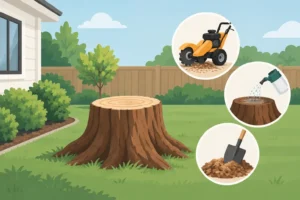
A stump can take up more of a small yard than most homeowners expect. It blocks a mower path, crowds a garden bed, creates a trip hazard, and can keep an otherwise useful corner of the property off limits. The best stump solutions for small yards depend on what you plan to do with that space next, how close the stump sits to structures, and whether problem roots remain underground.
For many New Haven County properties, the right answer is professional stump grinding. In tighter spaces or areas being prepared for a patio, lawn, garden, or new tree, deeper root removal may be the better investment. The goal is not simply to make the stump less visible. It is to leave the yard safer, cleaner, and ready for use.
Why Small-Yard Stumps Need a Different Approach
A large, open lot gives equipment and operators room to work around obstacles. Small residential yards do not. Fences, sheds, air-conditioning units, stone walls, gardens, underground utilities, and nearby foundations all affect how a stump can be removed safely.
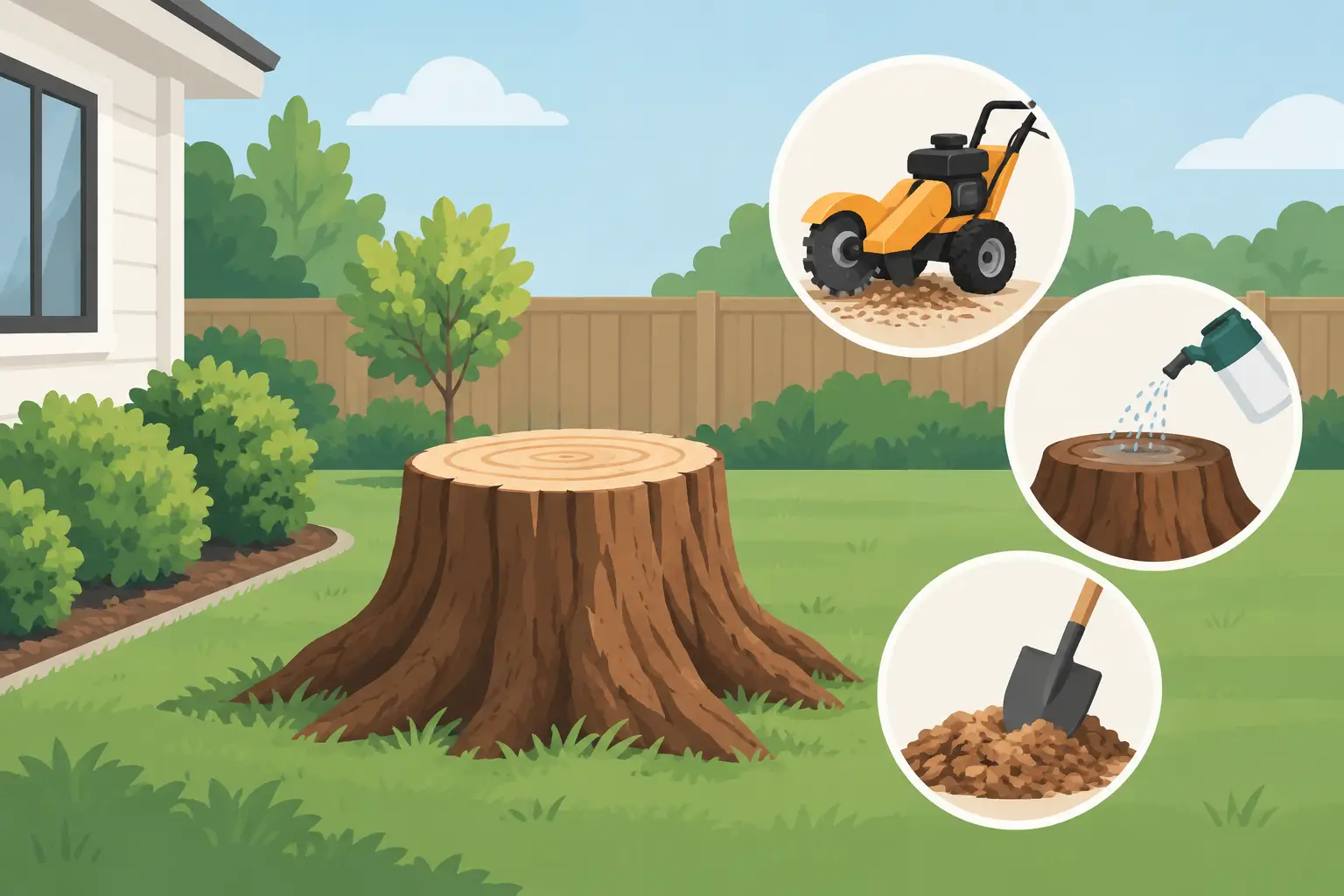
That is why a one-size-fits-all approach can cause trouble. A homeowner may be tempted to burn the stump, pour in chemicals, or rent a machine for the weekend. Those options often leave the root system behind, create an uneven area, and can damage the surrounding lawn or landscaping. Chemical products also work slowly, sometimes taking months or years to break down a stump, while the yard remains unusable.
A professional evaluation considers the stump species, diameter, location, visible root flare, access route, and the planned use of the ground. Those details determine whether grinding alone will solve the problem or whether the roots need more thorough attention.
Best Stump Solutions for Small Yards
Stump grinding for a clean, practical result
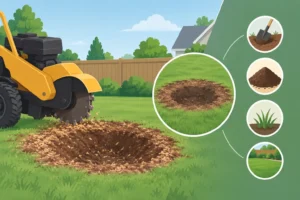
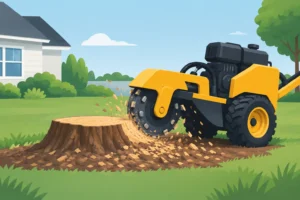
Stump grinding is the most common solution for a reason. A specialized grinder reduces the visible stump below grade, producing wood chips that can be removed or used as mulch where appropriate. Once the area is backfilled with soil and seeded, it can become lawn again.
Grinding works especially well when the stump is in an open lawn area and the primary concern is appearance, mowing access, or eliminating a trip point. It is generally less disruptive than digging out an entire stump, which matters when lawns, plantings, or hardscape are close by.
The trade-off is that major roots remain in the ground. They naturally decay over time, but they can still affect future excavation or planting. If you only need a smooth lawn surface, this is usually not a problem. If you want to install a patio, build a shed, or plant directly where the tree stood, grinding may not go far enough.
Deep root removal when the ground has a new purpose
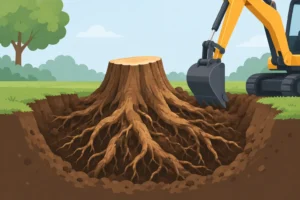
Root removal is the stronger option when a stump sits where you need solid, clear ground. Old roots can interfere with trenching, fence posts, new landscaping, and construction projects. They may also create settling as they decay, particularly if a large tree was removed.
Complete excavation is not always the right choice for a small yard. It can disturb a wider section of lawn and may not be advisable close to a foundation, retaining wall, utility line, or mature tree that needs protection. Still, when roots are causing repeated problems, a more targeted removal process can save time and frustration later.
Stumpbuster LLC uses a proprietary Plowrake system for deeper, cleaner stump and root extraction where conditions call for it. This type of work is particularly useful when homeowners want to reclaim a former tree location for a new project rather than simply cover it with grass.
Surface root treatment for mowing and safety issues
Not every root problem begins with a fresh tree removal. Some small yards have old, raised roots that catch mower wheels, lift edging, or make walking uneven. Roots from a nearby living tree require careful judgment. Cutting too much of a healthy tree’s root system can weaken it or create a future hazard.
An arborist-led assessment is valuable here. In some cases, selective root work, soil adjustments, or rerouting an edge can improve the area without putting the tree at unnecessary risk. In other cases, a declining or poorly placed tree may need removal before its roots do more damage to pavement, drainage, or nearby structures.
Letting the stump decay naturally
Leaving a stump in place costs the least upfront, but it is rarely the best answer in a compact, maintained yard. As a stump decays, it can attract insects, produce mushrooms, harbor moisture, and remain an obstacle for years. New shoots may also emerge from certain species.
Natural decay can make sense in a wooded back corner where the stump is safely out of the way and contributes to a natural habitat. It is not a good fit for a play area, a frequently used lawn, or a front yard where appearance and access matter.
How to Choose the Right Option
Start with the intended use of the area. If you want grass and nothing more, stump grinding is often the efficient choice. If you are planning a garden, walkway, fence, patio, addition, or utility work, ask whether deeper root removal is needed before the project begins.
Next, consider proximity. Stumps near a house, driveway, septic area, pool, retaining wall, or utility line need a careful plan. An experienced operator can use the right equipment and work method for tight access while protecting surrounding features. This is not a job to approach by digging blindly or cutting roots at random.
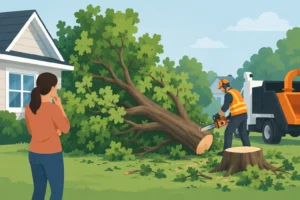
Finally, think about the whole property rather than just the stump. Was the tree removed because of disease, storm damage, or crowding? Are other trees nearby showing similar issues? Licensed arborist input can help identify whether the stump is an isolated cleanup task or part of a larger tree-care concern.
What Good Stump Work Looks Like
Quality stump work is more than a machine arriving and leaving a pile of chips. The work area should be reviewed for access and obstacles. The stump should be ground to a depth that matches the intended use of the property, and debris should be managed responsibly. If roots are being removed, the crew should explain how much disturbance to expect and what restoration steps will follow.
Homeowners should also ask about cleanup. Grinding produces material, and removal or redistribution should be discussed before work begins. A clean finish matters in a small yard because there is no extra space to hide debris or damaged turf.
Insurance and experience matter as well. Stump equipment operates with significant force, often close to fences, homes, parked vehicles, and landscaped areas. A qualified local contractor brings the equipment, operator skill, and accountability needed to protect the property while completing the work efficiently.
Prepare Your Yard Before Stump Removal
A little preparation can make the job smoother. Clear lawn furniture, planters, toys, and movable items from the work zone. Mark irrigation heads, low-voltage landscape lighting, and any private lines you know about. If a gate or narrow passage is the only route to the stump, provide its approximate width when requesting an estimate.
Do not assume every line is visible. Utility locating and site review are essential when excavation or deeper root work is planned. Tell the crew about septic systems, drainage pipes, invisible dog fences, and recent landscaping work. The more information available before equipment arrives, the better the crew can protect your property.
A Better Yard Starts Below Ground
The best choice is the one that fits the way you actually use your yard. Grinding can quickly restore a lawn. Root removal can prepare a problem area for its next purpose. And when access is tight or nearby structures raise the stakes, experienced local help is worth far more than a temporary fix.
If a stump is keeping part of your New Haven County property out of use, request a professional estimate before planning around it. A clear plan now can give you back a safer, cleaner piece of yard for years to come.