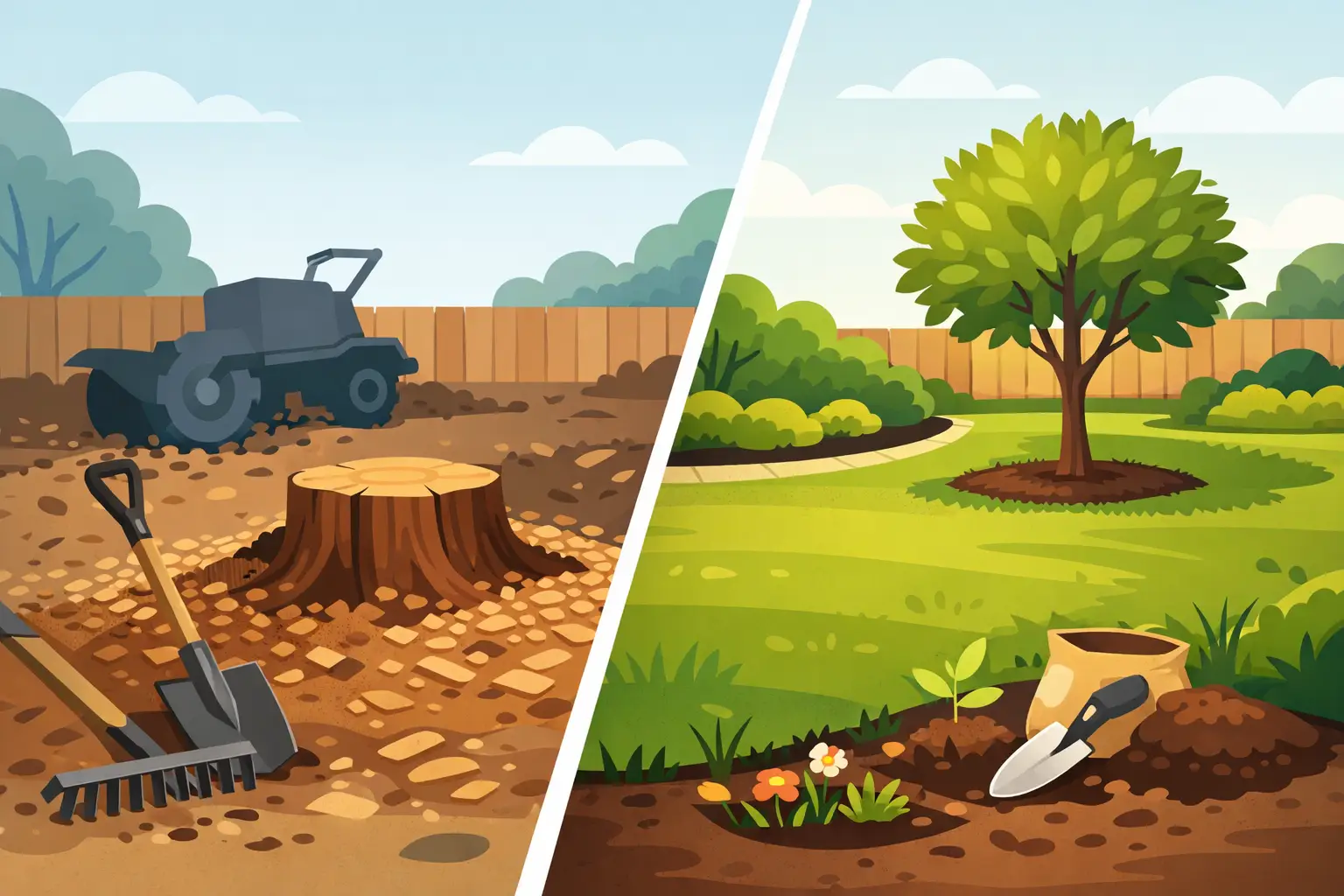
A stump is gone, but the spot it leaves behind can still feel like unfinished work. If you’re wondering how to reclaim yard after stump grinding, the short answer is this: remove excess grindings, rebuild the grade, restore the soil, and match the area to the rest of your lawn or planting bed. The right approach depends on how deep the stump was, how much root material remains, and what you want that part of the yard to become.
In Connecticut yards, that matters more than people think. A freshly ground stump area can settle, stay spongy, grow poorly, or turn into a low muddy patch if it’s handled too quickly. Done properly, though, the space can become usable lawn, a clean mulch bed, or a planting area that looks like the stump was never there.
What stump grinding leaves behind
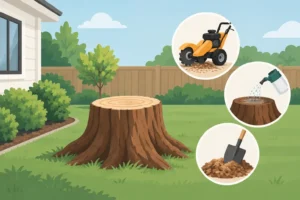
Stump grinding removes the visible stump by grinding it below grade, usually into a mix of wood chips, shredded roots, and soil. That gets rid of the tripping hazard and the eyesore, but it does not always mean every root is gone. Larger surface roots may remain, and deeper roots can continue to break down over time.
That breakdown is where many yard problems start. Fresh wood debris ties up nitrogen in the soil as it decomposes. The area can sink as buried material settles. If too much grindings-heavy material is left in place, grass seed may struggle, and the spot may never blend well with the surrounding lawn.
This is also why there is no one-size-fits-all answer. A small ornamental stump in an open front yard is different from a large maple stump near a patio, fence line, or foundation. If roots are extensive or the area needs to support new landscaping, more cleanup may be worth doing at the start.
How to reclaim yard after stump grinding the right way
The first step is deciding what the area needs to become. If you want lawn, the goal is a firm, level, soil-rich surface that can support turf. If you want a garden bed, you have a little more flexibility, but you still need stable grade and workable soil.
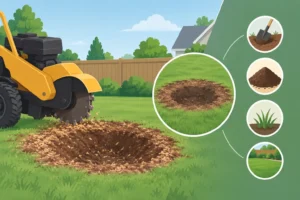
Start by removing enough of the grindings so you are not trying to grow directly in a pile of wood fiber. A small amount mixed into surrounding soil is one thing. A dense pocket of chips and shredded roots is another. In most cases, the best result comes from raking or excavating out the bulk of the loose grindings and replacing that volume with clean topsoil.
Then look at the grade. The area should sit slightly high if you expect some settling, but not so high that it creates a hump in the yard. On many properties, especially after larger stump removals, filling in layers and tamping lightly between lifts gives a better result than dumping all the soil in at once.
Water matters too. If the old stump sat in a low area or near a downspout runoff path, simply filling the hole is not enough. You may need minor grading so water moves across the yard instead of collecting over the old root zone.
Remove grindings before you rebuild
This is the step homeowners most often rush. Wood chips left from stump grinding are not topsoil, and they do not behave like it. They dry out quickly on the surface, stay uneven underneath, and can interfere with seed-to-soil contact.
For a lawn repair, remove as much of the grinding debris as practical from the top several inches. If the stump was large, you may find a mix of chips and root fragments deeper down as well. You do not always need to dig out every trace, but the more organic debris you leave concentrated in one spot, the more likely you are to deal with future settling.
If roots are still pushing up around the area or extending into the yard where you plan to mow, that’s a sign the cleanup may need to go beyond basic grinding. In tougher cases, deeper root removal is what creates a truly usable surface instead of a temporary cosmetic fix.
Refill with good soil, not leftover debris
Once the loose grindings are out, backfill with quality topsoil. Screened topsoil is usually the best fit because it spreads evenly and gives seed or sod a better base. If your surrounding yard is compacted or poor quality, blending in compost can help, but avoid overloading the area with rich loose material that settles too much compared with the rest of the lawn.
Work in layers if the hole is deep. Add soil, tamp it lightly, and repeat until the area is close to grade. Then rake the surface smooth. You want it level enough to mow and firm enough to walk across without feeling a soft pocket underneath.
Reclaiming lawn after stump grinding
If your goal is grass, timing helps. In Connecticut, cool-season lawn repair usually does best in late summer to early fall, with spring as the second-best window. Seeding into summer heat can work, but it takes more watering and usually gives less even results.
After grading, spread grass seed that matches your existing lawn as closely as possible. Cover lightly with topsoil or straw if needed, then keep the area consistently damp during germination. Not soaked, just evenly moist. Once the seedlings establish, you can taper watering to deeper, less frequent cycles.
Sod is another option if you want a faster visual result. It costs more, and it still needs good soil prep underneath, but it can help if the stump area is front-and-center and you want the repair to disappear quickly.
Why grass sometimes fails over an old stump spot
When a repair struggles, the problem is usually underneath. Too many wood grindings, poor grading, old roots decomposing, or not enough topsoil are the usual causes. Sometimes the area looks fine for a month, then drops an inch after heavy rain or winter freeze-thaw cycles.
That does not always mean the first repair was done wrong. It may just mean more settling was still coming. On larger stump sites, a second light topdressing and overseeding is sometimes the realistic finish.
If you want a bed instead of lawn
Some yards are easier to reclaim as a mulch bed or planting area, especially around mature trees, property edges, or places where grass already struggles. In that case, you still want to remove excess grindings and build up with decent soil, but the finish is different.
A bed can tolerate a little more organic settling than a lawn because you are not trying to mow it flat every week. Even so, avoid planting a new tree directly into the exact stump location unless the old root mass has been thoroughly addressed. New roots competing with decaying old wood is not the best start for a healthy replacement tree.
Shrubs, perennials, and mulch can work well in these spaces if the grade is stable and drainage is sound. Just give the area time to settle if major root material remains below.
When stump grinding cleanup needs a professional eye
Some stump sites are simple. Others are tied up with surface roots, tight access, utilities, fences, walkways, or nearby foundations. If the yard still feels uneven after grinding, if roots continue lifting the surface, or if you’re trying to reclaim a larger section of usable space, it may take more than a rake and a few bags of topsoil.
That’s especially true with older New Haven County properties where mature trees have been in place for decades. Large root systems can extend well past the original stump and affect patios, lawns, and planting beds beyond the immediate area. In those cases, arborist-led evaluation makes a difference because the goal is not just removing what’s visible. It’s restoring the site so it stays usable.
For homeowners who want the area cleaned up deeper and more thoroughly, Stumpbuster LLC handles not only stump grinding but also root removal when the situation calls for it. That can make the difference between covering up a problem and actually reclaiming the yard.
A realistic timeline for full recovery
Most stump areas look better right away once they are filled and graded, but full recovery takes a little patience. A lawn patch may need several weeks to establish and a season to fully blend. A larger stump site may settle through the first stretch of wet weather or over the first winter.
The practical approach is to aim for clean, safe, usable ground first, then watch the area. If it dips slightly, add soil and touch up the surface before the problem grows. Small corrections are easy. Waiting until the spot becomes a rut is not.
If you treat the old stump area like a small landscape repair instead of a quick cover-up, the results usually last. Good cleanup, proper fill, and realistic expectations go a long way. The yard does not need to show where the tree once stood.