A root problem usually starts small. A raised section of sidewalk, a mower catching on hidden runners, water pooling where the lawn used to drain cleanly, or a garden bed that never stops sprouting shoots. That is exactly why a good guide to clearing invasive roots matters – by the time roots are obvious above ground, they are often doing more below the surface than most property owners realize.
Invasive roots are not always from what people think of as invasive plants. Sometimes they come from a healthy mature tree planted too close to a driveway, a hedge that spread farther than expected, or a stump that was cut down years ago but never fully dealt with. In New Haven County, where many properties have older trees, established landscapes, and tight spaces around homes, garages, patios, and walkways, root spread can become a real property issue fast.
What invasive roots are really doing to your property
Roots follow moisture, air pockets, and the path of least resistance. That means they can lift pavers, push through lawn areas, crowd planting beds, and work their way toward cracked masonry, old drainage lines, or weak points around foundations. They do not usually smash through solid concrete or intact pipe on their own, but they absolutely exploit existing gaps and make a small defect much worse.
The damage is not always structural. Sometimes the issue is usability. A yard becomes uneven. Surface roots make it hard to mow. A stump area keeps sending up shoots. A once-clean corner of the lot turns into a constant maintenance headache. For commercial properties, that can also create trip hazards and make a site look poorly maintained.
This is where judgment matters. Removing roots blindly can solve one problem and create another. If the roots belong to a large living tree, aggressive cutting can reduce stability, stress the tree, and leave you with a bigger safety concern later.
A practical guide to clearing invasive roots safely
The first step is figuring out what kind of root problem you actually have. Surface roots from a mature shade tree are handled differently than roots from a dead stump, bamboo-like spread from an aggressive ornamental, or woody roots invading a fence line or drainage area. The right approach depends on the species, the size of the root system, how close it is to structures, and whether the main plant or tree is staying or going.
If the source tree is already removed or scheduled for removal, full root removal may make sense, especially if the goal is to reclaim lawn space, install a patio, regrade the area, or stop regrowth. If the tree is staying, root cutting needs a much lighter hand. In many cases, selective pruning, barrier planning, or redesigning the area is safer than chasing every root.
Location matters just as much. Roots near sidewalks and open lawn are one thing. Roots near foundations, retaining walls, septic areas, underground utilities, irrigation lines, and water service need a more controlled process. Digging in the wrong spot can become expensive in a hurry.
When DIY root clearing makes sense – and when it does not
There are limited cases where a homeowner can handle invasive roots safely. Small roots in a garden bed, shallow nuisance roots from shrubs, or isolated sprouts in open soil may be manageable with hand tools and patience. If you can clearly identify the source, work away from utilities, and avoid disturbing a healthy tree you want to keep, light cleanup may be reasonable.
That said, most serious root problems are not great DIY jobs. Large woody roots are tough to remove cleanly. Cutting them with the wrong equipment is slow, dangerous, and rough on surrounding soil. People often underestimate how far roots run and how much hidden material remains after the visible section is gone. What looks finished at the surface can still send up regrowth or interfere with future landscaping.
The bigger issue is risk. If roots are close to a house, utility line, driveway edge, drainage route, or mature tree, guessing is a bad plan. That is when experienced root removal becomes less about labor and more about protecting the rest of the property.
The main methods used to clear invasive roots
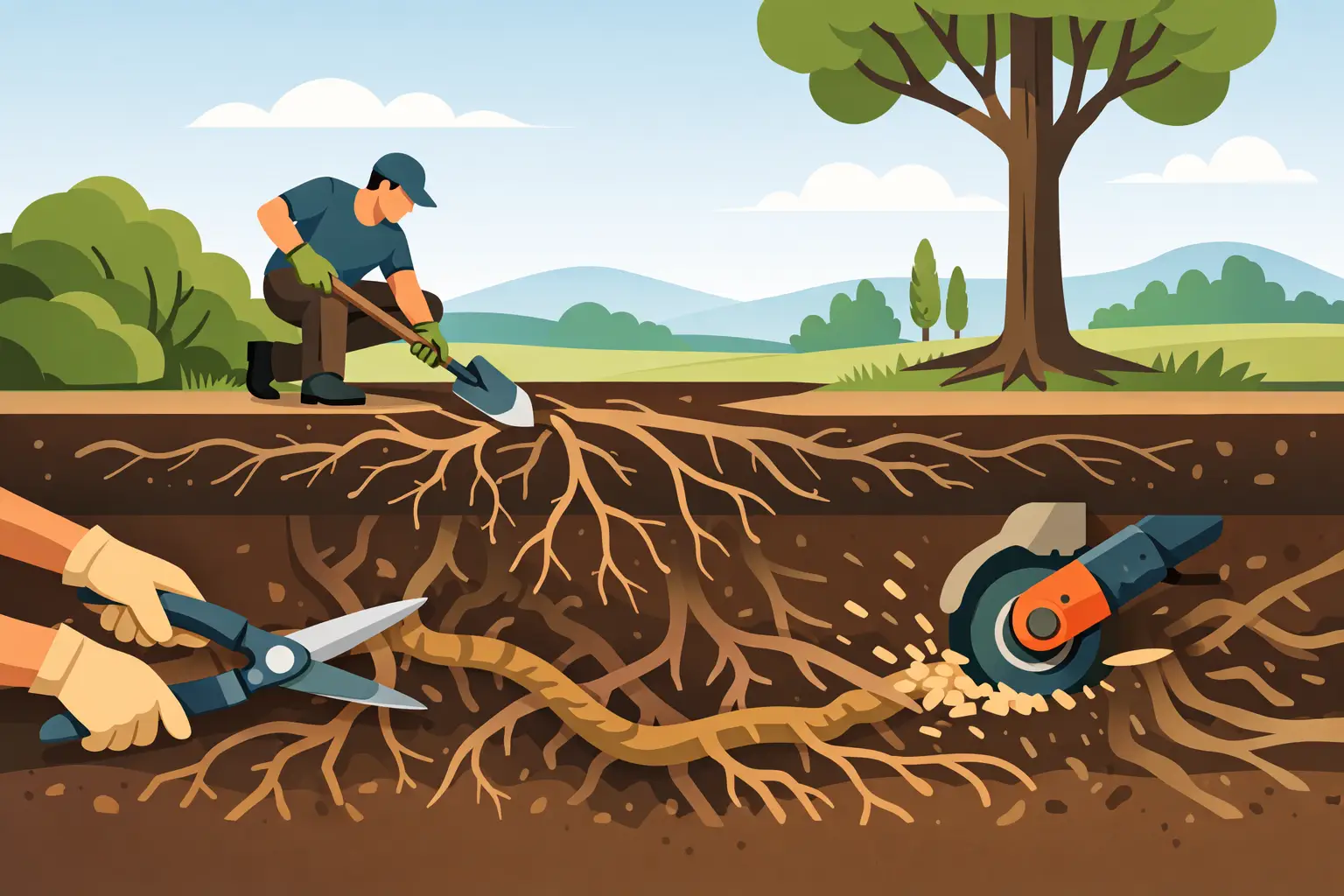
There is no single best method for every property. Hand digging is the most precise but also the slowest. It works in tight planting areas or where minimal disturbance matters. Mechanical excavation moves faster, but it can tear up lawn, compact soil, and create a larger restoration job if used too aggressively.
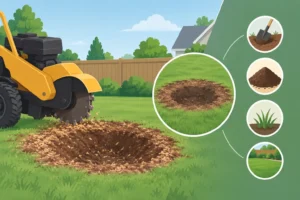
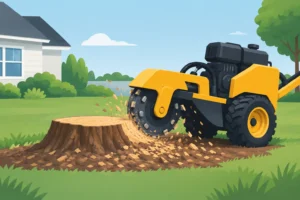
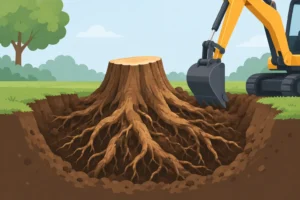
Stump grinding handles the stump itself well, but grinding alone does not always address the wider lateral roots that continue causing trouble. That is one of the most common misunderstandings property owners have. A stump can be gone and the root issue can still be very much alive around it.
For larger or more established root systems, especially where full removal is needed, specialized equipment changes the outcome. That is where an arborist-led crew with the right process has an advantage. Stumpbuster LLC has long used its Plowrake root removal system for deeper, cleaner extraction where basic grinding or surface cutting would leave too much behind. On the right job, that means less regrowth, fewer buried obstacles, and a site that is actually usable again.
What to expect during professional root removal
A good contractor should start by identifying the source and mapping the problem area, not just showing up with a machine. The work plan should account for nearby structures, access, grade, and cleanup. If there is any question about utilities, that has to be addressed before excavation starts.
Once work begins, the goal is controlled removal, not unnecessary disturbance. In some cases, only a section of offending roots needs to come out. In others, the best result is removing the stump, major roots, and surrounding debris so the area can be restored properly. It depends on whether the priority is stopping trip hazards, making room for hardscaping, preventing regrowth, or preparing for replanting.
Cleanup matters more than people think. Root jobs leave behind wood fragments, loosened soil, and uneven grade if they are not finished well. A thorough crew will leave the site in shape for the next step, whether that means topsoil, seed, sod, or a new landscape installation.
Protecting healthy trees while dealing with problem roots
Sometimes the root problem belongs to a tree you still want. That is a different conversation than full removal. Cutting too many roots on one side of a tree can affect stability, especially with older trees, shallow-rooted species, or trees already under stress.
This is where licensed arborist oversight matters. The question is not just can a root be cut. The question is what that cut will do to the tree six months from now or during the next major storm. A careful evaluation can tell you whether selective root pruning is reasonable, whether the tree itself is part of a larger risk issue, or whether another fix makes more sense.
In some cases, the better answer is not root removal at all. Reworking the landscape, redirecting foot traffic, adding a root barrier, or removing the tree and root system together may be the safer long-term move.
Signs you should not wait on invasive root removal
If roots are lifting pavement, pushing into a retaining wall, interfering with drainage, or creating repeated trip hazards, waiting usually increases the repair cost. The same goes for roots tied to an old stump that keeps producing suckers or roots spreading toward underground lines and foundation areas.
Another sign is when future work is planned. If you are putting in a fence, patio, driveway section, shed pad, or new lawn, hidden roots can ruin the project before it starts. Clearing them first is almost always cheaper than tearing out new work later.
For homes and commercial properties alike, the best timing is usually before the issue becomes an emergency. Root problems tend to spread quietly, then show up all at once when a slab shifts, a walkway lifts, or water starts backing up where it never did before.
Choosing the right contractor for root clearing
Experience counts here because root removal is rarely a one-size-fits-all service. You want a company that understands trees, not just excavation. Arborist knowledge helps distinguish between roots that are a nuisance and roots that are tied to a larger health or safety issue.
You also want proper insurance, specialized equipment, and a track record of clean, accountable work. In a place like New Haven County, where many properties have mature trees and tight working areas, local experience is not a small detail. It affects how the job is planned, how access is managed, and how well the property is protected during the process.
If invasive roots are starting to take over part of your yard or create problems around structures, the smart move is to address them while the options are still open. The right fix should leave you with safer access, cleaner ground, and a property you can actually use again.