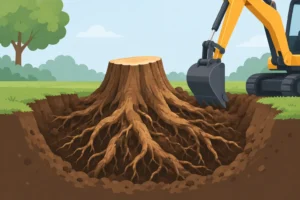
A low price on stump work can get expensive fast if the crew leaves roots near the surface, tears up the lawn, or damages a walkway, fence, or utility line. That is why the right questions for stump grinding company service matter before any machine rolls onto your property. A few smart questions can tell you whether you are dealing with an experienced operator or someone who just rented a grinder for the weekend.
In New Haven County, many properties have mature trees, tight side yards, stonework, old patios, and underground utilities that make stump grinding more than a simple in-and-out job. The contractor you hire should understand how to work around those conditions, explain what will happen below grade, and leave the area clean and usable when the work is done.
Why these questions matter before stump grinding
Not every stump job is the same. A fresh maple stump in an open lawn is one thing. An old oak stump next to a foundation, driveway, retaining wall, or septic area is another. The size of the stump, the species, the root spread, site access, and your plans for the area all affect the right approach.
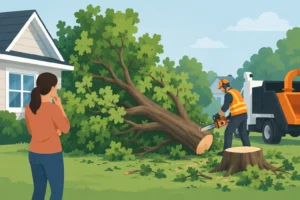
That is also where homeowners get tripped up. One company may quote grinding only the visible stump. Another may include surface roots, backfilling, and cleanup. On paper, the lower quote looks better. In the yard, it may leave you with a hole, a mound of chips, and roots still causing trouble.
Questions for stump grinding company estimates
1. Are you insured, and who is actually doing the work?
This should be the first question. Stump grinding uses heavy equipment with fast-moving cutting teeth, and the work often happens close to homes, garages, fences, sheds, and vehicles. You want to know the company carries proper insurance and that the operator is not learning on your property.
If the person estimating the job cannot clearly explain who will perform the work, that is a red flag. Experienced companies are usually direct about their crew, equipment, and process.
2. How deep will you grind the stump?
This is one of the most important questions because “stump removal” means different things to different contractors. Some grind just below the surface so the stump is out of sight. Others grind deeper to allow for regrading, reseeding, or a future planting area.
The right depth depends on what you want to do next. If you only want to mow over the area, a basic grind may be enough. If you plan to install a patio, driveway extension, or replant in the same spot, you may need more than standard grinding.
3. Are surface roots included, or is that separate?
Many homeowners assume the roots that are lifting grass or running across the yard are part of the stump job. Sometimes they are not. Some companies price the visible stump only and treat root grinding or root removal as separate work.
Ask where the stump work stops. If roots are creating trip hazards or interfering with landscaping, you want that addressed in the estimate from the start, not added after the machine is already on site.
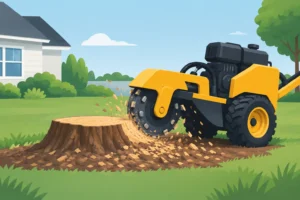
4. What equipment will you use, and can it access my yard without damage?
Access matters more than people think. A large machine may work well in an open area but be a poor fit for a narrow gate, soft lawn, or backyard with limited clearance. A smaller machine may protect the property better but take longer on a large hardwood stump.
A good contractor will ask about gates, slopes, fences, irrigation, septic components, and nearby structures. They should be able to tell you how they will get in, where they will stage equipment, and what steps they take to reduce lawn damage.
What to ask about the actual work
5. How do you protect nearby structures and landscaping?
Stump grinding throws wood chips, dirt, and small stones. If the stump is near siding, windows, vehicles, decorative walls, or planting beds, the operator should have a plan to control debris and protect what is nearby.
This is where experience shows. Careful operators do not treat every yard the same. They look at the surroundings and adjust the setup to fit the site.
6. Will you check for underground utilities or other buried obstacles?
A stump area can hide more than roots. Old fencing, buried masonry, utility lines, drainage pipe, invisible dog fence wire, and irrigation components all change how a job should be handled. The company should talk through known site conditions and explain what needs to be marked before work begins.
No reputable contractor should brush this off. If the answer sounds casual, keep looking.
7. What happens to the grindings and debris?
This is another point where estimates can look similar but deliver very different results. Some homeowners want the grindings left on site to settle back into the hole. Others want everything hauled away so the space can be finished cleanly.
Neither option is automatically right. Leaving chips can save money and work fine in some areas. Hauling them away often makes more sense if you want a neater finish or plan to seed, sod, or landscape soon. Just make sure the estimate spells it out.
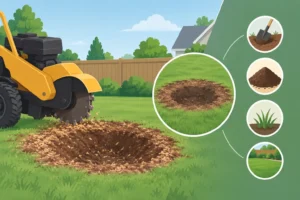
8. Do you backfill the hole and leave the area ready for topsoil or seed?
Grinding a stump is not always the same as restoring the area. If you want the yard to look finished, ask whether the company backfills, levels the spot, and leaves it ready for the next step. Some firms include that. Others consider it separate cleanup.
The practical question is simple: when they leave, what will the area actually look like?
Questions that reveal real experience
9. Have you handled stumps like this before?
That may sound basic, but it gets to the heart of the job. Tree species, stump age, root spread, and location all matter. A contractor who regularly works around old Connecticut landscapes, mature hardwoods, stone walls, and tight residential lots will usually spot issues before they become problems.
If your stump is near a foundation, walkway, pool area, retaining wall, or utility path, ask directly about similar jobs. You are listening for specifics, not vague reassurances.
10. When is grinding enough, and when is deeper root removal the better option?
This is where a knowledgeable company stands apart from a basic cutter-for-hire. Standard stump grinding solves many problems, but not all of them. If roots are spreading into lawn areas, affecting hardscapes, or interfering with future construction, grinding the top may not go far enough.
Sometimes you need more complete root removal, especially if the goal is to fully reclaim the area. That is not every job, and a trustworthy contractor will say so. But they should be able to explain the trade-off between a quick stump grind and a deeper cleanup approach.
11. What is included in the price, and what could change it?
Get this clear before the start date. Ask whether the quote includes travel, setup, grinding depth, root work, debris handling, cleanup, and any protection measures for nearby surfaces. Also ask what conditions could change the final price, such as hidden metal, extra roots, poor access, or a larger stump than expected.
A detailed estimate is not about paperwork for its own sake. It prevents confusion and helps you compare companies fairly.
Red flags to watch for
A stump grinding estimate should feel straightforward. If the contractor avoids specifics, does not ask about access, cannot explain cleanup, or gives a price without seeing the site conditions clearly, be careful. The same goes for anyone who talks only about speed and not about property protection.
Good stump work is not just about making wood disappear. It is about leaving the area safe, clean, and ready for the next use. That takes planning as much as equipment.
The best answer is usually the clearest one
When you ask these questions for stump grinding company service, you are not trying to make the process complicated. You are trying to avoid surprises. The best contractors will not be annoyed by informed questions. They will answer them plainly because they do this work every day.
That is especially true on older properties across towns like Hamden, North Haven, Branford, Guilford, Wallingford, and West Haven, where no two stump jobs are exactly alike. An arborist-led company with real local experience is more likely to spot site issues early, recommend the right level of removal, and leave the property in better shape when the work is done. Stumpbuster LLC has built its reputation that way since 1985.
If a company can explain the job in plain English, define what is included, and tell you how they will protect your yard, you are probably talking to the right crew. That kind of clarity is worth a lot before the first cut starts.