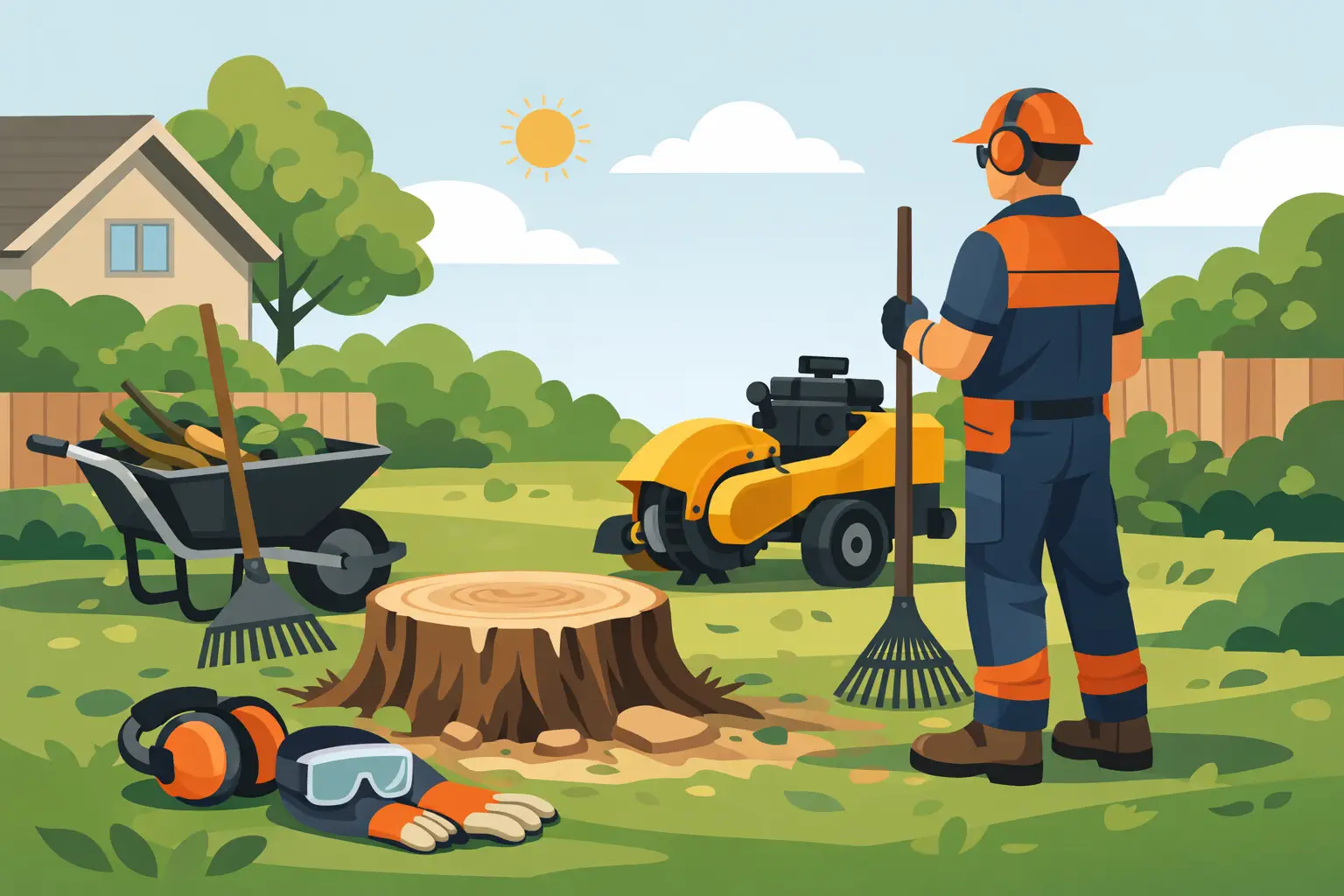
A stump may look harmless once the tree is gone, but the work around it can affect lawns, utilities, irrigation, fences, and nearby landscaping. Knowing how to prepare for stump grinding helps the crew work safely, protects your property, and gets you closer to a clean, usable yard without unnecessary delays.
For homeowners and property managers in New Haven County, preparation usually comes down to three things: clear access, accurate information about what is underground, and a plan for the wood chips left behind. A professional stump grinding crew will handle the machine work, but a little preparation before arrival makes a visible difference.
How to Prepare for Stump Grinding Before the Crew Arrives
Start by looking at the route from the street or driveway to the stump. Stump grinders range in size, but all need a reasonably clear, stable path. Move vehicles, trailers, patio furniture, garden decorations, sports equipment, and other loose items out of the travel area. If a gate, side yard, or narrow opening is involved, let the contractor know before the appointment rather than assuming the equipment will fit.
Access does not always mean a wide-open lawn. A stump behind a home may still be reachable through a gate or along a side yard, but the crew needs to understand the conditions ahead of time. Steep grades, soft ground, tight corners, stone walls, and low branches can change the equipment choice and the amount of time required.
Parked cars deserve special attention. Grinding throws wood chips and soil within the immediate work area, even when the operator uses guards and works carefully. Clear vehicles from the driveway near the stump and from any area the crew may use to stage equipment or haul debris.
Clear the Area Around the Stump
Remove loose objects from around the stump, including pots, landscape lights, hoses, toys, and movable edging. Give the operator room to position the machine and see the full stump flare, which is the wider base where the trunk meets the roots.
Trim back low shrubs or perennials only if they are directly against the stump and can be moved without damage. Do not start cutting roots or digging around the stump on your own. Roots can extend farther than expected, and digging may expose irrigation lines, buried wire, or other hazards. A clean work zone is helpful. An excavated, uncertain work zone is not.
If the stump sits inside a landscaped bed, identify any plants you want preserved. Grinding near mature shrubs, ornamental trees, or hardscape takes more care and may require a different approach than a stump in an open lawn. In some cases, protecting a nearby planting is worth leaving a little more of the root system in place. The right depth depends on what you plan to do with the area afterward.
Mark What Is Buried Before Stump Grinding
The most useful information you can provide is what may be below ground or hidden near the stump. Call for utility locating well before the service date when public utility lines could be in the area. Utility markings are a safety measure, not a reason to assume every underground item has been identified.
Private lines are often not included in standard utility locating. These can include invisible dog fences, landscape lighting wire, irrigation piping, septic components, drainage lines, propane lines, and wiring that runs to sheds, pools, garages, or outdoor features. If you installed something in the yard, or inherited it with the property, point it out.
Mark sprinkler heads, valve boxes, shallow drain outlets, and underground pet-fence paths if you know where they are. Flags, paint, or a quick walk-through with the crew can prevent avoidable damage. If you are unsure, say so. Guessing is less helpful than letting the operator know an unknown line or system may be present.
Stumps near utility poles, service lines, foundations, retaining walls, wells, and septic systems need extra evaluation. Grinding is often possible, but proximity affects how deep and how close the operator can work safely. A qualified contractor should explain the limitation rather than promise aggressive removal where it could create a bigger property problem.
Tell the Crew About Fences, Gates, and Sensitive Surfaces
Measure narrow gates if access looks tight. Also mention newly paved driveways, decorative concrete, septic covers, fragile lawn areas, or surfaces where equipment should not travel. The crew may be able to use protective mats, choose a different route, or use a machine better suited to the site.
For commercial properties, identify loading zones, customer parking areas, fire lanes, and any hours when access is restricted. A short site plan or an on-site contact can keep the job moving without disrupting tenants, customers, or deliveries.
Make the Yard Safe for People and Pets
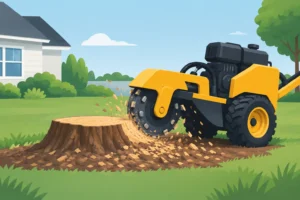
Stump grinding is not a job to watch from a few feet away. The machine removes wood with a high-speed cutting wheel, and chips can travel beyond the stump even under normal operating conditions. Keep children, pets, and visitors indoors or well away from the work area until the operator says the job is complete.
Close gates and secure pets before the crew arrives. If the stump is near a shared property line, give neighbors a courtesy heads-up, especially if equipment will need to pass near a common driveway or if the work may create temporary noise. Grinding itself is usually efficient, but the crew needs clear space to work without people entering the area.
If you have a pool, patio, outdoor kitchen, or delicate garden feature nearby, discuss it during the estimate. Protective barriers may be appropriate, though no barrier substitutes for proper machine positioning and a careful operator.
Decide What You Want Done With the Grindings
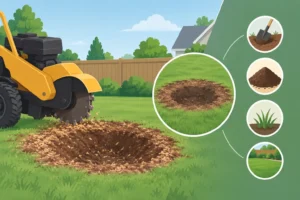
A stump grinder reduces the visible stump below ground level and creates a mix of wood chips and soil. Before the work begins, decide whether you want that material left on site, spread in a nearby area, or removed. The best choice depends on your plans for the space.
Leaving grindings can be practical if you need mulch for a natural area or want to fill the depression where the stump stood. Keep in mind that fresh wood chips settle as they break down, and they are not the same as finished topsoil. If you plan to seed grass immediately, you will usually need to remove or spread out excess grindings, add clean topsoil, and allow for some settling.
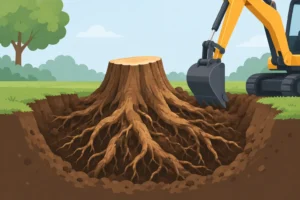
If you are installing a patio, driveway addition, shed, fence, or new tree, discuss the project before grinding. Those uses may require deeper grinding, removal of larger roots, or a more complete root-removal approach. Standard stump grinding is often the right solution for restoring lawn space, but it does not automatically remove every root across the yard.
That distinction matters. Roots may continue to decay below ground over time, and a large root can leave a shallow depression later. For construction or repeated landscape problems, deeper and cleaner extraction may be the better long-term choice. Stumpbuster LLC uses its Plowrake root removal system when a property needs more than surface-level stump reduction.
Plan for Weather, Lawn Conditions, and Follow-Up Work
Connecticut weather can change site conditions quickly. Heavy rain can soften a lawn, make slopes slick, and leave equipment tracks more likely. Frozen ground can also affect access and cleanup. Professional crews can assess whether conditions are workable, but it helps to be flexible if the site needs time to dry.
If lawn appearance is your main concern, ask how the crew plans to access the stump and whether ground protection is appropriate. There is a trade-off: mats can protect turf in some locations, but they may not be practical on every slope or around every obstacle. Honest planning is better than expecting heavy equipment to leave no trace on saturated ground.
After grinding, rake the area as needed, remove excess chips if that is part of the plan, and add topsoil before seeding or sodding. Water and settle the repaired area over the following weeks. If the stump was large, expect a little settling and be ready to top-dress low spots.
Questions Worth Asking Before the Appointment
A clear estimate should cover the stump size, access conditions, expected grinding depth, cleanup, and the handling of grindings. Ask whether roots close to the surface will be addressed, particularly if they interfere with mowing, landscaping, or a planned project.
You should also confirm what the crew needs from you on the service day. In many cases, the answer is simple: clear the route, secure pets, identify underground features, and make sure someone can be reached if a site question comes up. If a gate is locked or a vehicle blocks access, the work may need to be rescheduled.
A well-prepared site lets the operator focus on the job that matters: removing the stump safely and leaving the area ready for its next use. Whether that means new grass, a garden bed, a fence line, or simply a yard that is easier to mow, a few minutes of preparation help turn an old stump into usable ground again.