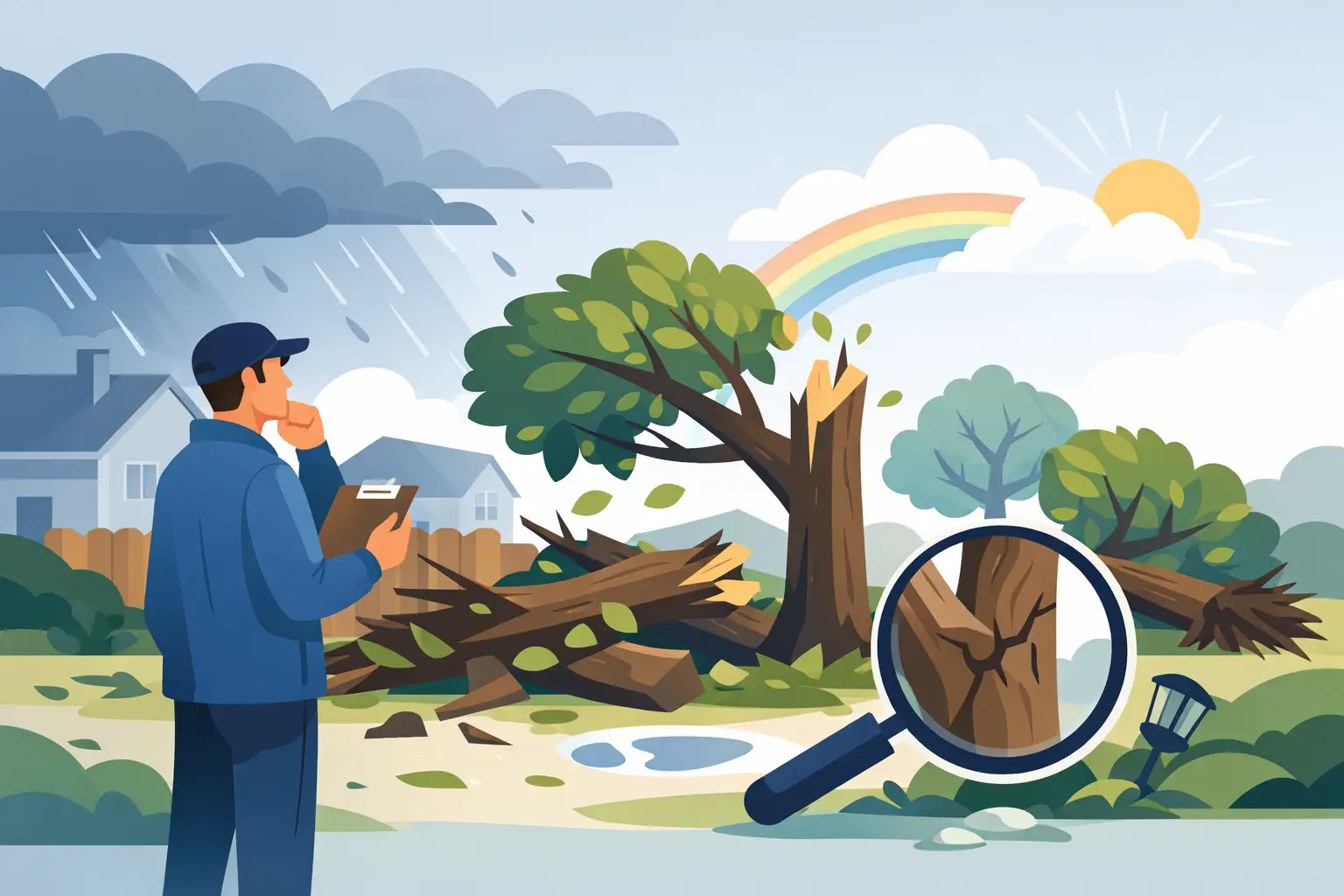
A hard rain, heavy wet snow, or strong wind can change a tree’s condition in a matter of minutes. This guide to post storm tree assessment gives Connecticut property owners a safe, practical way to check their yards without getting too close to a dangerous tree or limb.
The first priority after a storm is not cleanup. It is making sure people, pets, vehicles, and buildings are out of harm’s way. A tree can look mostly intact while its roots have shifted, its trunk has cracked, or a large branch is hanging by a small strip of wood. In New Haven County, where mature maples, oaks, pines, and ornamental trees often grow close to homes and driveways, a careful inspection can prevent a bad situation from getting worse.
Start From a Safe Distance
Before walking under a tree, look at the property from indoors or from an open area away from the canopy. Keep children and pets clear of the yard until you know there are no hanging limbs, downed power lines, or unstable trees.
Do not inspect a tree during high winds, lightning, or while ice is still falling from branches. Wet soil can also make root systems less stable, especially around trees growing in saturated ground, on slopes, or near drainage areas.
If a branch or tree has contacted a utility line, stay well away. Treat every line as energized, even if it is on the ground. Call the utility company or emergency services as appropriate. No tree service should begin cutting or moving material near power lines until the electrical hazard has been addressed.
Look for the Most Urgent Warning Signs
A post-storm tree inspection is about finding changes. You know your property better than anyone, so compare what you see now with how the tree looked before the weather event.
The following conditions deserve prompt attention from a qualified tree professional:
- A tree that is leaning more than it did before the storm, particularly toward a house, driveway, sidewalk, or neighboring property.
- Fresh cracks in the trunk or large limbs, including long vertical splits, open seams, or bark pulling away from the wood.
- Uprooted or lifted soil around the base of the tree, often called root plate movement.
- Large limbs hanging in the canopy, caught on other branches, or partially broken but not fully detached.
- A trunk that has split into two sections or a major branch connection that has failed.
- Trees or limbs resting on a roof, fence, vehicle, shed, or other structure.
- Broken branches near service lines, streetlights, or utility poles.
A hanging limb is not harmless just because it has stopped moving. Wind, vibration, or the added weight of rain can bring it down without warning. Keep people out from beneath it and avoid parking under the affected tree.
Check the Ground and Root Area
Homeowners often focus on visible branch damage, but the ground around a tree can reveal a more serious issue. A tree stays upright because of its root system. When storm winds loosen the soil or pull roots from the ground, the tree may be unstable even if the trunk is not cracked.
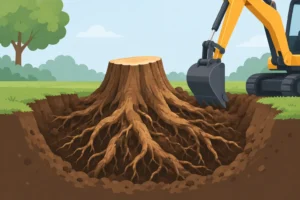
Walk around the area only if it is safe and clear of overhead hazards. Look for newly raised soil, exposed roots, cracks radiating through the lawn, or a mound forming on one side of the trunk. These signs may mean the root plate has shifted.
A leaning tree does not always need to be removed. Some trees have a natural lean and have been stable for years. The concern is a new lean, especially when paired with disturbed soil, torn roots, or soil heaving. In that case, keep clear and arrange a professional assessment as soon as possible.
Also look at trees near retaining walls, patios, driveways, and foundations. Root movement can affect more than the tree itself. It may create trip hazards, damage hardscape, or put pressure on nearby structures.
Inspect the Trunk and Major Branch Unions
The trunk carries the load of the entire canopy, so storm damage here deserves close attention. Look for fresh wounds, torn bark, hollow openings, deep cracks, or dark areas where moisture is collecting. A crack that extends from a branch union down the trunk can indicate a significant structural failure.
Pay particular attention to trees with multiple trunks. When two large stems meet in a narrow V-shaped union, there may be bark trapped between them. This is called included bark, and it can create a weak connection that is more likely to split under wind or snow load.
Not every damaged branch means the tree is a loss. Smaller broken limbs can often be removed with proper pruning, allowing a healthy tree to recover. The decision depends on the size of the damaged limb, its location, the condition of the trunk, and the target below it. A broken branch over an open lawn is different from one over a bedroom, driveway, or public walkway.
Never climb a damaged tree or use a ladder to reach storm debris. Broken limbs can shift under your weight, and ladders are especially dangerous on wet or uneven ground. Professional crews use the right equipment and work methods because storm-damaged trees are unpredictable.
Assess the Canopy Without Standing Under It
From a clear viewing area, look up for changes in the crown. You may see broken branch tips, stripped foliage, or a few scattered twigs after a storm. That kind of minor damage is common and does not automatically require tree removal.
More concerning signs include one-sided canopy loss, large torn limbs, branches crossed or tangled after a failure, and areas where the canopy has suddenly opened up. A tree that loses several large limbs from one side can become unbalanced. The remaining canopy may catch wind differently, placing new stress on the trunk and roots.
Evergreens require special attention after heavy snow or ice. Their branches may bend dramatically under weight and appear as though they are failing. Do not shake branches or strike them with a pole. That can snap frozen wood or put you directly beneath falling ice. In many cases, branches rebound as temperatures rise. If branches remain bent, cracked, or hanging after conditions improve, have them evaluated.
Know What You Can Handle and What You Should Not
Small, loose twigs and light debris in an open yard are usually reasonable for a homeowner to collect once the storm has passed. Keep the work simple. Wear sturdy footwear and gloves, and avoid using a chainsaw unless you are trained and have clear, stable conditions.
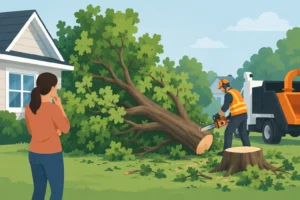
Storm cleanup becomes professional work when material is elevated, under tension, near a structure, close to power lines, too heavy to move safely, or connected to a damaged tree. Limbs that are bent, pinned, twisted, or caught in another tree can release suddenly when cut. This is one of the most common sources of serious injuries during do-it-yourself storm cleanup.
It is also wise to call an arborist when a mature tree has suffered substantial limb loss, even if it remains standing. Proper corrective pruning can remove damaged wood while preserving as much healthy structure as possible. Poor cuts, topping, or removing too much live canopy can create additional decline over the next several years.
Document Damage Before Cleanup Begins
Take clear photos of the tree, the damaged areas, and anything the tree has struck. Photograph the overall scene first, then get closer images only from a safe location. This record can help with insurance discussions, contractor estimates, and decisions about repair or removal.
Make notes about what changed during the storm: when the limb fell, whether the tree shifted, what direction it is leaning, and whether any damage is getting worse. If a tree is affecting a neighbor’s property, communicate early and avoid taking action across a property line without agreement, except where emergency responders or utilities direct otherwise.
For commercial properties, inspect parking areas, entrances, walkways, loading zones, and customer-facing landscaping before reopening the affected area. A single hanging limb over a sidewalk can create a liability problem even when the rest of the property looks normal.
Get a Professional Opinion When the Stakes Are High
A storm does not always make the answer obvious. Some trees can be pruned, cabled, or monitored. Others have enough root, trunk, or canopy damage that removal is the safer choice. The right recommendation depends on the tree’s condition, species, location, and the risk to people and property.
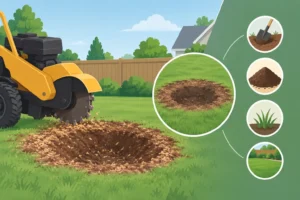
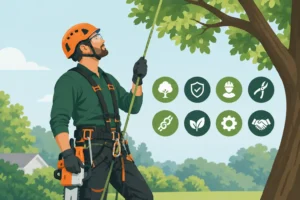
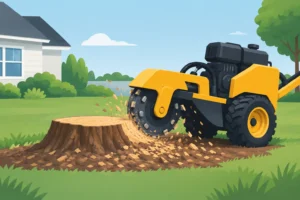
For homeowners and businesses in New Haven County, Stumpbuster LLC provides arborist-led tree evaluations, safe removal, pruning, stump grinding, and thorough cleanup. When a damaged tree is too close to a home, vehicle, utility area, or busy walkway, bringing in experienced, insured professionals is the practical choice.
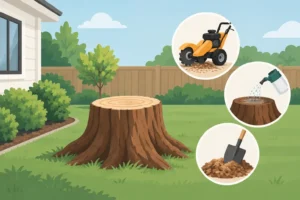
After the immediate danger is addressed, take a moment to look at the rest of your landscape. Storm damage often exposes crowded branches, weak limb unions, decaying trees, and old stumps or roots that have been creating trouble beneath the surface. Addressing those issues on your schedule is far better than facing them during the next storm.