A tree can look stable for years, then a single storm, heavy snow load, or failing limb turns it into a direct threat to a fence. This guide to removing trees near fences explains what makes these jobs different, how to protect the fence and surrounding yard, and when professional tree removal is the sensible choice.
A fence is not designed to absorb the weight of a trunk, a large limb, or even repeated impacts from cut sections being lowered to the ground. Vinyl panels crack, wood posts loosen, chain-link fabric bends, and masonry walls can shift. The goal is not simply to get the tree down. It is to remove it in controlled pieces while preserving as much of the property as possible.
Why Trees Near Fences Require Extra Planning
Trees growing beside a fence often have limited room for equipment, workers, and a safe drop zone. A tree may lean away from the fence but still have limbs hanging over it. It may be crowded by a garage, garden beds, a neighbor’s yard, utility lines, or a driveway. Every one of those conditions changes the removal plan.
The fence itself also affects how the tree is cut. When there is open lawn, a crew may be able to fell a tree in a planned direction. Near fencing, that option is often off the table. Instead, the tree may need to be climbed or accessed with specialized equipment, then dismantled from the top down. Limbs and trunk sections can be tied off and lowered with rigging rather than dropped.
That slower approach takes more skill, but it prevents the kind of avoidable damage that leaves a property owner replacing fence panels after the tree work is complete. For older trees, dead trees, or trees with decay, the safest method depends on what the wood will hold, where the weight is distributed, and whether the tree can safely support a climber or rigging point.
Inspect the Tree and Fence Before Any Cutting Begins
A proper assessment starts at ground level. Look for dead branches, fungal growth, cracks in the trunk, cavities, loose bark, root heaving, and a noticeable lean. These are not always signs that a tree will fail immediately, but they are useful indicators of structural condition. A licensed arborist can determine whether pruning, removal, or monitoring makes the most sense.
Then inspect the fence line. Note the material, post locations, gates, attached trellises, irrigation heads, lighting, and landscaping on both sides. Wood fences can be weakened by rot near the base. Vinyl can become brittle with age. Even if a fence looks sound, it should not be treated as a backstop for falling wood.
Property lines matter as well. A tree trunk may be on one property while branches extend over another, or the fence itself may sit directly on a shared boundary. Clearing up ownership questions before work begins helps prevent unnecessary disputes. If access to a neighboring yard is required, arrange permission in advance rather than assuming it will be available on removal day.
Check Utilities and Underground Conditions
Overhead lines are one of the most serious hazards around a fence-line tree. Do not assume a cable, telephone, or electrical line is insulated or safe to work near. Trees that contact or hang near power lines require a utility-coordinated approach. Homeowners should never attempt to cut limbs around energized lines.
Underground conditions deserve attention too. Fence posts, gas lines, water lines, drainage pipes, septic components, and irrigation systems may all be close to the stump. Before grinding a stump or removing major roots, the work area should be evaluated and utility locations handled appropriately. A clean tree removal can still create an expensive problem if the next step damages something below grade.
The Best Methods for Removing Trees Near Fences
There is no single method for every tree. Size, species, condition, access, lean, and available landing space all matter. What works for a small ornamental tree along a chain-link fence is very different from removing a mature oak beside a six-foot privacy fence.
For small trees with clear working room, a crew may be able to cut the tree at the base and guide it into an open area. That is the exception, not the rule, when fencing is close. A controlled directional fall requires enough unobstructed space for the entire tree, plus room for the crew to move safely.
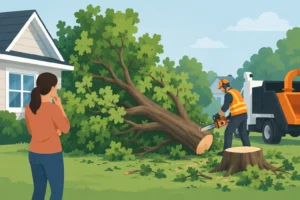
For larger or confined trees, sectional removal is generally the better approach. The crew removes outer limbs first, reduces the weight of the canopy, and works down the trunk in manageable sections. Rope rigging allows pieces to be lowered away from the fence instead of striking it. In tight locations, a crane or other specialized equipment may be considered, depending on site access and the condition of the tree.
A professional crew will also protect the work area. That can include using mats where equipment must cross soft ground, moving patio furniture and yard items, and setting up a controlled exclusion zone. The point is not to make the work look dramatic. It is to prevent people, vehicles, windows, and fence sections from entering the path of falling or swinging material.
Do Not Forget the Stump and Roots
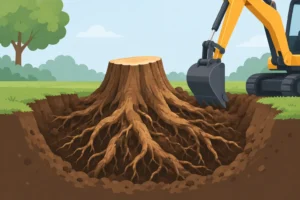
Removing the visible tree does not always solve the issue along a fence. The stump may sit close enough to interfere with a replacement post, a gate, a new planting bed, or lawn maintenance. Surface roots can lift soil, push against the fence line, or make it difficult to install new fencing properly.
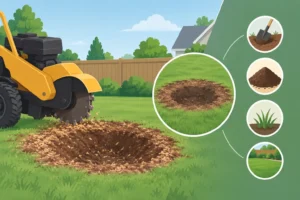
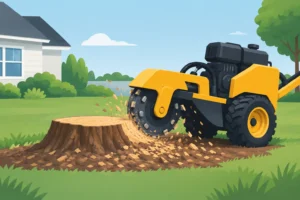
Stump grinding is often the right solution when the goal is to reclaim the area for grass, mulch, or general use. However, grinding reduces the stump below grade without removing every root. That is usually sufficient, but not always. If roots are directly in the way of a planned fence replacement, drainage project, or construction work, deeper root removal may be needed.
Root removal around fences should be handled carefully. Cutting major roots can affect nearby trees, disturb compacted soil around posts, and create settling along the fence line. The right level of removal depends on what you plan to do with the space afterward. A good contractor will ask that question before recommending a solution.
When Pruning May Be Better Than Removal
Not every tree near a fence needs to come down. If the trunk is sound and the problem is limited to low limbs, overhanging branches, or excess weight on one side of the canopy, selective pruning may reduce the risk and protect the fence.
Proper pruning removes dead, damaged, rubbing, or poorly attached limbs while maintaining the tree’s natural structure. Topping a tree or cutting back large sections without a plan can create weak regrowth, increase decay, and leave the tree more hazardous over time. It may look like a quick fix, but it often creates a larger removal problem later.
This is where arborist judgment matters. The best recommendation may be pruning now and monitoring the tree, or it may be removal before the tree fails into a fence, roof, driveway, or neighboring property.
What Property Owners Can Do Before the Crew Arrives
Homeowners do not need to prepare the tree itself. That is the crew’s job. A few simple steps can make the work safer and more efficient:
- Move vehicles, grills, patio furniture, and children’s play equipment away from the work zone.
- Keep pets indoors and make sure children stay well clear of the removal area.
- Point out buried irrigation, drainage features, septic components, and known utility concerns.
- Let the crew know about gates, locked access points, fragile landscaping, or shared fence arrangements.
- Discuss whether you want the stump ground, roots addressed, wood removed, or logs left for another use.
If a fence is already damaged by the tree, take photographs before work starts. This creates a clear record of the existing condition and helps separate old damage from any issue that needs attention afterward.
Choose Experience Over the Cheapest Quick Fix
Tree removal near a fence is precision work. A low estimate can become costly if the contractor lacks proper insurance, trained operators, rigging experience, or a realistic cleanup plan. Ask how the tree will be taken down, where debris will be placed, whether the stump is included, and how the fence line will be protected.
For homeowners and property managers in New Haven County, Stumpbuster LLC brings arborist-led planning, insured tree work, and decades of local experience to confined removals, stump grinding, and deeper root removal. The right crew should leave you with a safer property and a clean, usable yard – not a damaged fence and another project to manage.
If a tree is crowding, lifting, or threatening your fence, address it before wind, ice, or decay makes the decision for you. A careful on-site evaluation can turn a difficult-looking job into a controlled repair to your property and peace of mind.