A stump can look harmless after a tree comes down, but it often keeps a valuable part of the yard out of use. Homeowners commonly ask about grinding versus chemical removal because both options promise to deal with the same problem. The difference is how quickly they work, how completely they clear the area, and what they leave behind.
For most properties in New Haven County, stump grinding is the practical answer when the goal is a clean, usable yard. Chemical products may help speed natural decay in limited situations, but they do not make a stump disappear on a homeowner’s schedule. The right choice depends on the stump’s size, location, root system, and plans for the ground around it.
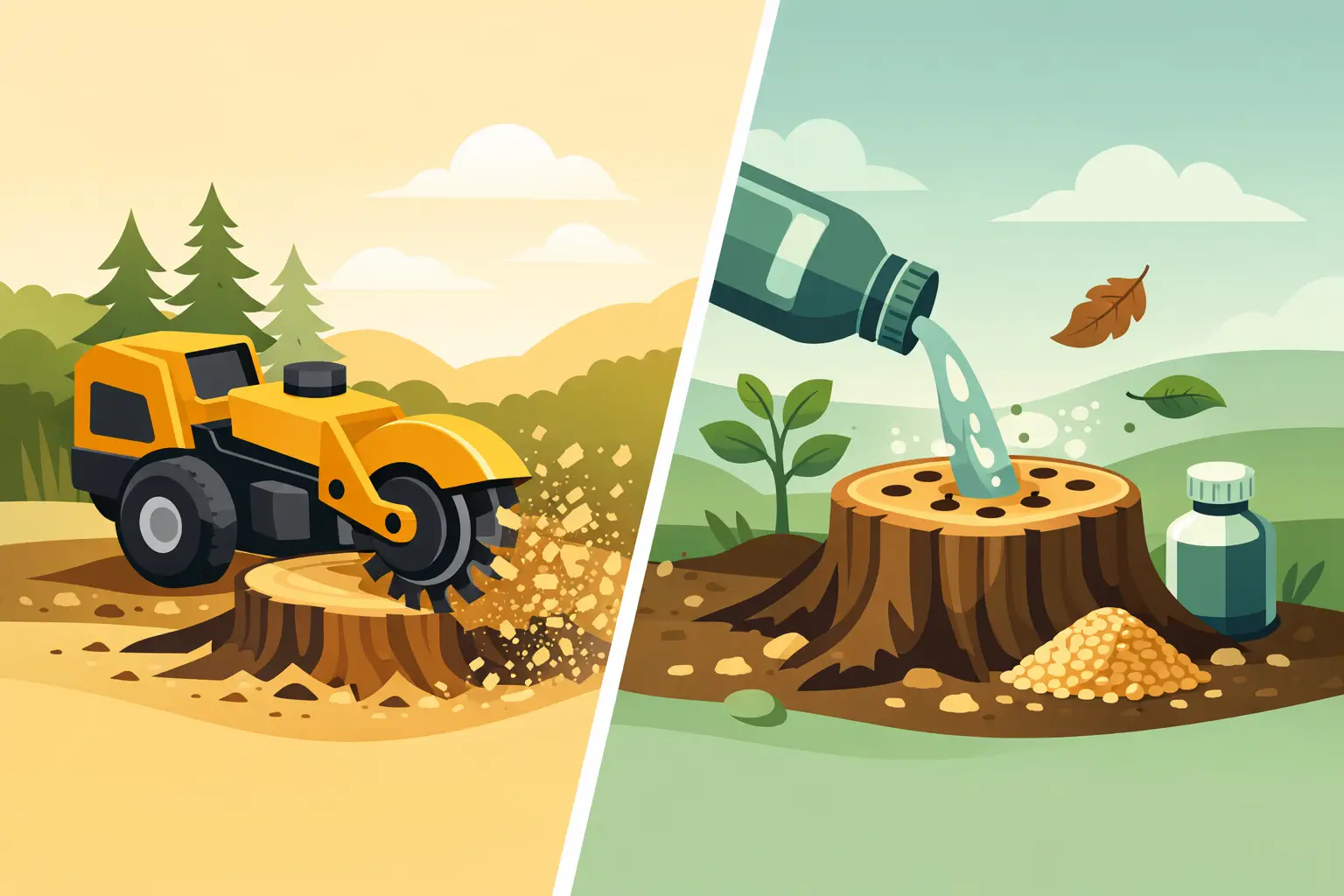
Grinding Versus Chemical Removal: The Main Difference
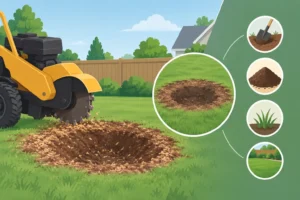
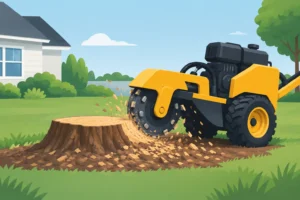
Stump grinding is a mechanical process. A specialized machine cuts the visible stump into wood chips below ground level. Once the stump is ground down, the area can be backfilled, covered with topsoil, seeded, or prepared for landscaping.
Chemical removal is better described as chemical decay acceleration. Products formulated for stump decay are applied to a cut stump and are intended to help the wood break down over time. They do not pull out the stump, remove the root structure, or create immediate open space. Depending on the species, size, moisture level, and weather, the process can take months or longer.
That time difference matters. If a stump sits beside a driveway, near a patio, in a mowing path, or where a new planting bed is planned, waiting for decay is rarely the best use of the property.
When Stump Grinding Makes More Sense
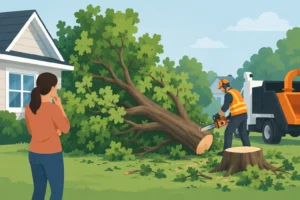
Grinding is usually the better choice when you want results now. It is especially useful after a tree removal, when equipment is already on site and the property owner wants the work finished cleanly rather than leaving a stump as the last unfinished piece of the job.
A professionally ground stump improves more than appearance. It removes a tripping hazard, makes mowing easier, and eliminates a common place for insects and fungi to settle into decaying wood. It also prevents the stump from becoming an obstacle when you want to install a fence, expand a driveway, build a shed, or redesign a landscape bed.
Grinding is a strong option for stumps in front yards, close to walkways, or in high-traffic areas. It is also the practical choice for commercial properties where grounds need to stay safe, neat, and easy to maintain.
What Grinding Leaves Behind
Stump grinding removes the above-ground stump and grinds into the soil, but it does not automatically remove every root extending across the yard. Those roots will eventually decay underground. In many situations, that is perfectly acceptable because the visible obstacle is gone and the ground can be restored.
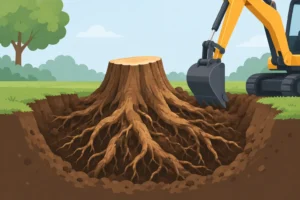
However, surface roots or major roots near a structure, utility area, pool, sidewalk, or planned construction may require more attention. This is where an experienced tree service should look beyond the stump itself. A quick grind may be enough for a lawn. A site being prepared for a new patio, foundation work, or replanting may need deeper root removal.
Stumpbuster LLC uses its Plowrake root removal system when a property needs a deeper, cleaner removal approach. That distinction can save homeowners from finding buried roots later when they begin a landscaping or construction project.
When Chemical Removal May Be Worth Considering
Chemical stump treatments have a narrow but legitimate place. They may make sense for a small, isolated stump in a wooded section of a large property where immediate access is not needed. If the stump is far from pets, children, gardens, wells, drainage areas, and future landscaping, a property owner may prefer to let nature do most of the work.
Even then, patience is required. Connecticut’s seasonal weather can slow the breakdown process, particularly when wood is dense or the stump stays dry. Certain tree species also resist decay more effectively than others. A chemical treatment may soften the wood over time, but the stump can remain visible and inconvenient for quite a while.
Chemical products should always be handled according to their label directions. They are not a good fit for every yard, particularly where runoff, vegetable gardens, nearby plantings, pets, or regular family activity are concerns. A stump that needs to be burned, chopped, or excavated later has not really been solved by the chemical treatment alone.
Cost Is More Than the Initial Price
At first glance, chemical removal can appear less expensive because the product itself costs less than hiring stump grinding equipment and an operator. That comparison leaves out the value of time, labor, and the condition of the property while the stump remains.
A homeowner may still spend weekends trying to drill, treat, chop, burn, or break apart a stump that has only partially decayed. There is also the cost of working around it for another season or two. If the stump is in the middle of a lawn, that means awkward mowing and an ongoing trip hazard. If it is near a landscape project, the project may simply be delayed.
Grinding has a higher upfront service cost, but it gives a clear result on the day of service. The final price depends on stump diameter, species, access for equipment, the number of stumps, slope, and whether roots need to be addressed beyond standard grinding. A reliable estimate should account for those conditions before work begins.
Consider the Yard You Want After Removal
The best decision is usually based on what comes next. If you simply want an old stump to deteriorate in an unused corner, chemical decay treatment may be adequate. If you want grass, mulch, a garden bed, a fence, or open space where the stump stands, grinding is the more direct path.
Replanting deserves special consideration. A new tree should not be planted directly into the old stump’s grindings or exactly where the old root crown sat. Wood chips use nitrogen as they break down, and remaining roots can make digging difficult. Moving the new planting location a reasonable distance away and using clean soil gives a replacement tree a better start.
For lawn restoration, the ground stump area should be filled with suitable soil rather than left as a depression. Some settling is normal as underground wood decays, especially with large stumps. Planning for that settling helps keep the finished lawn level and easy to mow.
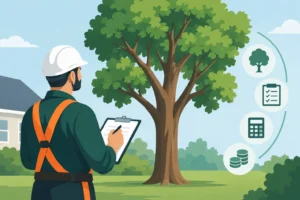
Why Professional Evaluation Matters
Not every stump is a simple backyard obstacle. Large trees can leave broad root systems, and stumps near homes, walls, septic areas, underground lines, or paved surfaces require careful planning. The operator needs enough room to work safely without damaging nearby landscaping or structures.
An arborist-led tree service can also identify whether a stump is likely to produce suckers, whether root removal is necessary, and whether a nearby tree may be affected by the work. Those details are easy to miss when the focus is only on getting rid of visible wood.
For homeowners and commercial property managers, the practical question is not just, “How do I make this stump go away?” It is, “What will leave this area safe, clean, and ready for its next use?” In most cases, grinding provides that answer without the long wait and uncertainty of chemical decay.
A stump does not need to control the layout of your yard for another year. Before choosing a method, consider access, future landscaping, root concerns, and how quickly you need the space back. A professional on-site estimate can turn that decision into a clean, lasting result.