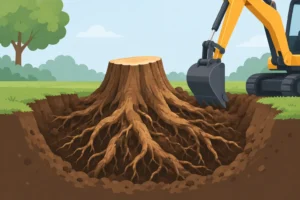
A stump can look like a small leftover problem until its roots begin lifting a walkway, crowding a planting bed, or taking up the spot where you want a patio. A real example of deep root extraction is a mature maple stump removed from a New Haven County backyard where the visible stump was only part of the job. The larger issue was the thick root system extending beneath lawn, old landscape edging, and the edge of a concrete walk.
Grinding the stump below grade would have improved the appearance of the area. It would not necessarily have removed the major roots causing the homeowner’s problem. Deep root extraction is the additional work needed when roots must be located, broken up, and removed from the ground rather than left to decay in place.
The Yard Problem Behind This Example of Deep Root Extraction
In this type of job, the tree has already been removed because it was declining, poorly located, or too close to the house. What remains is a stump with roots spreading well beyond its visible diameter. On an older Connecticut property, those roots may run under lawn, through compacted soil, around buried stone, and toward driveways, foundations, fences, or utility areas.
The homeowner’s goal may be simple: reclaim the yard for grass, a garden, a shed, or a new hardscape project. But the right removal method depends on what is below and around the stump. Roots near a foundation or underground service line require a different approach than roots in an open section of lawn.
A surface-level stump grinding job can be the right choice when the goal is to remove a tripping hazard and cover the area with topsoil and seed. The remaining roots will gradually decay. That is often practical, economical, and sufficient.
Deep extraction makes more sense when substantial roots are preventing construction, repeatedly producing sinkholes as they break down, interfering with drainage, or leaving uneven ground in a high-use area. It is more involved work, but it provides a cleaner starting point when the property needs to be restored for a specific use.
What Deep Root Extraction Looks Like on Site
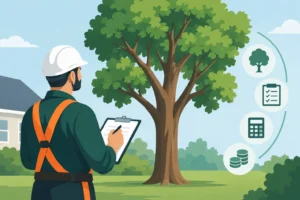
The work begins with a close look at the stump, the root flare, the condition of the surrounding ground, and nearby structures. An experienced operator does not treat every stump as an isolated object. The position of the old tree tells part of the story, but the soil, grade, nearby pavement, and visible surface roots show where the job may become more complicated.
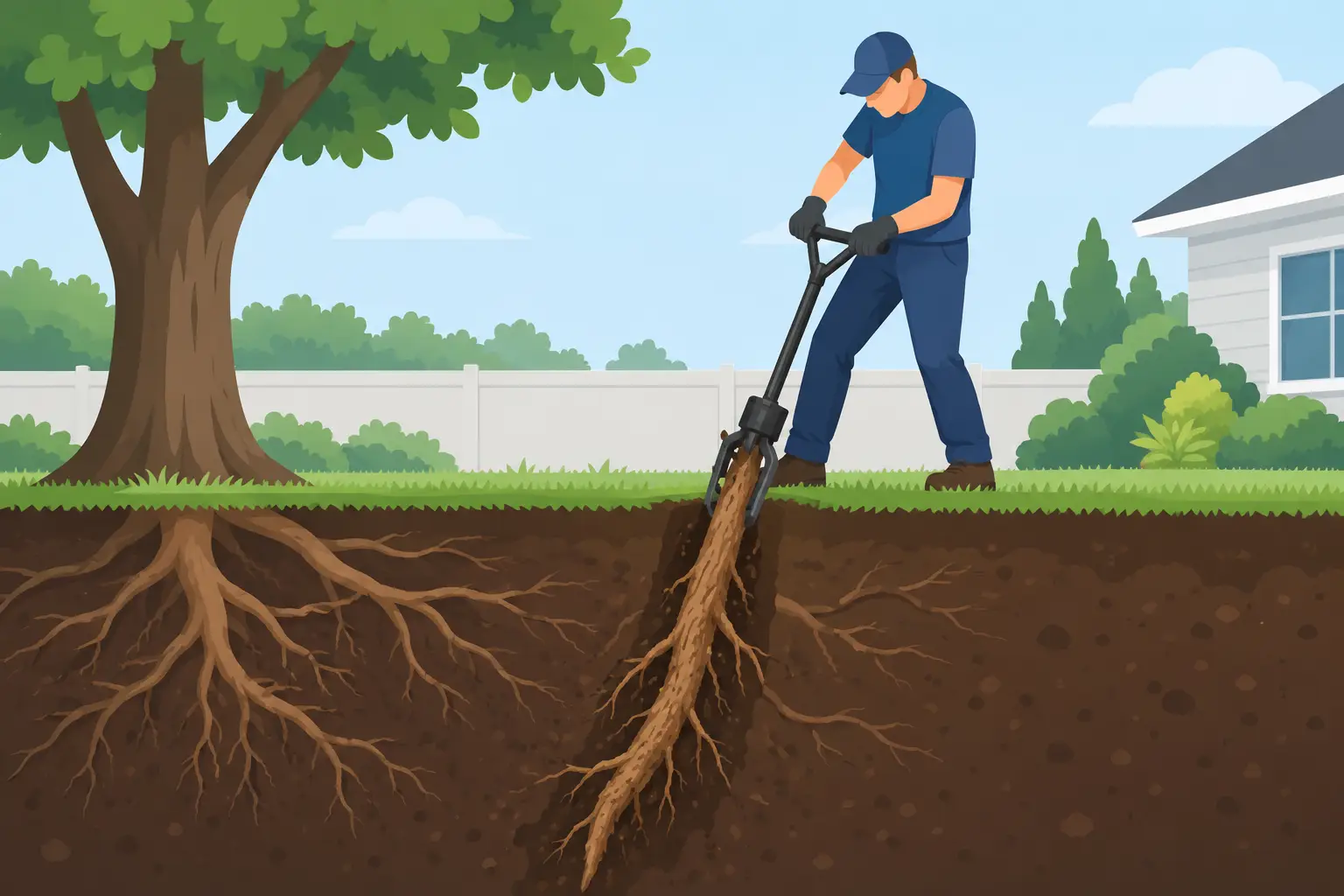
After identifying the work area, the stump is ground or broken down to expose the root structure below grade. From there, the larger roots are traced outward as needed. The goal is not to dig up every small feeder root across the entire yard. That would be unnecessary disruption in most cases. The goal is to remove the main woody roots that are creating an obstacle or compromising the finished area.
At Stumpbuster LLC, deep root removal can be handled with the proprietary Plowrake system, which is designed to reach and pull apart deeper root material more thoroughly than standard surface grinding alone. This helps remove the heavy root sections that can remain buried after a basic stump job.
The equipment and method matter because aggressive digging in the wrong place can damage lawn areas, hardscape, irrigation, drainage components, or underground utilities. A careful operator works in stages, removing material while watching for changes in soil and site conditions. On a tight residential lot, precision is often more valuable than speed.
Why Grinding Alone May Not Solve the Problem
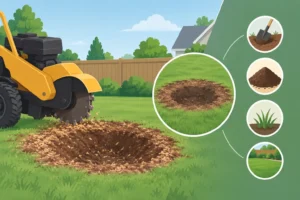
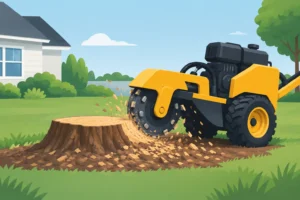
Stump grinding is an effective service, but it has limits by design. A grinder reduces the stump and nearby root flare into mulch below ground level. It is excellent for eliminating the visible stump and preparing an area for basic lawn restoration. It is not always intended to remove long, heavy roots extending away from the stump.
Consider the maple example. If the homeowner plans to seed the area and does not mind the natural settling that can occur as buried roots decay, grinding may be enough. If the homeowner is installing a level paver patio over that same ground, leaving large roots and wood debris below is a greater concern. As those materials decompose, voids can develop and contribute to settling.
The same applies to roots crossing a future driveway extension, a fence line, or a vegetable garden. Deep root extraction removes the material that would otherwise occupy that space and gives the next contractor a more predictable base to work with.
There is also a cleanup benefit. Large roots close to the surface can make mowing difficult and leave an uneven lawn long after the stump itself is gone. Removing those roots, filling the disturbed area correctly, and restoring the grade can make a noticeable difference in how the yard looks and functions.
The Trade-Offs Property Owners Should Understand
Deep root extraction is not automatically the best answer for every stump. It requires more labor, more equipment time, and more disturbance to the surrounding soil than standard grinding. The final cost reflects that added work, particularly when access is limited or roots are close to structures.
It can also require lawn repair afterward. Removing deep roots creates excavated areas that need backfill, grading, and sometimes topsoil and seed. On a property with established turf or carefully maintained landscaping, homeowners should expect a restoration period rather than an instant finished lawn.
In some situations, leaving roots in place is safer. Roots that run close to a foundation, retaining wall, underground utility, septic component, or public sidewalk should be evaluated carefully before removal. Cutting and extracting them without understanding what they affect can create a larger problem than the stump itself.
That is why an on-site estimate matters. A qualified tree service can determine whether deep removal is needed, how far the work should extend, and what level of cleanup will leave the property in good shape.
Signs Your Property May Need More Than Stump Grinding
A few conditions often point toward a deeper root removal conversation:
- The ground is raised, uneven, or difficult to mow around the old tree location.
- You are planning a patio, shed, driveway, fence, garden, or other project over the former root zone.
- Large roots are visible at the surface or are pushing against edging, walkways, or lawn areas.
- A previous stump grinding job left buried wood that is causing settling or soft spots.
- You need the area cleared as completely as practical for new landscaping or construction.
None of these signs guarantees that full extraction is necessary. Soil conditions, root depth, the original tree species, and the location of nearby utilities all affect the recommendation. Still, they are good reasons to ask for an evaluation before scheduling a basic stump grind.
A Cleaner Start for the Next Project
The value of deep root extraction is not just that a stump disappears. It is that the area can be prepared for what comes next. Whether that means a safer lawn, a new planting bed, or room for a hardscape project, removing the right root material helps prevent avoidable obstacles below the surface.
For New Haven County homeowners and property managers, the practical step is to explain your end goal when requesting an estimate. Tell the contractor whether the area will remain lawn or support a new project. That detail helps determine whether standard stump grinding is enough or whether deep root extraction will give you the clean, usable ground you are looking for.