A patio should be a place to set out chairs, cook dinner, and enjoy the yard – not an area where exposed roots create trip hazards and push against the edge of the hardscape. This case study of roots removed near a patio shows why this type of work needs more than a quick cut with a saw. When roots are close to concrete, pavers, retaining walls, or utility lines, the method matters as much as the result.
The homeowner had a mature tree removed years earlier, but the remaining stump and large surface roots were still affecting the patio area. Roots had worked their way into the lawn beside the patio, lifted sections of edging, and made it difficult to maintain a clean, level transition from the house to the yard. The goal was straightforward: remove the problem roots, preserve the patio, and leave the area ready for repair and landscaping.
The Problem: Roots Were Crowding the Patio
At first glance, the issue looked like a few visible roots near the patio border. A closer inspection showed a broader root system extending below the lawn and toward the hardscape. This is common with older stumps. Even after a tree is cut down, the root flare and major lateral roots can remain in place for many years.
The roots were not only an appearance problem. They were creating uneven ground where people stepped off the patio, interfering with lawn care, and holding moisture along the patio edge. Left alone, the area could continue to settle unevenly or allow roots and decaying wood to affect adjacent landscaping.
Removing roots near a patio requires a measured approach. Aggressive digging can loosen pavers, crack a concrete edge, disturb a retaining wall base, or damage irrigation and other buried lines. On the other hand, simply cutting visible roots at ground level leaves the larger root mass below, which means the problem can remain.
Planning Root Removal Without Damaging Hardscape
Before equipment was brought in, the work area was evaluated for access, root direction, patio construction, and nearby landscape features. The distance between the largest roots and the patio was especially important. A patio that is already cracked or settling calls for a different level of caution than a stable patio with a firm base.
The crew also considered what the homeowner wanted to do after removal. In this case, the plan was to restore the lawn edge and make a small patio-side planting area. That meant removal needed to go deep enough to eliminate the roots that would interfere with grading, soil placement, and future plantings.
For homeowners, this is the point where experience saves trouble. Root removal is not always an all-or-nothing job. If a live tree is still standing nearby, removing major structural roots can affect tree stability and health. In that situation, a licensed arborist should assess the tree before any roots are cut. Here, the tree had already been removed, so the focus was on extracting the remaining stump material and root system without disturbing the patio.
Why Surface Grinding Alone Was Not Enough
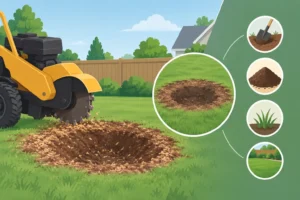
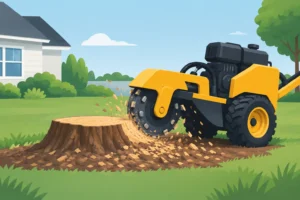
Stump grinding is often the right solution when a homeowner wants to remove a stump from an open lawn. It reduces the visible stump below grade and allows the area to be covered with soil and seed. But in tight areas near patios, grinding alone may not address large roots that run beneath or beside the hardscape.
The homeowner’s concern was not just the old stump. It was the thick root structure extending away from it. Surface grinding could have left root sections in the soil where they would continue to affect grading and break down unevenly over time.
For this job, deeper root extraction was the better fit. The work needed to be controlled, with excavation focused on the problem areas rather than broad, unnecessary disturbance across the yard.
The Removal Process
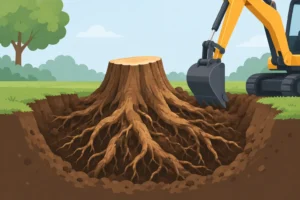
The crew began by clearing loose debris and exposing the root paths on the lawn side of the patio. Soil was carefully worked away from the root flare to identify the size and direction of the main roots. This step is slower than simply pulling at buried wood, but it gives the operator a clear view of what is moving and where force can safely be applied.
Stumpbuster LLC uses its proprietary Plowrake root removal system for jobs where deeper, cleaner extraction is needed. The system is designed to pull out substantial root material while limiting the repeated digging and tearing that can leave a yard unnecessarily damaged. Near a patio, that control is valuable. The objective is to remove the buried material while keeping pressure and excavation away from the hardscape base.
The major roots were separated and removed in sections. Smaller feeder roots and decayed wood were cleaned out as the work progressed. Rather than excavating directly against the patio edge, the crew worked from the open side, gradually freeing the root mass and lifting it away from the structure.
This approach took more care than a standard open-yard stump removal, but it protected the feature the homeowner wanted to keep. There was no reason to trade one property problem for another by damaging the patio during removal.
Managing Soil, Voids, and Drainage
Once the root mass came out, the ground did not immediately look finished. That is normal. Roots displace soil, and decaying wood can leave soft pockets or voids beneath the surface. If those areas are covered too quickly, the soil may settle later and create a low spot next to the patio.
The excavated area was cleaned of remaining wood debris, then backfilled and graded to support a gradual slope away from the patio. Proper grading matters because water should not collect along a foundation, patio edge, or landscaped border. The final soil level was prepared for the homeowner’s planned lawn and planting restoration.
Cleanup included removing the extracted root material and raking the work area so it was ready for the next phase. The patio remained intact, and the yard no longer had roots protruding at the edge where guests and family members walked.
Results: More Usable Space Around the Patio
The immediate improvement was visible. The uneven roots and exposed wood were gone, the lawn line beside the patio was open again, and the homeowner had a clean area to repair the edging and add topsoil. Just as importantly, the removal addressed the buried root sections that had made the area difficult to level.
The project also made routine property care easier. Mowing along the patio edge no longer required working around raised roots, and the homeowner could plan new landscaping without guessing where old stump wood was still hiding below ground.
Root removal near hardscape does not always mean a full patio repair is needed. It depends on how far roots have traveled, whether they have already lifted or cracked the surface, and what type of patio construction is in place. In this case, the patio had not suffered major structural damage, so careful removal and final grading were enough to restore the surrounding area.
When Patio-Area Roots Need Professional Attention
If roots are lifting pavers, pressing against a concrete slab, creating soft spots, or making the ground uneven beside a patio, it is worth having the area evaluated before the problem expands. The same applies when an old stump sits close to a deck, walkway, driveway, or retaining wall.
Avoid attempting to pull large roots with a truck, pry them out with a rented machine, or cut blindly into the ground. Buried roots can be tied into hardscape bases, old landscaping fabric, irrigation components, drainage piping, or utility lines. A rushed removal can turn a manageable yard project into a costly repair.
For homeowners in Hamden, North Haven, Wallingford, Branford, Guilford, West Haven, and throughout New Haven County, a professional assessment can identify whether stump grinding, deeper root removal, or a more limited approach makes sense for the property.
A clear patio edge and level ground make a yard easier to use and safer to enjoy. If old roots are taking over the space beside your patio, addressing them carefully now can keep the next outdoor season focused on the patio itself, not the problems growing around it.