A stump that starts sending up fresh shoots can make a completed tree removal feel unfinished. Those sprouts are not just an appearance problem. They can turn into woody stems, interfere with mowing, crowd nearby landscaping, and keep an active root system alive beneath the lawn. The best ways to stop stump regrowth depend on the tree species, the condition of the stump, and whether you want to remove only the visible stump or the remaining roots as well.
For many New Haven County properties, the lasting answer is more thorough than cutting the shoots back. A clean stump-and-root removal plan gives you a better chance of reclaiming the area for grass, planting, a patio, or a safer open yard.
Why a Cut Stump Can Keep Growing
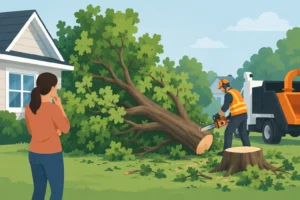
When a tree is cut down, the root system may still hold stored energy and moisture. Certain species are especially determined to survive by pushing out new growth from the stump, root crown, or roots farther away from the original trunk. Maples, willows, poplars, black locust, tree-of-heaven, and some ornamental trees are common examples of trees that may resprout or produce root suckers.
A newly cut stump is most likely to sprout, but old stumps can also send up shoots if enough living tissue remains. The tree does not need a full trunk to keep trying. A few green shoots can feed the roots and prolong the problem.
This is why simply cutting shoots flush with the ground rarely ends regrowth. It improves the appearance for a while, but it does not remove the source of the shoots. In some cases, repeated cutting can even encourage more vigorous sprouting.
The Best Ways to Stop Stump Regrowth
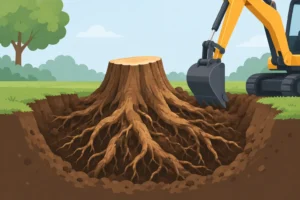
Remove the stump and major roots
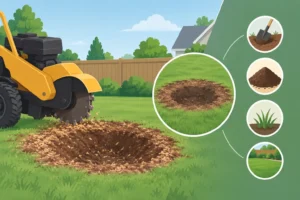
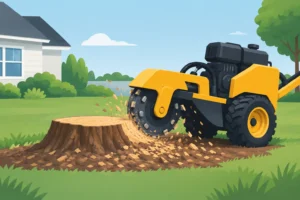
Complete physical removal is the most dependable option when the goal is to eliminate a stump and reduce the chance of new shoots. Stump grinding removes the visible stump below ground level, but the extent of root removal matters when roots are active, invasive, or occupying space needed for a new project.
A standard grinder can be the right choice for a stump in an out-of-the-way section of lawn where the homeowner mainly wants a smooth surface for grass. However, grinding leaves much of the root system in place. Those roots will decay over time, but some species can still produce shoots from living roots after the stump is ground.
For stubborn regrowth, construction areas, gardens, driveway edges, and locations near foundations or utilities, deeper stump and root extraction may be the better investment. Stumpbuster LLC uses a proprietary Plowrake root removal system to pull out more of the root material that conventional grinding can leave behind. This creates a cleaner area for restoration and reduces the remaining structure that can continue causing trouble below the surface.
Treat a fresh stump when removal is not practical
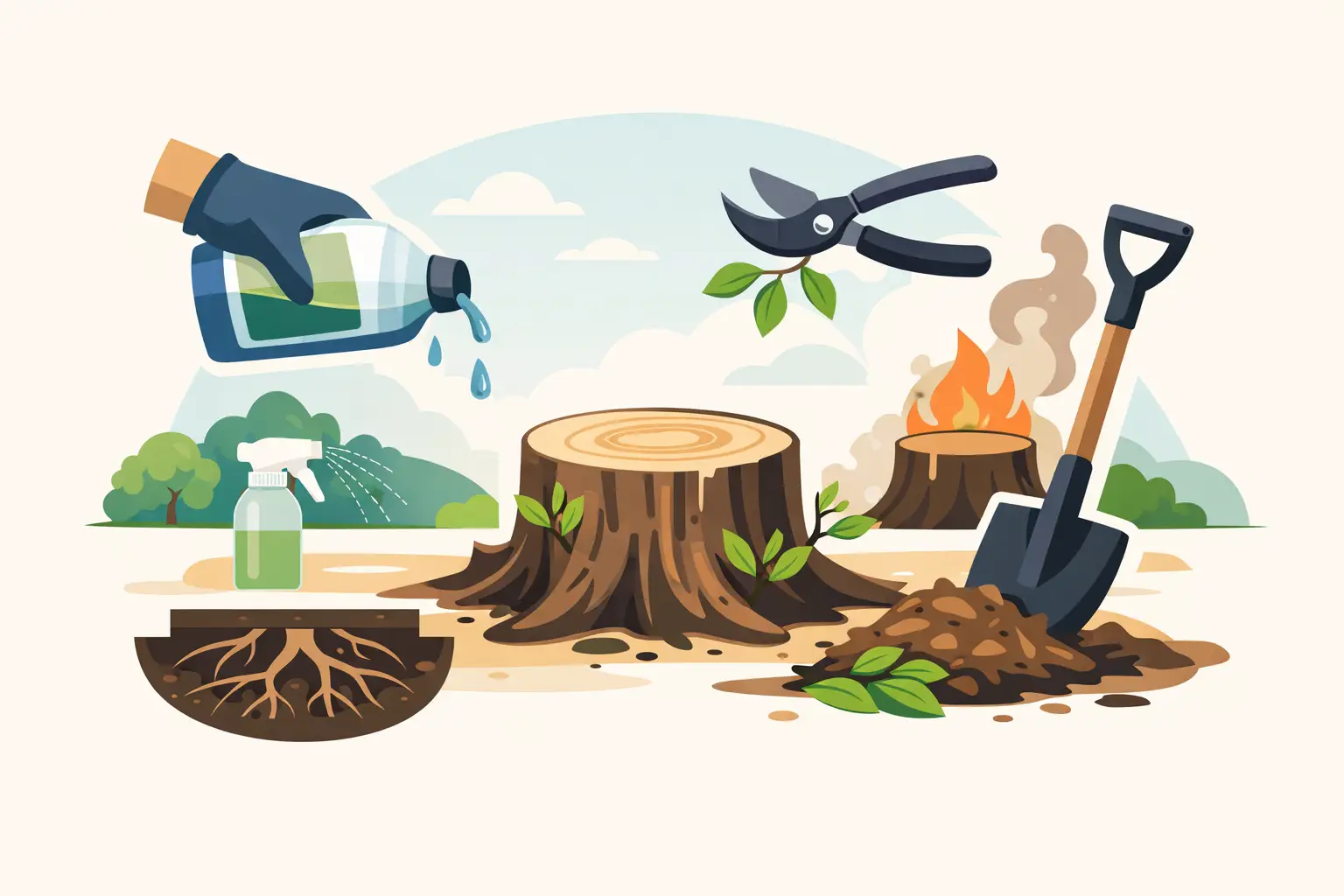
When full removal is not needed or access is limited, a properly applied stump treatment may help stop a freshly cut stump from resprouting. The timing matters. Treatment works best soon after the tree is cut, while the stump tissue is still active and can carry the product into the root system.
This is not a job for guesswork. Products intended for stump treatment must be used exactly according to their label directions, including where they can be applied, how much to use, required protective equipment, and precautions around water, gardens, pets, and desirable trees. Some treatments can harm nearby plants if applied carelessly or if roots are connected underground.
Chemical treatment may be a reasonable choice for a small stump in a naturalized area, but it is not always the best choice near vegetable gardens, play areas, drainage routes, or established landscaping. It also does not remove the physical stump, so the wood and roots remain in the ground until they break down.
Cut new shoots before they build strength
If a stump has already begun sprouting, remove the shoots promptly and keep them from leafing out for long. Small shoots are easier to manage than thick stems, and regular cutting reduces the plant’s ability to replenish energy through photosynthesis.
This approach takes patience. Depending on the species and root reserves, it can take more than one growing season of consistent cutting before regrowth slows down. It is best suited to small, accessible stumps where removal is not urgent. Letting shoots grow tall between cuts defeats the purpose, because each set of leaves helps support the remaining roots.
Do not use a mower to tackle thick woody shoots. They can damage blades or become projectiles. Use appropriate pruning equipment for small stems, and call a qualified tree service if the growth is dense, close to structures, or emerging from a large root system.
Watch for root suckers beyond the stump
Sometimes the stump is not the only issue. New shoots may appear several feet away across the lawn, along a fence line, or near a landscape bed. These are root suckers, and they often signal that living roots remain well beyond the stump itself.
Mowing or cutting every sucker can control the appearance, but it may not solve the underlying problem. Broad root systems are common with mature trees, especially in compacted soil or where roots had spread toward moisture and open lawn. If the area is being converted for a shed, walkway, garden, or new tree planting, targeted root removal is worth discussing before the work begins.
It is also smart to identify the species before choosing a method. Some trees respond well to consistent shoot removal. Others are known for aggressive suckering and may need a more direct approach to prevent repeat growth.
When Stump Grinding Is Enough – and When It Is Not
Stump grinding is a practical, efficient solution for many homeowners. It removes the tripping hazard, clears the visible wood, and makes it easier to cover the area with topsoil and seed. For a non-suckering species in an open lawn, that may be all the work needed.
But grinding is not the same as complete root removal. If the stump belonged to a tree that readily resprouts, or if roots are lifting pavement, invading a planting area, or preventing excavation, leaving roots behind can lead to future work. There is a trade-off: deeper removal requires more equipment and site restoration, but it provides a cleaner starting point when the property owner needs the area truly cleared.
A professional evaluation can help avoid paying for the wrong level of service. The location of the stump, tree species, access for equipment, nearby utilities, planned use of the area, and condition of surrounding landscaping all affect the right recommendation.
Avoid These Common Mistakes
Burning a stump is rarely a clean or reliable answer. It can create a fire risk, damage surrounding soil, and leave roots underground. Drilling holes and adding household chemicals is also unreliable and can create unnecessary risks for people, pets, groundwater, and nearby plants.
Covering a stump with soil does not kill it. In fact, hidden stumps can become a problem later when mowing, digging, or installing a fence. Leaving sprouts unattended is another costly mistake, particularly near a house, sidewalk, or utility area where a small problem can become a larger maintenance issue.
The better approach is to decide what you want from the space after removal. If you only need a level lawn, grinding may be appropriate. If you need a clean area for construction, replanting, or landscaping, ask about root removal before the job is finished.
Get the Yard Back to Usable Condition
Stopping stump regrowth is about more than making shoots disappear for a few weeks. It means dealing with the remaining wood and roots in a way that fits your property and your plans for the space. For homeowners and commercial properties in New Haven County, experienced stump work can prevent repeat maintenance and leave the site ready for what comes next.
Before you seed, plant, pave, or build over an old stump area, have the remaining stump and root system assessed. A thorough removal plan now can save you from chasing the same shoots every spring.