A large limb hanging over a roof, a dying maple near the driveway, or a stump that will not stop sending up shoots is not the time to guess. The arborist vs tree company question matters because the right crew can protect your home, improve the health of valuable trees, and leave the property clean when the work is finished.
For homeowners and commercial property managers in New Haven County, the best choice is often not one or the other. A qualified tree company led by an experienced arborist brings both sides of the job together: sound tree-care judgment and the equipment, crew, insurance, and cleanup needed to do difficult work safely.
Arborist vs Tree Company: The Main Difference
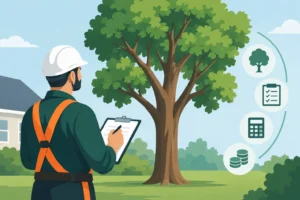
An arborist is a trained tree-care professional. Their work centers on understanding trees: species, growth patterns, structural weaknesses, disease symptoms, soil conditions, pruning needs, and the way a tree may affect nearby buildings or people. A licensed arborist can evaluate whether a tree should be preserved, pruned, monitored, treated, or removed.
A tree company is the business that performs tree-related work. Depending on the company, that may include trimming, removals, emergency storm work, stump grinding, brush clearing, hauling, and site cleanup. Some tree companies have strong arborist knowledge on staff. Others focus primarily on cutting and removal.
That distinction is worth paying attention to. Tree work is not just about getting branches on the ground. Poor cuts can weaken a healthy tree, encourage decay, create heavy regrowth, or leave a property exposed to future hazards. On the other hand, a knowledgeable evaluation without a capable field crew does not solve a tree that is already leaning toward a garage.
The strongest fit for most property owners is an arborist-led tree service company that can assess the problem and carry out the recommended work properly.
When an Arborist’s Assessment Is Especially Valuable
Call for arborist expertise when the question is not obvious. A tree may look rough after a storm but still be structurally sound. Another may appear healthy while having a cracked union, internal decay, root damage, or a dangerous lean that is easy to miss from the ground.
An arborist evaluation is particularly useful when a mature tree is close to a house, power line, driveway, patio, fence, or commercial parking area. These trees have value, but they also carry consequences if a limb or trunk fails. The goal should be to reduce risk without removing more of the canopy than necessary.
Proper pruning is another situation where experience matters. Tree topping, random limb cutting, and excessive thinning may make a tree look smaller for a season, but they often cause long-term trouble. Correct pruning removes dead, damaged, rubbing, overextended, or poorly placed limbs while maintaining the tree’s structure and appearance.
An arborist can also help distinguish between a tree that needs removal and one that needs better care. It depends on the species, location, condition of the trunk and roots, amount of decay, and the target beneath it. A compromised tree in the middle of a wooded lot presents a different level of concern than the same tree over a child’s play area.
When You Need a Full-Service Tree Company
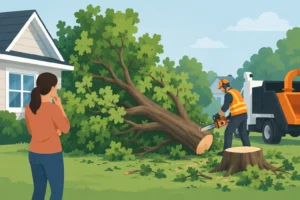
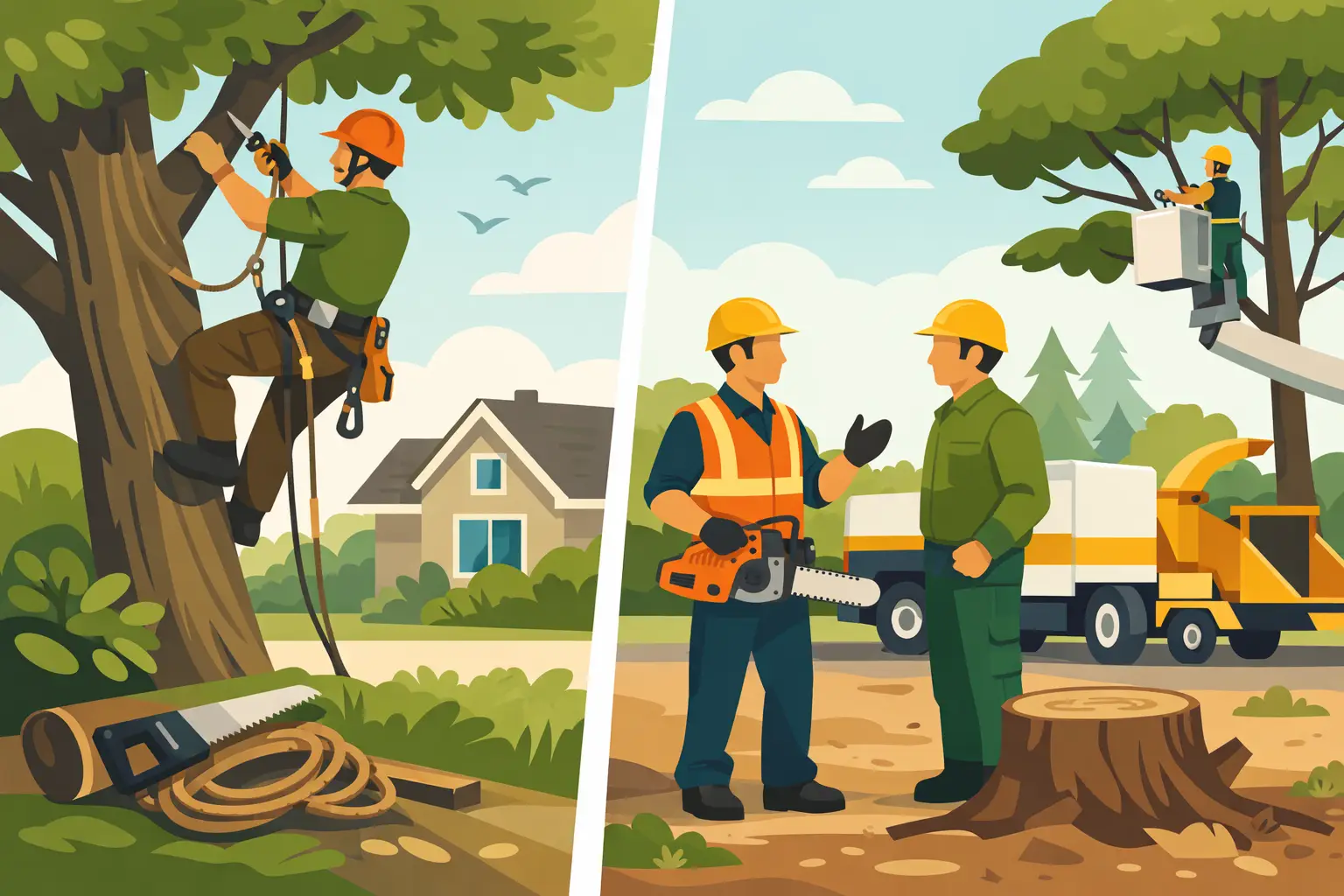
Once a decision has been made, the job often requires more than a pruning saw. Tree removal and major trimming can involve climbing, rigging, bucket trucks, chippers, cranes when conditions require them, stump equipment, and a crew that knows how to control each section of the tree as it comes down.
A professional tree company is the practical choice for work such as removing a dead or hazardous tree, clearing storm-damaged limbs, cutting back branches from a roofline, grinding an old stump, or removing roots that interfere with a lawn or future landscaping. The crew should have the equipment sized for the work and a plan for protecting the surrounding property.
Insurance is a major part of that decision. Trees do not fall in convenient places, and access can be tight on established Connecticut properties. Ask whether the contractor is properly insured and whether the estimate clearly states what is included. Removal, hauling, wood disposal, stump grinding, surface root removal, and final cleanup are not always included in the same scope of work.
Price matters, but the lowest estimate is not automatically the best value. A quote that leaves brush behind, skips cleanup, lacks insurance, or does not address the stump can become more expensive and frustrating than it first appears.
What to Look for Beyond the Job Title
The words “arborist” and “tree company” alone do not tell the whole story. Before hiring anyone, look at how they approach the property and the work itself.
A dependable contractor should inspect the tree in person, identify obvious risks, and explain the recommended service in plain language. They should be able to tell you whether the work is focused on health, clearance, hazard reduction, removal, or appearance. If a tree needs to come down, they should explain how they will manage nearby structures, landscaping, utilities, and access points.
Experience also shows in the details. A crew that has worked for decades in towns such as Hamden, North Haven, Branford, Guilford, Wallingford, and West Haven understands the common challenges of mature neighborhoods: narrow side yards, aging stone walls, underground utilities, established gardens, and trees growing close to homes.
Ask direct questions before approving the work. Who will oversee the job? Is there arborist involvement when tree health or structural condition is a concern? Is the company insured? Will debris be removed? What happens to the stump? A clear answer is a good sign. A vague answer is a reason to keep looking.
Stump Grinding and Root Removal Are Not the Same Service
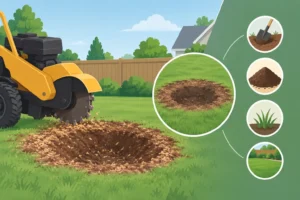
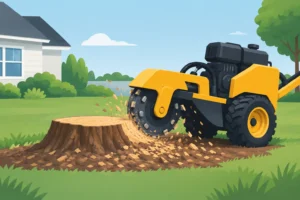
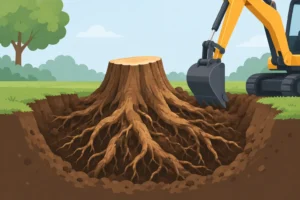
Many property owners discover this after the tree is gone. Stump grinding reduces the visible stump below ground level, allowing the area to be covered with soil, seed, mulch, or a new planting. It is often the right solution when the goal is to remove a tripping hazard and improve the look and use of the yard.
However, grinding does not always remove the deeper root system. Large roots may remain beneath the lawn, near a walkway, or in an area planned for construction. Some roots will decay over time, while others can continue to cause uneven ground, interfere with regrading, or make future planting difficult.
That is where specialized root removal can make a real difference. For a homeowner planning a patio, lawn restoration, garden bed, fence, or other improvement, it is worth discussing the final use of the space before the work begins. The right method depends on the tree species, root spread, soil, access, and how thoroughly the area needs to be cleared.
At Stumpbuster LLC, the Plowrake root removal system is designed for deeper, cleaner removal where standard stump grinding alone is not enough. That type of capability can save a property owner from having to reopen the same area later.
A Practical Way to Make the Right Call
If the concern is a tree’s health, stability, or long-term future, start with a company that has real arborist knowledge. If the need is immediate removal, storm cleanup, or heavy stump work, make sure that same company has the crew, equipment, and insurance to complete the job without cutting corners.
For many properties, the answer is both. You need informed judgment before the first cut and skilled field work after the decision is made. That combination helps prevent unnecessary removals while making sure genuine hazards are addressed before they damage a roof, block access, or put people at risk.
A good tree service leaves more than a cleaner yard behind. It leaves you with safer access, usable outdoor space, healthier trees where they can be preserved, and confidence that the work was handled carefully from the first assessment through the final cleanup. If a tree, stump, or root problem is affecting your property, request a clear estimate from an insured, experienced local crew before the problem grows.