A mature oak can look solid from the ground and still have a split limb hanging over a driveway, a hollow trunk, or roots lifting the soil around its base. That is why a guide to tree work safety starts with one plain fact: tree work is not ordinary yard work. Gravity, chainsaws, ladders, power lines, heavy wood, and unpredictable decay can turn a small job into a serious injury or costly property damage in seconds.
For homeowners and property managers in New Haven County, the safest decision is often recognizing where a job stops being suitable for a homeowner and needs an experienced, insured tree crew. The goal is not to avoid caring for your trees. It is to make sound decisions that protect people, homes, vehicles, and the trees worth keeping.
Start With a Ground-Level Hazard Check
Before anyone picks up a saw or climbs a ladder, walk the area from a safe distance. Look up, look down, and consider what could be affected if a branch or tree moves in an unexpected direction. A tree does not always fall where it appears to lean, especially when rot, wind, uneven weight, or hidden root damage are involved.
Pay attention to dead or broken limbs, peeling bark, cavities, mushrooms at the base, long vertical trunk cracks, and soil heaving around roots. None of these signs automatically means a tree will fail immediately, but they are reasons to have it evaluated. A tree that has recently lost a large limb, been struck by lightning, or sits in saturated soil deserves extra caution.
The drop zone matters as much as the tree itself. Identify houses, garages, fences, sheds, vehicles, patios, pools, neighboring property, and public sidewalks. Also think about people who may enter the area without realizing work is underway, including children, delivery drivers, pedestrians, and pets.
Keep Clear of Utility Lines
Overhead electrical lines create one of the most serious hazards in tree trimming and removal. Branches do not need to touch a power line directly to create danger. Equipment, ladders, wet wood, or a falling limb can become part of a hazardous path to the ground.
Treat every overhead wire as energized. Do not attempt to cut, pull, climb, or use a ladder near it. Do not use a pole pruner around a service line, even for what appears to be a small branch. If a tree or limb is tangled in a line, keep everyone away and contact the utility company. For a non-emergency situation involving tree work near lines, use a qualified tree service with the training and equipment to assess the work safely.
Underground utilities also matter when stump grinding, root removal, planting, or digging near a tree. Roots often extend farther than homeowners expect, and utility lines may run through areas that appear open. Calling for utility marking before excavation is a basic step that prevents dangerous strikes and expensive repairs.
A Guide to Tree Work Safety Means Knowing Your Limits
Many property owners can handle light cleanup: picking up small storm debris, raking leaves, or pruning a small reachable branch with hand tools while standing firmly on the ground. The job changes completely when it involves climbing, a ladder, a chainsaw, rigging, heavy limbs, or a tree near a structure.
Do not use a chainsaw from a ladder. A ladder can shift, a saw can kick back, and a falling branch can knock the operator off balance. This is one of the most common scenarios where a quick trim becomes an emergency. Similarly, do not climb a tree with a saw unless you have professional climbing training, proper harness equipment, and a planned work system.
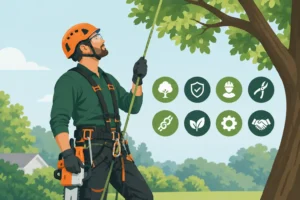
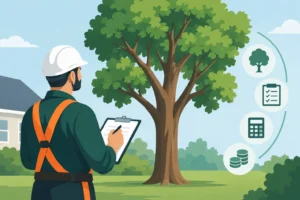
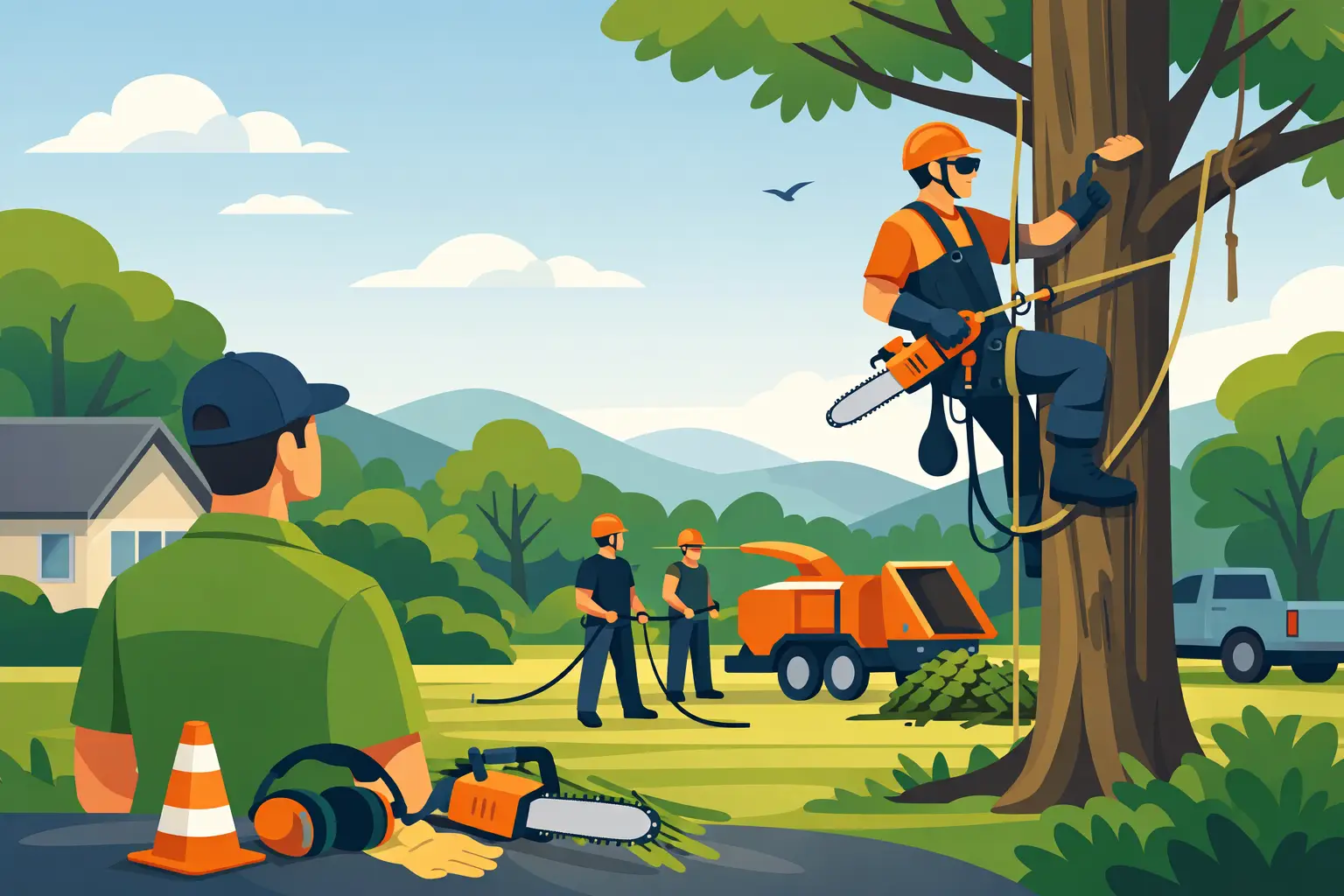
A tree may also be unsafe to climb even for an experienced worker. Dead wood, internal decay, weak branch unions, and storm damage can make a tree structurally unreliable. Professional crews evaluate the tree, access, landing area, equipment needs, and removal method before beginning work. Sometimes that means climbing. Other times it means using ropes, sectional removal, a bucket truck, or simply waiting until conditions are safer.
Prepare the Work Area Before Any Cutting Begins
Good tree work is planned before the first cut. If a qualified crew is coming to your property, you can help make the work area safer and more efficient by clearing vehicles, outdoor furniture, grills, toys, and movable landscape items from the designated area. Keep gates unlocked if access has been arranged, and let the crew know about septic systems, sprinkler heads, invisible pet fences, shallow utilities, or other site conditions.
Keep children and pets indoors or well away from the work zone. A professional crew should establish a clear exclusion area, but property owners should not assume that a closed door, open gate, or verbal warning alone will keep others out. Tree work creates noise and activity that can attract curious neighbors or pets.
Weather should guide the schedule. High winds, lightning, icy surfaces, and heavy rain increase risk. Wind can alter the path of limbs and make climbing or aerial work unsafe. Wet ground can also affect equipment access and tree stability. Delaying a job is frustrating, but it is better than forcing a risky removal under poor conditions.
Use the Right Protective Equipment
Personal protective equipment is not a substitute for skill, but it is essential when work is appropriate to perform. At minimum, ground-level pruning and cleanup call for sturdy work boots, gloves, eye protection, and close-fitting clothing. Hearing protection is needed around powered equipment.
Chainsaw work requires more: a properly fitted helmet with face and hearing protection, chainsaw chaps or pants, protective footwear, and a well-maintained saw. But protective gear does not make chainsaw use safe on a ladder, near power lines, or under a damaged tree. Equipment reduces some injury risk. It cannot correct a bad position, poor judgment, or an uncontrolled fall.
Never work alone on a significant tree task. A second person should remain clear of the cutting zone but be available to call for help, control access, and respond if something goes wrong. They should not stand beneath the tree or try to catch, guide, or stop a falling branch.
Respect Falling Wood and Stored Energy
Branches rarely behave like neat pieces of lumber. They twist, roll, bounce, and break apart when they hit the ground. Limbs under tension can snap or swing back when cut. A trunk section can shift on a slope, and a cut piece can strike a fence or structure after landing.
This is why professionals use controlled cutting methods, ropes, rigging, and clear communication. The person making a cut needs an escape route and must never stand directly behind or below the expected movement of the wood. Everyone else must stay outside the planned drop zone until the cutter gives an all-clear.
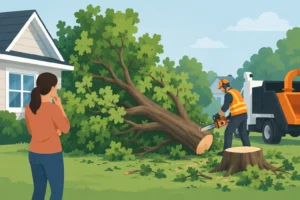
Storm-damaged trees deserve special caution because they often contain stored energy. A branch caught in another tree, commonly called a hanger, can release without warning. Do not pull on it with a rope from below, climb beneath it, or try to dislodge it with a pole. Mark off the area and arrange for professional removal.
Choose a Tree Service Based on Safety, Not Just Price
Tree work estimates can vary because the work itself varies. Access, tree condition, proximity to buildings, cleanup needs, equipment, insurance, and disposal all affect the price. A low bid can be tempting, but it may leave out the planning, trained labor, coverage, or equipment needed to protect your property.
Ask whether the company is insured, how it plans to handle the tree, and whether an arborist will evaluate the condition of trees being trimmed or removed. For work near structures, mature trees, or difficult root systems, experience matters. A knowledgeable crew can often preserve healthy trees with proper pruning while removing hazardous limbs before they become a larger problem.
Stumpbuster LLC has served local properties since 1985 under licensed arborist leadership, bringing specialized equipment and careful cleanup to tree removal, trimming, stump grinding, and deep root removal work. For homeowners, that experience means the job is approached as a site-specific safety project, not simply a tree to cut down.
After the Work: Check the Site and the Tree
Once work is complete, inspect the area before resuming normal use. Look for wood debris, sawdust piles, exposed roots, turf damage, and any disturbed fencing or landscape features. If a tree was pruned rather than removed, do not assume it is maintenance-free. Watch it over the next seasons for new dead limbs, changes in leaf cover, or signs of stress.
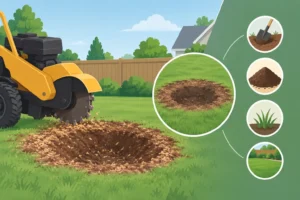
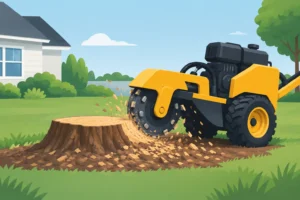
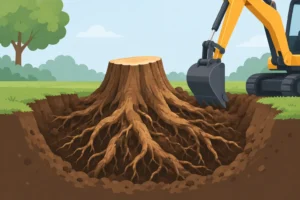
If a stump has been ground, ask what depth was used and whether roots remain where future digging, paving, or planting is planned. Grinding improves appearance and removes the visible stump, while deeper root removal may be the better choice where roots interfere with a lawn, driveway, foundation area, or new landscape project.
The safest tree work is usually the work planned early, before a limb is over a roof or a storm turns a weak tree into an emergency. If something on your property looks questionable, keep the area clear and have a qualified professional take a look. A careful assessment today can protect the people and property you rely on tomorrow.