A mature tree can look perfectly healthy when a construction project begins, then decline months or even years after the work is finished. The problem is usually underground. Effective tree construction protection keeps equipment, stored materials, excavation, and grade changes away from the roots that support the tree long before a problem becomes visible in the canopy.
For Connecticut property owners, this matters during more projects than major additions. A new driveway, patio, drainage line, pool, retaining wall, utility trench, or yard regrading can all damage established trees. Planning for the trees early is far less expensive than removing a declining tree later, especially when it is close to a house, parking area, or utility line.
Why Construction Damages Healthy Trees
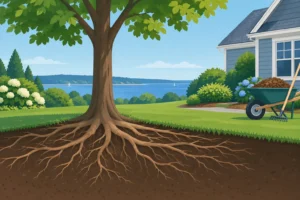
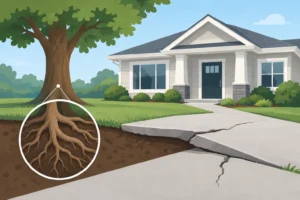
Most of a tree’s feeder roots are not deep below the trunk. They are typically concentrated in the upper layers of soil, often extending well beyond the edge of the branches. Those small roots take in water and nutrients. Larger roots provide anchoring and transport moisture back to the tree.
Construction equipment compresses the air spaces in soil. Once the soil is compacted, water drains poorly and roots struggle to get the oxygen they need. A single pass with a loaded truck can cause damage in a sensitive root area. Repeated traffic, material storage, and parking equipment beneath a tree are even more damaging.
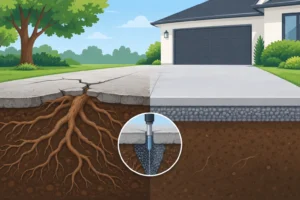
Excavation creates a different problem. Cutting roots for a foundation, trench, curb, or new hardscape can reduce stability and interrupt the tree’s water supply. A tree may survive a limited amount of root loss, but there is no universal safe percentage. The species, age, existing health, soil conditions, and location all matter. Root damage on the side facing a home or driveway may also raise concern about the tree’s long-term stability.
Grade changes are frequently overlooked. Adding only a few inches of fill over roots can limit oxygen exchange. Removing soil can expose roots and alter drainage around the tree. Both changes can put a mature tree under stress that it may not show until a hot, dry summer arrives.
Tree Construction Protection Starts Before Work Begins
The best time to protect a tree is before equipment is delivered. An arborist can identify which trees are worth preserving, which ones have existing defects, and where construction conflicts are most likely. This early review can prevent a homeowner or contractor from investing in protection for a tree that is already unsafe or in poor condition.
A practical assessment looks beyond the trunk. It considers the canopy, root flare, lean, trunk defects, branch structure, nearby utilities, drainage patterns, and the planned work area. It also identifies whether the proposed project can shift a few feet, use a different access route, or avoid trenching directly through important roots.
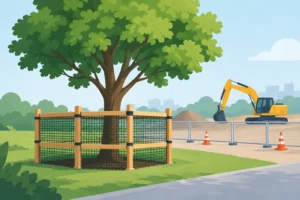
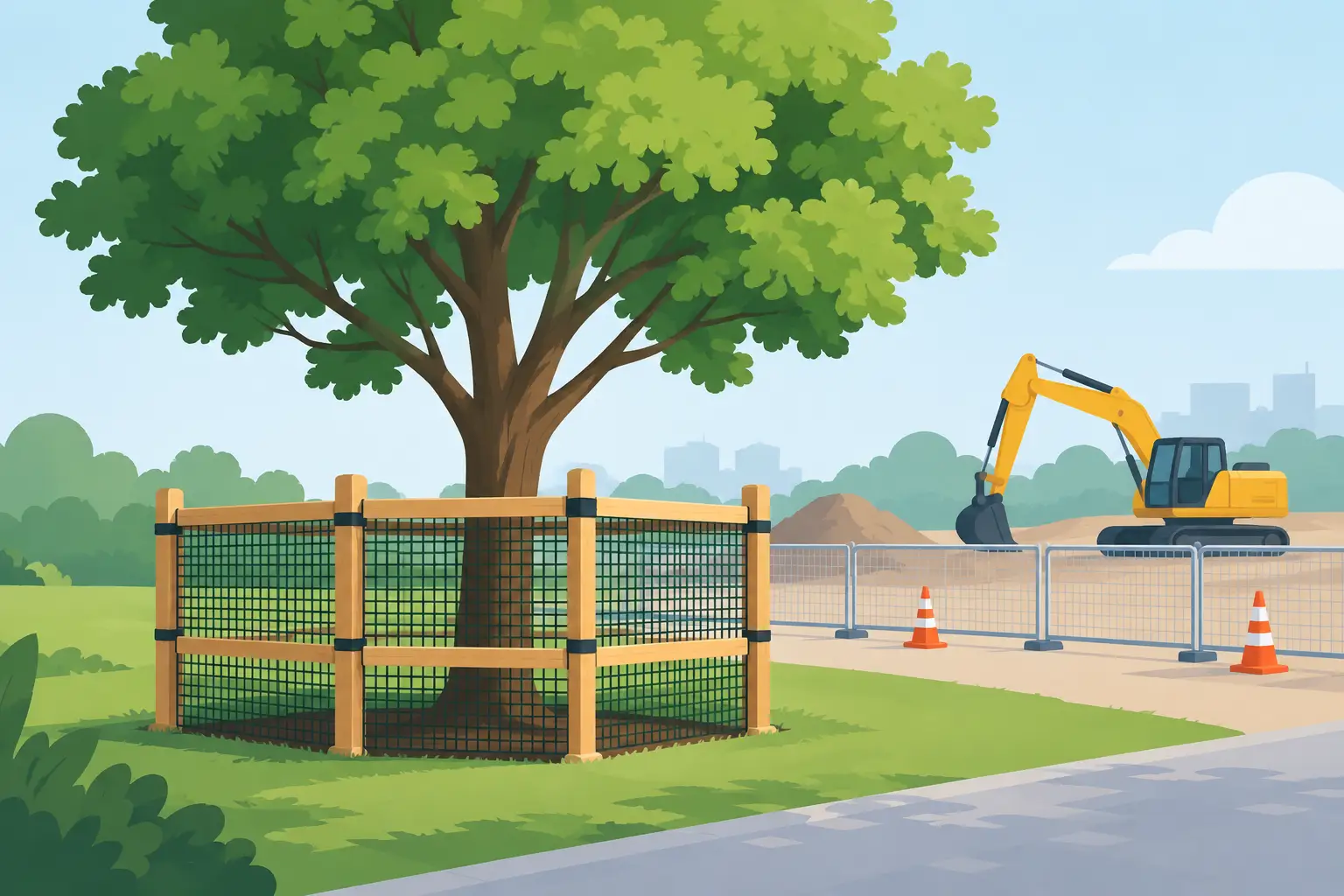
When a tree is a good candidate for retention, establish a root protection zone. This is a clearly marked area around the tree where construction activity is restricted. The exact size depends on the tree and the job. The drip line can offer a starting point, but it is not always enough, particularly for large mature trees or trees growing in open yard space.
A visible barrier is far more effective than a verbal instruction. Install sturdy temporary fencing before clearing, demolition, grading, or deliveries begin. Tape, cones, or a few stakes are easy to move and rarely hold up on an active work site. The barrier should remain in place until heavy work is complete.
What Must Stay Outside the Protected Area
Once the protection zone is marked, it needs to function as a true no-work area. That means no vehicles, no machines, no stockpiles, and no casual shortcuts across the soil. Contractors should know the limits before the first load of gravel or lumber arrives.
Keep these activities outside the protected area whenever possible:
- Parking trucks, loaders, lifts, trailers, or other equipment
- Storing lumber, stone, soil, dumpsters, fuel, or job materials
- Washing concrete tools or disposing of paint, chemicals, or rinse water
- Excavating, trenching, grading, or installing underground utilities
- Attaching signs, wires, lights, or temporary supports to the tree
Concrete washout, fuel spills, and construction debris can damage roots as surely as a machine. Even a pile of topsoil can smother the root system if it sits in place for weeks. Good site management protects the tree and keeps the job cleaner overall.
When Work Near Roots Cannot Be Avoided
Some projects have unavoidable conflicts. A utility connection may need to cross near a tree, or a walkway may be planned where roots already run close to the surface. In those cases, the goal is to reduce harm rather than assume that damage is unavoidable.
Do not use a backhoe to tear through roots near a retained tree. Root-sensitive excavation may require air excavation, hand digging, or carefully directed work that exposes roots before decisions are made. If roots must be cut, clean cuts made with the right tools are less damaging than ripping or crushing them with machinery.
It may also be possible to adjust the design. A pier foundation, elevated deck, narrower walkway, or rerouted utility line can sometimes preserve important roots. These options may cost more upfront, but they can avoid the larger cost of tree removal, stump grinding, replacement landscaping, and lost shade later.
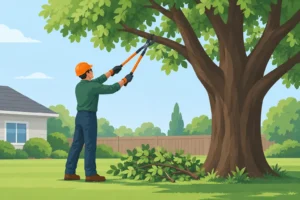
Pruning may be appropriate before construction, but it should be based on the tree’s condition and the access required. Cutting large branches simply to make equipment movement easier can create unnecessary wounds and imbalance the canopy. A licensed arborist can determine whether selective pruning will improve clearance without compromising the tree.
Watch for Problems After Construction
Tree construction protection does not end when the fence comes down. Construction-related stress often appears gradually. Watch the tree over the next several growing seasons for thinning leaves, early fall color, dead branch tips, unusually small leaves, canopy dieback, fungal growth near the base, or new leaning.
These signs do not always mean the tree will fail, and a stressed tree may recover with proper care. However, waiting until large limbs die or the trunk develops obvious decay reduces the available options. An arborist can inspect the tree, recommend appropriate pruning, evaluate soil and root conditions, and determine whether the tree has become a safety concern.
Watering can help a tree through dry periods after root disturbance, but more water is not always better. Deep, measured watering around the remaining root area is generally more useful than frequent shallow watering. Avoid piling mulch against the trunk. A thin, broad layer of mulch can help moderate soil temperature and conserve moisture, while mulch mounded against the bark can trap moisture and invite decay.
Know When Removal Is the Safer Choice
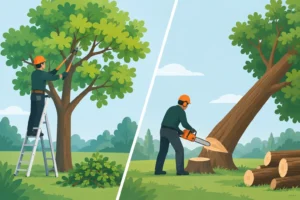
Preserving every tree is not always the right decision. A tree with extensive decay, a major lean toward a structure, significant root loss, or poor branch attachments may pose a greater risk after nearby construction. In some cases, planned removal before work begins is safer and less disruptive than emergency removal after damage occurs.
This is particularly true for trees located beside homes, garages, driveways, play areas, or commercial parking lots. A clear assessment lets property owners make a practical decision based on safety, project needs, and the tree’s remaining useful life. If removal is needed, complete stump and root removal can also prevent future conflicts with new pavement, landscaping, or building work.
For property owners in New Haven County, an experienced local arborist brings useful perspective to these decisions. Stumpbuster LLC has worked around mature Connecticut trees, tight residential lots, established landscapes, and construction access challenges since 1985. The right plan protects the trees that can be saved and addresses the ones that could become a future hazard.
Before the first machine reaches your property, take a close look at every tree near the planned work zone. A few feet of planning, solid fencing, and professional advice can make the difference between finishing a project with a healthy landscape and spending years dealing with preventable tree decline.