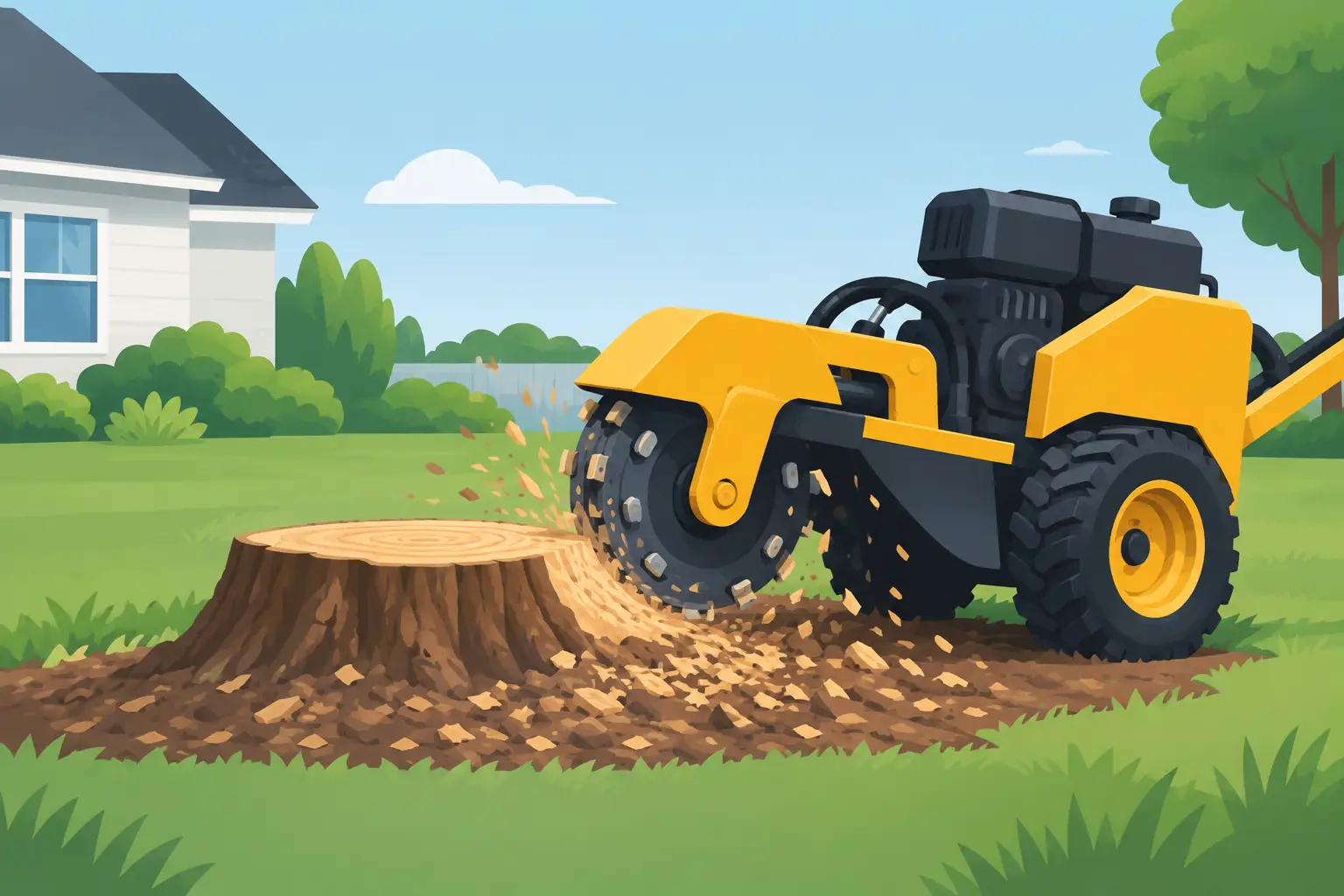
A stump may look like a small leftover problem, but it can limit how you use an entire section of your property. It gets in the way of mowing, attracts insects, creates a trip hazard, and often leaves roots beneath the surface where you want to plant, build, or expand a lawn. Automated stump grinding can make removal faster and more controlled, but the quality of the result still depends on the operator, the equipment, and the plan for what lies underground.
For homeowners and commercial property owners in New Haven County, the best approach is not simply choosing the biggest machine. It is choosing an experienced crew that can match the equipment and removal method to the stump, the site conditions, and your plans for the area afterward.
What Automated Stump Grinding Really Means
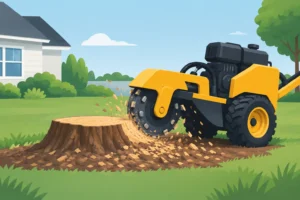
The phrase automated stump grinding can mean several things. In most professional settings, it refers to modern stump grinders with hydraulic controls, advanced cutting systems, self-propelled tracks or wheels, and, in some cases, remote-control operation. These features reduce manual labor and allow an operator to position the machine more precisely.
It does not usually mean that a grinder is left to work alone. Stump removal takes judgment. The operator must assess the stump’s size and species, the slope of the property, access points, nearby buildings, fences, irrigation lines, utility locations, and the roots that may extend well beyond the visible stump.
Automation improves control and efficiency. It does not replace an experienced person on site.
A well-equipped crew can use modern grinding equipment to work through dense hardwood stumps, move across uneven ground, and keep the cutting head at the proper depth. That can reduce the time your yard is disrupted. It also helps limit unnecessary damage to the surrounding lawn when the machine is selected and operated correctly.
Why Modern Equipment Helps on Connecticut Properties
Properties throughout North Haven, Hamden, Branford, Wallingford, Guilford, and nearby communities often have mature trees, older landscapes, stone walls, narrow side yards, and established utilities. A stump grinder has to fit the job, not just the stump.
A large machine may be the most productive option for an open backyard with multiple stumps. A smaller self-propelled grinder may be a better fit for a fenced residential yard or a tight area between a garage and a garden bed. The wrong machine can tear up turf, compact soil, damage landscaping, or make access difficult before grinding even begins.
Modern hydraulic and automated controls help operators make small, deliberate movements around obstacles. The cutting wheel can be worked across the stump in controlled passes rather than aggressively digging into one spot. This matters when the stump is near a driveway, patio, retaining wall, utility box, or the foundation of a home.
There is also a practical time benefit. Efficient grinding equipment can remove a stump with less disruption than older, less capable machinery. That does not mean every job is quick. Large oak stumps, intertwined root systems, and difficult access can take longer. A professional estimate should account for those realities instead of promising a one-size-fits-all timeline.
Grinding a Stump Is Not Always the Same as Removing the Roots
This is one of the most common misunderstandings property owners face. Standard stump grinding breaks down the visible stump and the upper portion of the root flare below grade. It creates wood chips and leaves the area ready for backfilling, seeding, or light landscaping in many situations.
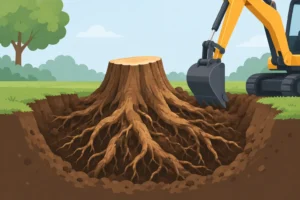
However, grinding does not automatically remove every major root. Roots can extend far from the stump, especially from large, mature trees. If you are simply reclaiming lawn space, grinding may be all you need. If you plan to install a patio, driveway, pool, addition, drainage system, or new foundation work, deeper root removal may be necessary.
That is where experience matters more than the word “automated.” The best method depends on what you plan to do next. Stumpbuster LLC uses its proprietary Plowrake root removal system when a job calls for deeper, cleaner extraction of remaining roots. This can be especially valuable where roots interfere with construction, grading, or future landscaping.
Before work begins, be clear about your end goal. Tell the crew whether you want grass to grow, a new tree planted, a shed installed, or a hardscape project completed. That information helps determine the appropriate grinding depth and whether root removal should be included.
The Site Check Matters as Much as the Machine
A reliable stump grinding job starts before the equipment arrives. An experienced contractor looks for access restrictions, overhead limbs, underground utilities, irrigation components, landscape lighting, septic areas, and nearby structures. They also consider where chips will go and how the finished area will be cleaned up.
Utility safety is especially important. Underground lines are not always obvious, and roots can grow around pipes, wires, and drainage features. Professional crews should use the proper utility-location process before digging or grinding near potential underground services. Property owners should also point out anything private that may not be marked, such as sprinkler lines, invisible pet fencing, low-voltage lighting, or drainage pipe.
The condition of the stump itself can change the plan. A freshly cut stump is typically easier to identify and assess. An old decayed stump may have hidden voids, embedded stones, or metal left from old fencing or hardware. A grinder hitting a buried object can damage cutting teeth and create a safety risk, which is another reason a careful inspection is never wasted time.
What Happens to the Wood Chips?
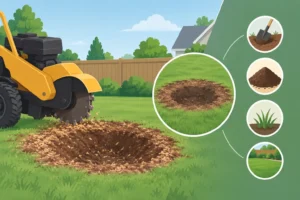
Grinding turns the stump into a mix of wood chips and soil. Some property owners choose to keep that material on site for mulch in natural areas. Others want it removed so the space can be filled with topsoil and reseeded.
Neither choice is automatically right. Leaving a heavy pile of fresh chips in a future lawn area can make it harder to establish grass because the material settles and decomposes over time. It may also tie up nitrogen near the surface as it breaks down. For a lawn, garden bed, or building site, removing excess grindings and adding clean soil often produces a better finished result.
If you keep chips for mulch, avoid piling them against house siding, tree trunks, or shrub stems. Spread them in a reasonable layer around planting beds instead. Your contractor can explain what cleanup is included and whether the grindings should remain, be hauled away, or be redistributed elsewhere on the property.
When Automated Stump Grinding Is the Right Choice
Stump grinding is usually the right solution when the goal is to eliminate a visible stump, remove a mowing obstacle, reduce a trip hazard, or prepare an area for grass and general landscaping. It is often less disruptive than excavation because it focuses on the stump rather than opening a large hole across the yard.
It may not be the complete answer when roots are lifting pavement, pressing against a structure, blocking excavation, or occupying the footprint of a planned project. In those cases, grinding can be the first step, but deeper root removal or excavation may still be needed.
The location matters, too. A stump beside a utility pedestal, under a deck, next to a stone wall, or against a foundation requires a different level of caution than one in the middle of an open lawn. The safest and cleanest option may involve smaller equipment, additional hand work, or a staged removal process.
Questions Worth Asking Before You Hire a Crew
Before scheduling work, ask whether the contractor is insured, what depth they expect to grind, how they will protect surrounding turf and structures, and what will happen to the wood chips. If you have future construction or landscaping plans, ask directly whether root removal is recommended.
You should also ask about access. Gate widths, steps, slopes, soft ground, and tight turns all affect equipment selection. Taking a few photos and sharing accurate details during the estimate process can prevent surprises on the day of service.
A licensed arborist-led company brings added value when stump grinding is connected to broader tree care. The same crew can help evaluate whether nearby trees have exposed roots, declining health, hazardous limbs, or future removal needs that should be addressed while equipment is already on site.
A clean stump removal gives you more than a smoother patch of lawn. It gives you back a piece of your property. Whether you want room for a garden, safer footing for your family, or a clear area for your next project, the right equipment and an experienced operator can leave the ground ready for what comes next.