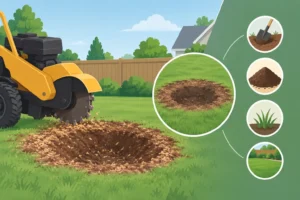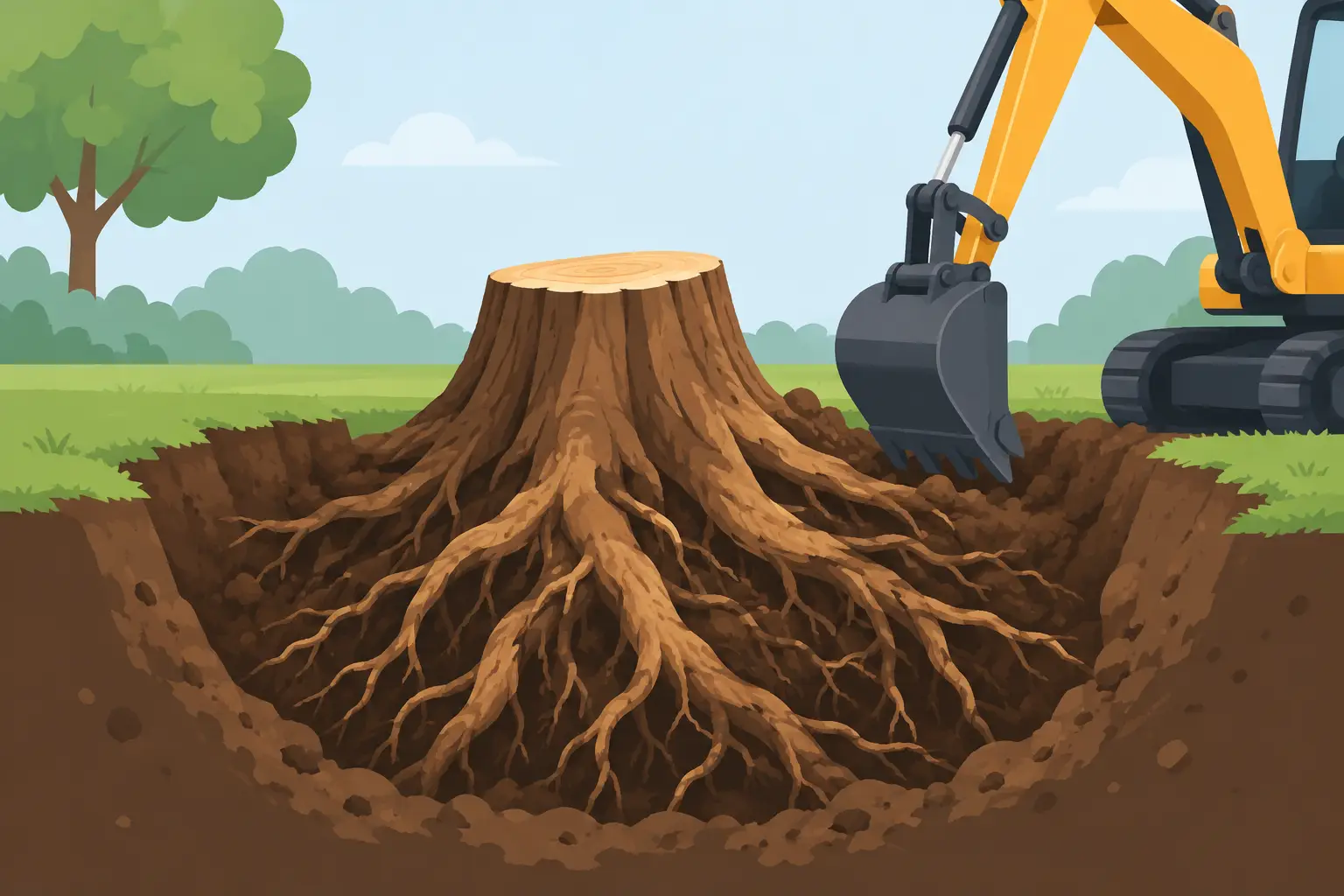
A stump can look like a simple cleanup problem until its roots keep a new patio from sitting level, send shoots through a lawn, or occupy the exact place where you want to plant. This root excavation example shows what complete root removal can look like when stump grinding alone will not solve the property issue.
For many New Haven County homeowners, the decision comes down to the next use of the space. If the area will remain lawn, grinding a stump below grade may be the practical choice. If roots are interfering with construction, drainage, landscaping, or a utility project, excavation may provide the cleaner long-term result.
A Typical Root Excavation Example
Consider a mature maple that was removed from a side yard in Hamden. The trunk stood about eight feet from a driveway and close to a planned garden expansion. After the tree was taken down, the stump remained roughly 24 inches across, with large surface roots extending toward the drive and beneath the former lawn.
The owner did not simply want the stump lowered. They wanted to widen the driveway edge, regrade the yard so water would move away from the house, and install new planting beds. Leaving the major roots in place could have created uneven ground, made digging difficult, and left a future obstacle exactly where the work was planned.
The first step is always evaluating the site. An experienced crew looks at the stump size, tree species, visible root pattern, slope, access for equipment, nearby structures, and any signs that roots may run near utilities. In an older Connecticut yard, roots may be mixed with fieldstone, buried debris, compacted fill, or previous landscaping material. That affects the method, the time required, and the scope of removal.
Before excavation begins, utilities must be identified and marked. This is especially important near driveways, irrigation lines, outdoor lighting, sewer laterals, and underground electrical service. Root work is not a job for blind digging.
What the Removal Process Looked Like
In this example, the stump was first ground down to open the central wood mass. The surrounding soil was then carefully worked back to expose the larger roots rather than tearing through the area indiscriminately. Major roots were cut and removed in manageable sections, including the roots extending toward the future driveway edge.
A specialized root-removal system can make a meaningful difference here. Stumpbuster LLC uses its proprietary Plowrake system to pull deeper, heavier root material that ordinary stump grinding can leave behind. The goal is not to churn up the entire yard. It is to remove the wood that prevents the property owner from using the space as intended while limiting unnecessary disturbance.
Once the main stump and problem roots were removed, the excavation area was cleaned of wood chips and root debris. The site was backfilled and graded for the next phase of the owner’s project. The final finish depends on the plan: some customers want the area prepared for seed, while others need a clean base for a walkway, garden bed, fence line, or hardscape contractor.
Why Grinding Alone Was Not Enough
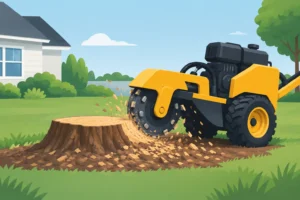
Stump grinding is an effective service for many properties. It removes the visible stump, reduces a tripping hazard, and makes mowing easier. It is often the best value when a homeowner wants to restore a lawn and has no building or planting work planned directly over the stump area.
But grinding does not remove every major root. A grinder works downward and outward from the stump, leaving much of the root system in the soil to decay over time. That is usually acceptable in an open lawn. It can be a poor fit where a root is lifting a surface, blocking excavation, or occupying the footprint of a planned project.
In the maple example, the roots nearest the driveway mattered more than the roots farther out in the yard. Full root removal was not about chasing every fine feeder root across the property. It was about removing the stump and substantial roots that would interfere with grading, construction, and planting.
That distinction helps prevent overpromising. No responsible tree service should claim to remove every trace of a mature tree’s root system from an entire yard. Fine roots naturally remain and break down. The practical goal is to remove the structural roots and woody material that are causing the specific problem.
When Root Excavation Makes Sense
Root excavation is most useful when there is a clear reason to expose and remove deeper root material. Common examples include a stump located where a shed, addition, pool, patio, retaining wall, or fence will be installed. It may also be appropriate when old roots are creating a raised area in a lawn, preventing drainage work, or making it difficult to establish new landscaping.
A property owner may also choose excavation after a tree has been removed near a foundation or driveway. Roots do not normally break sound concrete simply by existing, but they can worsen an existing crack, push at loose pavers, or complicate repairs where the surface is already moving. The right answer depends on what is actually causing the damage. Removing roots without addressing drainage, base preparation, or failing pavement will not fix every hardscape problem.
Tree species and stump age matter, too. Fresh stumps from vigorous species may produce new shoots if the root system remains active. Older, decaying stumps may be easier to grind but can leave soft pockets in the soil as wood breaks down. An on-site evaluation helps determine whether grinding, excavation, or a combination of both makes the most sense.
What Affects the Cost and Scope
There is no reliable flat price for root excavation because access and site conditions matter as much as stump diameter. A stump in an open backyard with a wide gate is very different from one behind a garage, beside a stone wall, or close to utility lines.
The estimate should account for the size and species of the tree, depth and spread of major roots, access for equipment, soil conditions, nearby structures, and the required finish work. Hauling away root material, importing topsoil, reseeding, or preparing the area for another contractor can also affect the final scope.
Homeowners should be cautious of estimates that treat every stump as identical. Quick removal can be appropriate, but a low price is not always a complete solution. If your real goal is a level yard, a new garden, or a construction-ready area, say so before the work begins. That lets the crew recommend the right level of removal instead of performing a basic grind that leaves the next contractor with the difficult part.
A Cleaner Plan for the Space You Want Back
The best root removal plan starts with the intended use of the ground. If you only need a stump out of the way, grinding may be all you need. If the roots are in the path of a driveway repair, planting project, drainage correction, or new outdoor feature, excavation can save time and frustration later.
For homeowners and commercial property managers in New Haven County, a site visit can clarify what is below the surface and what it will take to reclaim the area safely. A clear estimate and an experienced arborist-led crew give you a practical path from an old stump to usable ground again.