A low number on paper can become an expensive surprise once a crew arrives at the property. Estimate accuracy matters in tree work because the job is rarely as simple as cutting down a visible trunk. Access, overhead utilities, decay, nearby structures, hauling, stump depth, and hidden roots all affect the equipment, labor, and safety planning required.
For homeowners and property managers in New Haven County, a useful estimate should make the scope of work clear before any equipment rolls onto the lawn. It should help you understand what is being removed, how the crew plans to handle it, and what the property should look like when the work is done.
Why Estimate Accuracy Matters for Tree Service
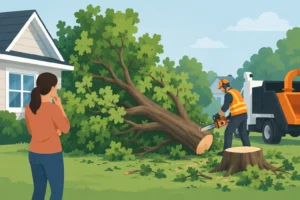
Tree work is high-risk work. A tree may lean over a garage, sit between utility lines, or have limbs extending above a driveway, fence, pool, or landscaped bed. A proper estimate accounts for these conditions instead of treating every removal, trimming job, or stump as the same.
Accurate pricing also protects the customer from vague promises. If an estimate says only “remove tree,” important details may be left open to interpretation. Does removal include cutting the trunk into manageable sections? Will the brush and wood be hauled away? Is stump grinding included? Will the crew remove surface roots, fill the grindings, or clean up sawdust from the lawn and driveway?
The lowest estimate is not always the best value if it leaves these questions unanswered. A complete scope can cost more than a bare-bones price, but it allows you to compare contractors fairly and avoid change orders caused by work that was never included.
What a Tree Service Estimate Should Cover
A professional estimate starts with an on-site look at the property whenever possible. Photos can help with an initial conversation, but they do not always show the slope of a yard, the condition of the wood, the width of a gate, or how close branches are to a roof and service lines.
The exact work being performed
The estimate should identify each tree, stump, or area of concern. For a removal, that may include the approximate size, location, and whether the tree will be dismantled in sections or felled whole. For trimming, the description should explain the purpose of the work, such as removing dead limbs, reducing overextended branches, improving clearance from a building, or addressing storm damage.
Good trimming is not simply cutting everything back. A licensed arborist considers the tree species, growth habit, health, and structural condition. Over-pruning can create stress, encourage weak regrowth, and reduce the tree’s appearance. The estimate should reflect the actual need, not a one-size-fits-all approach.
Access and equipment needs
The route to the work area has a real effect on cost and planning. A tree beside a wide driveway may allow efficient use of trucks and equipment. A tree behind a house with narrow gates, retaining walls, gardens, or wet ground may require more hand work and careful material handling.
In Connecticut, mature yards often have stone walls, underground utilities, septic areas, irrigation lines, and established landscaping to work around. A responsible contractor evaluates these conditions before quoting the job. This does not mean every job needs heavy equipment. It means the crew should use the right equipment for the site without causing unnecessary damage.
Debris removal and cleanup
Ask whether brush, logs, chips, and sawdust are included in the estimate. Some customers want firewood-length logs left on site. Others want a complete haul-away so they can use the space immediately. Either choice is reasonable, but it should be stated clearly.
Cleanup should also be defined. Tree service creates debris even when the crew works carefully. A thorough estimate explains whether the work includes raking the immediate area, blowing off hard surfaces, and removing branches and wood from the property. If a large tree is being removed, discuss whether temporary lawn marks or minor ground disturbance are possible, particularly after rain or during soft spring conditions.
Stump grinding and root removal
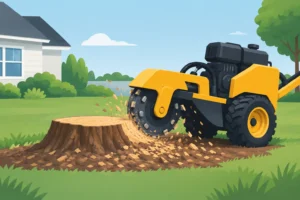
Tree removal and stump removal are separate services unless the estimate specifically combines them. Standard stump grinding removes the visible stump below grade, but it may not remove major roots that extend through a lawn, garden, or future construction area.
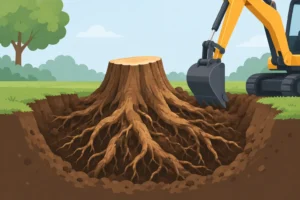
That difference matters when roots are lifting a walkway, interfering with a patio, running through a planting bed, or preventing a new fence or landscape project. Deeper root removal may require specialized equipment and a different level of restoration afterward. Stumpbuster LLC uses a Plowrake root removal system for situations where a surface-level grind is not enough.
Before approving the work, confirm the expected depth of grinding, whether exposed roots are part of the scope, what happens to grindings, and whether topsoil or seed is included. Those details affect both the price and how soon the area can be put back into use.
Conditions That Can Change an Estimate
The best contractor will explain that an estimate is based on visible conditions and reasonable site access. Most jobs proceed exactly as planned. Still, trees can hide problems that are impossible to confirm from the ground.
Internal decay may become apparent once a tree is climbed or sections are cut. A trunk may be hollow, a limb may be more compromised than it looked, or an old stump may have roots intertwined with buried material. Weather can also affect safe access and scheduling. High winds, saturated ground, or snow-covered obstacles may require the crew to postpone work rather than take unnecessary risks.
Utility conditions deserve special attention. Never assume a tree company can cut or remove branches near energized lines without coordination. If limbs are close to electrical service, the estimate should explain the limits of the work and whether utility involvement is needed. Safety comes before speed.
A change in price should never feel like a surprise. If site conditions require work beyond the agreed scope, a reputable contractor should discuss the issue with you before proceeding whenever circumstances allow.
How to Compare Tree Service Estimates Fairly
When comparing estimates, look beyond the bottom line. Place each proposal side by side and check whether the same services are included. One contractor may quote tree cutting only, while another includes controlled dismantling, hauling, stump grinding, cleanup, and protection for the work area.
It is also reasonable to ask about insurance, experience, and who will be supervising the job. Tree work around homes and businesses requires more than a chainsaw and a pickup truck. Qualified crews know how to assess hazards, select safe cutting methods, manage falling material, and protect people and property.
Be cautious with estimates that are unusually low or offered without anyone seeing the property. A low bid may reflect an incomplete scope, lack of proper coverage, or a plan to add costs later. The goal is not to find the highest price. It is to choose a clear, fair estimate from a contractor who has accounted for the work in front of them.
Getting a More Accurate Estimate for Your Property
You can help the estimating process by pointing out concerns before the visit. Mention underground irrigation, septic systems, invisible dog fences, recent construction, utility lines, drainage concerns, and areas where equipment cannot travel. If you know a stump has been ground before or roots have caused damage, share that information as well.
It also helps to be clear about the outcome you want. Are you removing a hazardous tree? Opening sunlight for a garden? Preparing for a new shed or patio? Cleaning up storm damage? The end goal guides the recommendation. A homeowner planning grass in the area may need a different level of stump and root removal than someone placing mulch around an existing stump.
A detailed estimate is not paperwork for its own sake. It is the plan for doing difficult outdoor work safely, cleanly, and with fewer surprises. Before work begins, take a few minutes to make sure the scope, cleanup, access, and final result are understood by both you and the crew. That conversation is often what turns a stressful tree problem into a job done right.