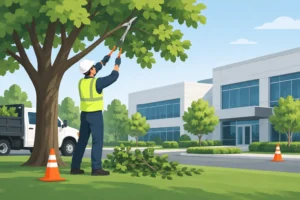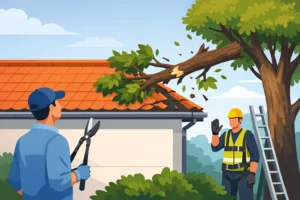
When a tree is leaning over your roof, a stump is taking up half the yard, or roots are pushing into areas they should not be, getting a price is easy. Getting the right price from the right company is where people get burned. A solid tree service estimate checklist helps you compare proposals based on safety, scope, insurance, and cleanup – not just the lowest number on the page.
Tree work is not like hiring someone to mow the lawn. The risks are higher, the equipment is heavier, and one missed detail can leave you with property damage, an unfinished job, or a mess that costs more to fix later. That is why the estimate matters.
What a tree service estimate should actually tell you
A good estimate should explain what is being done, how far the work goes, and what is included when the crew leaves. If a proposal is vague, it becomes hard to hold anyone accountable once the job starts.
At minimum, the estimate should identify the tree or stump location, the service being performed, and whether the work is full removal, trimming, stump grinding, root removal, or cleanup only. It should also note access conditions. A backyard tree with fence access is a different job than one hanging over a garage or growing near utility lines.
This is where experienced contractors stand out. They ask the questions that affect the outcome, not just the price. Can equipment reach the work area without tearing up the lawn? Is rigging needed to protect the house, driveway, shed, or landscaped beds? Will the stump be ground below grade, and if so, how deep? If roots are part of the problem, are they included or priced separately?
Your tree service estimate checklist before you say yes
The best estimates are specific enough that both sides know what the finished job looks like. If you are comparing two or three bids, use the same checklist each time.
1. Verify exactly what work is included
Make sure the estimate states whether the company is removing the whole tree, cutting it down and leaving sections on site, pruning selected limbs, or handling only storm damage. For stump work, check whether the price includes stump grinding only or deeper root removal as well.
A lot of confusion starts here. One contractor may price basic stump grinding, while another includes deeper excavation or root cleanup. Those are not equal estimates even if the numbers look close.
2. Ask about cleanup and debris removal
Cleanup should never be assumed. Ask if brush, logs, chips, and sawdust are hauled away. If wood is left behind, ask where it will be stacked and whether that affects the price.
For many property owners, cleanup is where the real value shows. A cheaper estimate that leaves debris, ruts, and surface roots behind may not be cheaper once the job is over.
3. Confirm insurance and worker protection
Any company giving a tree service estimate checklist serious attention should be ready to show proof of liability insurance and workers’ compensation coverage. If something goes wrong, this matters fast.
Do not settle for verbal assurances. Tree work involves climbing, falling limbs, power equipment, and tight working conditions around structures. You want a contractor who is properly covered before a saw starts.
4. Find out who is evaluating the job
There is a difference between someone who sells tree work and someone who understands tree work. An arborist-led estimate tends to be more accurate because it considers tree condition, structural risk, species behavior, and the safest removal or trimming method.
That matters if you are deciding whether a tree should be pruned, reduced, or removed altogether. It also matters when roots, decay, or storm damage are part of the problem.
5. Check access, equipment, and site protection
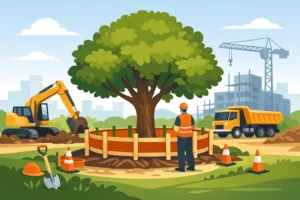
Ask how the crew plans to get in and out of the work area. Large equipment can save time, but it can also damage turf, edging, irrigation, or paved surfaces if the route is not planned properly.
A professional estimate should account for obstacles such as fences, narrow gates, overhead wires, septic areas, patios, and garden beds. If your property has tight access, the method used can change both pricing and results.
6. Look for stump depth and root details
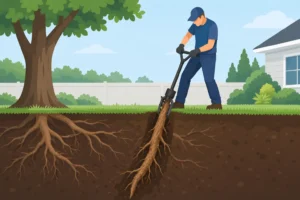
This is one of the most overlooked parts of any tree service estimate checklist. “Stump removal” means different things to different companies. Some only grind the visible stump a few inches below grade. Others can address deeper material and lateral roots that keep the area unusable.
If you want to reseed, replant, build, or reclaim yard space, ask how deep the stump will be removed and whether major roots are included. That answer affects what you can do with the area afterward.
7. Ask about timing and job conditions
An estimate should give you a reasonable timeline, but it should also explain what can affect it. Weather, frozen ground, saturated lawns, emergency storm work, and utility coordination can all change scheduling.
Reliable contractors are usually straightforward about this. They give a realistic window, not a promise they cannot keep.
Red flags when comparing estimates
The lowest number is not always the best deal. Sometimes it is simply the least complete scope.
Be careful with estimates that are handwritten and vague, do not mention insurance, skip cleanup details, or avoid specifics on stump depth and debris hauling. Another warning sign is a contractor who wants to start immediately but cannot clearly explain the process.
Watch for language like “remove tree” with no mention of stump, brush, log removal, or surface repair. If it is not written down, assume it may not be included.
Why tree estimates vary so much
Property owners are often surprised when one estimate is much lower or higher than another. Usually, the difference comes down to risk, access, labor, and equipment.
A tree growing in an open yard is simpler than one hanging over a home. A basic pruning job is different from technical limb removal above a driveway or power service line. Stump grinding is one price. Full root removal is another. Cleanup can be minor or extensive depending on volume and site conditions.
There is also the experience factor. A company with trained crews, proper insurance, and specialized equipment may not be the cheapest. But there is usually a reason. Better planning, cleaner work, and fewer problems cost money up front and often save money afterward.
A smarter way to compare bids
Do not compare totals first. Compare scope first.
Take each estimate and mark whether it includes the same work: tree removal, stump grinding, root removal, hauling, cleanup, and site protection. Then look at who is insured, who explained the job clearly, and who identified potential complications before the work begins.
If one estimate is lower, ask why. Sometimes there is a fair reason. Maybe you agreed to keep the wood, skip the stump, or schedule during a less busy period. Other times the lower price comes from omissions that show up later as change charges or unfinished work.
For Connecticut property owners dealing with mature trees, aging landscapes, and tight residential lots, details matter. The right estimate should leave fewer questions, not more.
Tree service estimate checklist for homeowners and commercial properties
Residential and commercial jobs share the same basic concerns, but commercial properties often need more documentation and tighter scheduling. If you manage an office lot, retail site, apartment property, or HOA area, ask whether traffic flow, tenant access, and work-hour limits are part of the estimate.
For homeowners, the focus is often safety, appearance, and usable yard space. For commercial clients, liability, scheduling, and clean completion tend to carry even more weight. In both cases, a clear estimate protects everyone.
What to ask before you approve the work
Before signing off, ask one direct question: “When this job is done, what exactly will my property look like?”
That single question often reveals whether the contractor has thought through the full project. You should get a plain answer covering what is removed, what stays, how the area is cleaned, and whether any visible stump or roots remain.
A company that has done this work for decades usually has no trouble answering that clearly. That is often the difference between a smooth job and one that leaves you chasing details after the crew is gone.
If you are gathering estimates in New Haven County, use this checklist to slow the process down just enough to make a better decision. A careful estimate is not paperwork for its own sake. It is the first sign that the work will be handled safely, professionally, and the right way from the start.