That old stump in the yard usually stops being “just part of the landscape” the first time someone trips over it, clips it with a mower, or tries to build around it. For many Connecticut property owners, the top reasons to remove stumps come down to safety, usable space, and avoiding bigger problems later.
A stump may look harmless compared to a standing tree, but it still affects how your property works. It gets in the way of mowing, disrupts landscaping plans, attracts insects, and can keep roots active below the surface longer than people expect. In some cases, it is mostly an eyesore. In others, it creates a real maintenance or liability issue. The right solution depends on the stump’s size, species, location, and root spread, but leaving it in place is not always the cheaper or easier choice over time.
Top reasons to remove stumps from your property
The most common reason people call about stump removal is simple – they are tired of working around it. A stump turns a usable section of the yard into dead space. That matters if you want a cleaner lawn, a planting bed, a fence line, a patio area, or room for kids and pets to move around without obstacles.
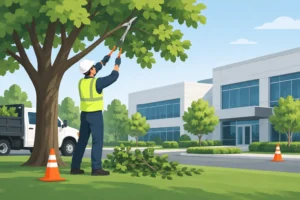
For commercial properties, the issue is often even more practical. Stumps interfere with grounds maintenance, make properties look neglected, and create hazards near walkways or parking areas. If you are responsible for tenant-facing or customer-facing property, that small leftover stump can send the wrong message.
Safety is usually the first concern
A stump is a trip hazard, plain and simple. That risk is easy to overlook when the stump is fresh and visible, but it gets worse as grass grows around it or leaves collect over the top. The same goes for exposed surface roots around the stump. What stands out in winter can disappear in spring and summer.
This matters for families, visitors, delivery drivers, and anyone maintaining the property. If the stump sits near a driveway, sidewalk, play area, or commonly used part of the yard, removal is often the safer move. The risk is not dramatic every day, but it only takes one bad step.
It makes mowing and yard work harder
Homeowners feel this one every week during growing season. A stump forces you to mow around it, trim around it, and work around roots that may be pushing up through the lawn. That costs time and wears out equipment. One close pass with a mower deck or string trimmer can cause damage fast.
If you care about a neat, maintained lawn, stumps make that harder than it should be. Even when the stump itself is low, the area around it often stays uneven. Removing it gives you cleaner lines and more consistent turf care.
Stumps attract pests and decay problems
Old wood breaks down, and as it decays, it can attract insects that you do not want near the rest of your landscape. Ants, termites, beetles, carpenter ants, and other wood-boring pests are often drawn to rotting stumps. Not every stump becomes a pest magnet right away, but the risk tends to rise with age and moisture.
That does not automatically mean insects will move from a stump into your house. Distance, species, and site conditions all matter. Still, if the stump is close to the home, garage, shed, or other wood structures, it is reasonable to address it before it becomes a larger concern.
Decay also creates a mess above and below ground. As the stump softens, it can sink, crumble, and leave voids or uneven spots in the yard. That is one reason putting off removal does not always save money. Sometimes the work gets more complicated after years of rot and root spread.
Fungi and unwanted growth can follow
A decaying stump can also become a host for mushrooms and fungal growth. In some settings, that is mostly an appearance issue. In others, especially where children or pets play, homeowners prefer not to have fungi popping up regularly in the lawn.
There is also the issue of regrowth. Certain tree species keep trying to send up shoots from the stump or root system after the tree has been cut. That creates an ongoing nuisance and can leave you trimming back suckers for months or even years if the stump is not properly addressed.
Curb appeal and property value matter
One of the top reasons to remove stumps is that they make a property look unfinished. You can have a well-kept lawn, trimmed shrubs, and a freshly cleaned yard, but a leftover stump still reads as incomplete work. It draws the eye, especially near the front of the house.
That matters if you are selling, renting, or simply trying to keep your property looking its best. Buyers and tenants notice obstacles and deferred maintenance. A clean yard suggests a property that has been cared for. A stump suggests there may be other unfinished issues nearby.
For businesses and commercial sites, appearance has a direct impact on how customers and tenants view the property. A clean, open landscape is easier to maintain and presents better than one with old stumps and root flare sticking up out of the ground.
Stumps can limit future plans
Many property owners do not think about removal until they want to change the space. Then the stump becomes a roadblock. Maybe you want to install a shed, expand a driveway edge, add a patio, plant new material, or regrade part of the yard. Suddenly that old stump is in the exact wrong spot.
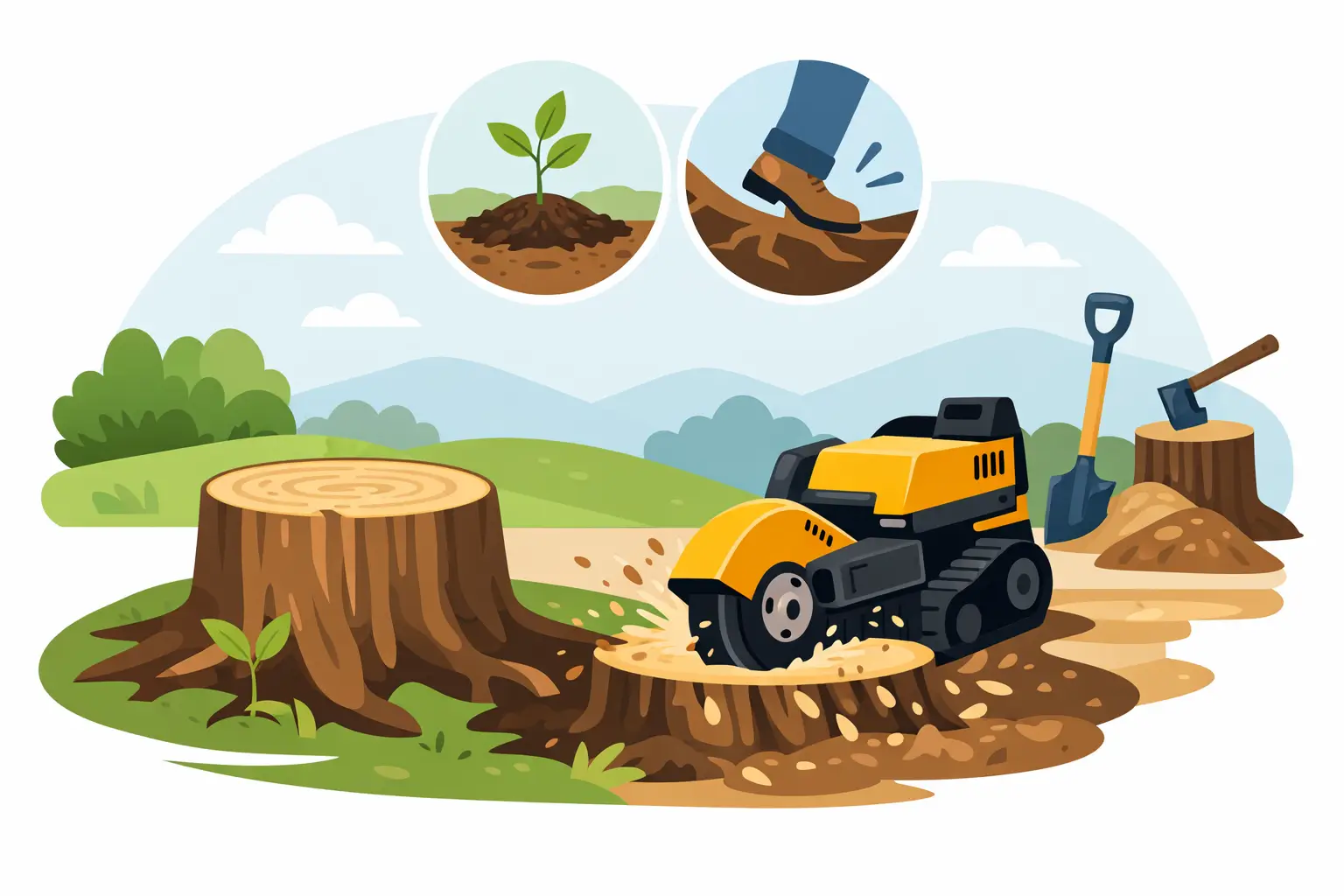
If roots are still active below the surface, they can affect excavation and make new landscaping harder than expected. Full removal needs to match the goal. In some cases, grinding is enough. In others, especially where deeper roots interfere with construction or replanting, more complete root removal may make more sense.
Root systems can keep causing trouble
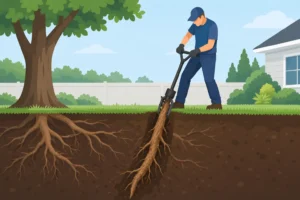
The stump is what you see, but the roots are often the bigger issue. Surface roots can lift sections of lawn, interfere with mowing, and creep into planting beds. Larger root systems near hardscapes can complicate sidewalk edges, retaining walls, and other improvements.
This is where experience matters. Not every stump needs the same level of removal. If the goal is basic lawn restoration, one method may be appropriate. If the stump sits near a foundation, driveway, pool area, or future project site, the plan should account for deeper root issues as well. A quick grind is not always the complete answer.
Arborist-led evaluation helps separate cosmetic concerns from structural and site-related concerns. That saves property owners from overdoing the work in one case or underestimating it in another.
Why professional stump removal is usually worth it
People sometimes ask if they can leave a stump to rot naturally or try to remove it themselves. Technically, both happen. In practice, natural decay is slow and unpredictable, and DIY removal can turn into a major job fast. Size, species, age, root spread, and access all change the difficulty.
Small stumps in open ground are one thing. Large hardwood stumps near utilities, fences, stonework, or landscaped areas are another. Proper equipment makes a difference, but so does knowing how to protect the surrounding property and clean up the site correctly afterward.
That is one reason experienced local contractors still matter. In New Haven County, properties often have mature trees, established landscaping, tight access, and older hardscapes that require precision. Stumpbuster LLC has been handling that kind of work since 1985, with licensed arborist leadership and specialized root removal capability when a standard surface-level approach is not enough.
When it makes sense to remove a stump sooner rather than later
If the stump is near a walkway, attracting pests, interfering with mowing, or blocking a project, waiting usually does not improve the situation. The same is true if roots are causing visible trouble or the area needs to be restored for normal yard use.
There are times when timing depends on budget, season, or a larger landscape plan. That is fair. But if the stump is already affecting safety, appearance, or maintenance, it is usually better to deal with it before it creates another layer of work.
A good stump removal job should leave you with more than a missing stump. It should give you back clean, usable ground and one less problem to work around every week. If a stump has been sitting there longer than it should, that is usually your answer right there.